Politics
Court Orders Final Forfeiture of 48 Properties Linked to Ex-AGF Abubakar Malami
A Federal High Court in Abuja has ordered the final forfeiture of 48 properties linked to former Attorney-General of the Federation and Minister of Justice, Abubakar Malami, to the Federal Government. The court ruled that the Economic and Financial Crimes Commission (EFCC) established sufficient legal grounds to permanently seize the assets, while Malami has announced that he will appeal the judgment. The ruling marks one of Nigeria's most significant anti-corruption asset forfeiture decisions in recent years.
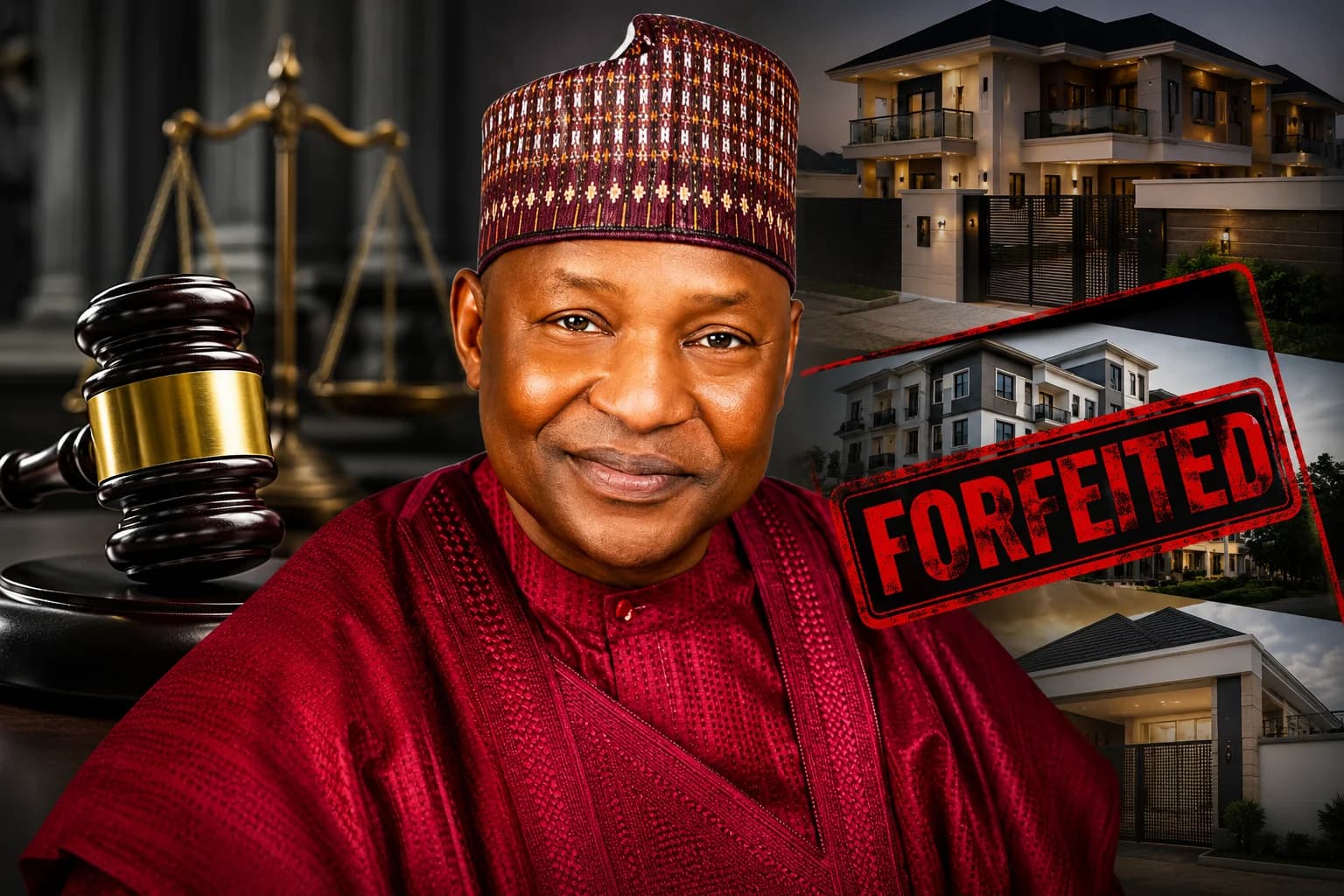
One of Nigeria's most closely watched anti-corruption cases has taken a dramatic new turn.
The Federal High Court in Abuja has ordered the permanent forfeiture of 48 properties linked to former Attorney-General of the Federation and Minister of Justice, Abubakar Malami, bringing months of legal proceedings to a major milestone.
The ruling follows an application by the Economic and Financial Crimes Commission (EFCC), which argued that the properties were reasonably suspected to have been acquired through unlawful means.
After considering objections from Malami and other claimants, Justice Joyce Abdulmalik ruled that the respondents failed to rebut the legal standard of "reasonable suspicion" required under Nigeria's asset forfeiture laws.
Why the Court Ordered the Forfeiture
In her judgment, Justice Abdulmalik explained that the central question before the court was not simply who owned the properties, but whether there was sufficient evidence showing they had been lawfully acquired.
The court concluded that the respondents failed to provide satisfactory evidence to displace the EFCC's case that the assets were suspected proceeds of unlawful activities. The judge also noted that civil forfeiture proceedings do not require a prior criminal conviction before assets can be forfeited.
The Properties
According to court records, the forfeited assets include a wide range of high-value properties spread across several states.
Media reports indicate the portfolio includes residential buildings, commercial properties, a university campus, an agro-allied factory and other real estate assets. The court, however, excluded several properties from the final forfeiture order after reviewing the evidence presented.
Malami Rejects the Decision
Former Attorney-General Abubakar Malami has rejected the ruling and says he will challenge it before the Court of Appeal.
His legal team maintains that the judgment is flawed and argues that the court did not properly evaluate the evidence presented on his behalf.
The appeal means the legal battle is far from over, even though the Federal High Court has issued its final forfeiture order.
Separate Criminal Proceedings
The forfeiture case is separate from ongoing criminal proceedings involving Malami.
The former minister has pleaded not guilty to money laundering-related charges previously filed against him.
Those criminal allegations have not yet been determined by the court, and the presumption of innocence continues to apply unless a court reaches a final verdict.
Why This Case Matters
Asset forfeiture has become one of the EFCC's most powerful tools in tackling alleged illicit wealth.
Unlike criminal prosecutions, civil forfeiture proceedings focus primarily on the assets themselves rather than securing a criminal conviction against an individual.
Supporters argue that this helps prevent suspected proceeds of crime from remaining beyond the reach of the law.
Critics, however, often stress the importance of ensuring that forfeiture proceedings fully respect due process and property rights.
The Malami case has therefore become an important legal test of how Nigeria balances anti-corruption efforts with constitutional protections.
Political Reactions Expected
Given Malami's prominent role in the administration of former President Muhammadu Buhari, the judgment is expected to generate political debate.
Supporters of the anti-corruption campaign have welcomed the decision as evidence that powerful public officials can be held accountable.
Others argue that the appellate courts should carefully examine the judgment before any final conclusions are drawn.
As with many high-profile corruption cases in Nigeria, public opinion remains sharply divided.
What Happens Next?
Attention now shifts to the Court of Appeal.
Malami's legal team is expected to file a formal appeal challenging the Federal High Court's decision.
The appellate court will determine whether the forfeiture order should stand, be modified or be overturned.
Until then, this case remains one of the most significant legal and political stories in Nigeria.
A Landmark Decision
Whether viewed as a major anti-corruption victory or the beginning of another lengthy legal battle, the ruling has already secured its place among Nigeria's most consequential court decisions of the year.
For the EFCC, it represents a significant courtroom success.
For Malami, it marks the start of another legal fight.
And for Nigerians, it is another reminder that the country's anti-corruption campaign continues to shape both politics and the justice system.
EDITORIAL TEAM
About Talk Ya True Editorial Team
The Talk Ya True Editorial Team is an independent newsroom committed to factual reporting, responsible journalism and thoughtful analysis across Africa and around the world.
Related Articles


Stay Informed
Get the biggest stories from Nigeria, Africa and around the world.
Free news updates. Unsubscribe anytime.
By subscribing, you agree to receive free news updates from Talk Ya True. You can unsubscribe at any time.