Entertainment
From Rap Beef to ₦2.55 Billion Lawsuit: Blaqbonez Takes Odumodublvck Battle to Court
What began as one of Nigerian hip-hop’s most talked-about rivalries has entered a far more serious phase, with Blaqbonez seeking ₦2.55 billion in damages and legal costs from fellow rapper Odumodublvck over alleged defamatory statements, harassment and reputational harm. The dispute now raises a bigger question for Nigeria’s entertainment industry: where does rap rivalry end and legal responsibility begin?
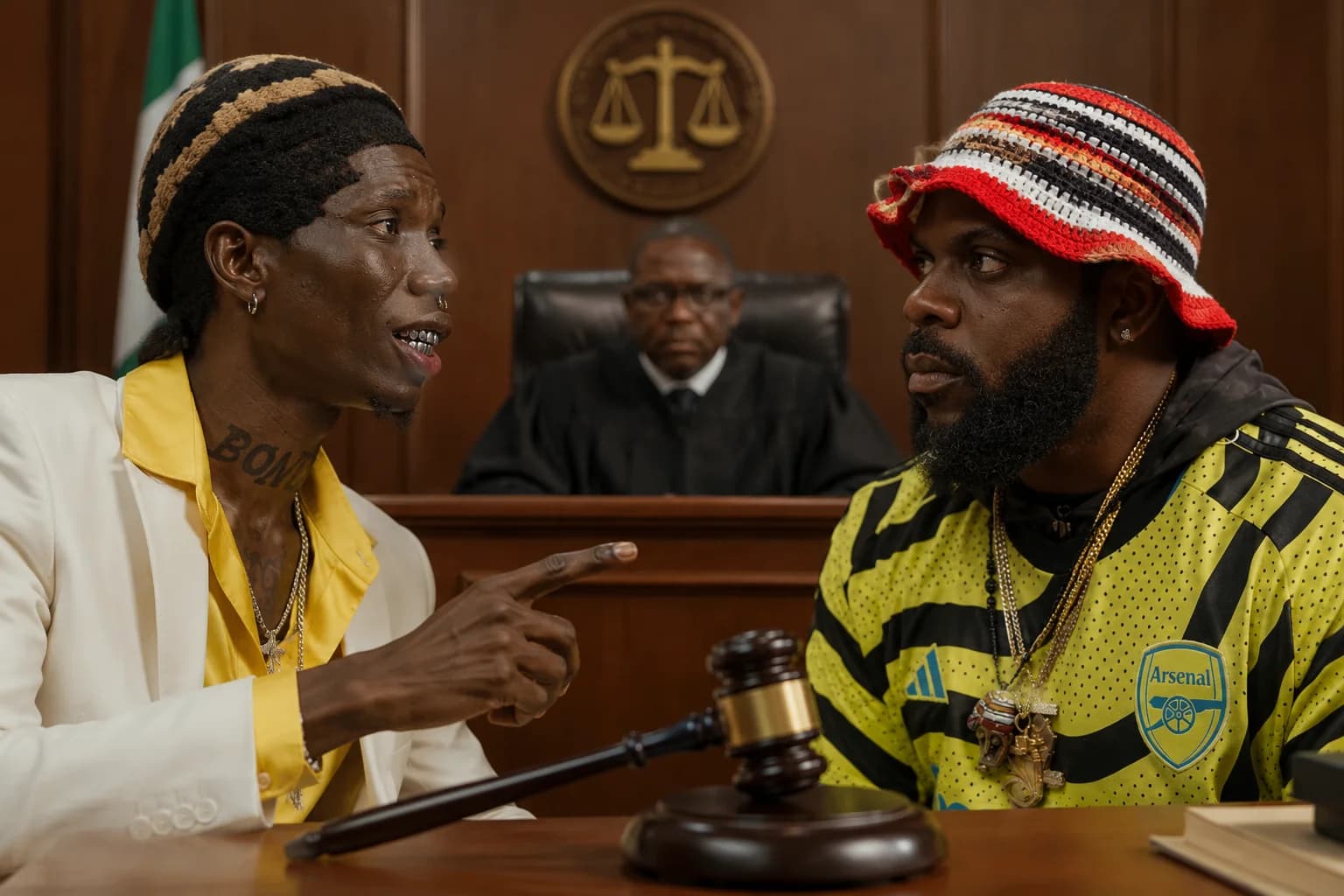
Nigerian hip-hop has witnessed diss tracks, subliminal shots, social media battles and bitter rivalries.
But the ongoing dispute between Blaqbonez and Odumodublvck has now moved into territory where punchlines may be examined not by fans, bloggers or music critics, but through a legal process.
Blaqbonez has taken legal action against fellow rapper Odumodublvck, seeking a total of ₦2.55 billion in damages and legal costs over statements he alleges are defamatory and damaging to his reputation, career and commercial interests.
According to reports on legal documents dated July 7, 2026, Blaqbonez is seeking ₦2 billion in general damages, ₦500 million in aggravated damages and ₦50 million in legal costs.
His legal representatives accuse Odumodublvck of making and amplifying serious allegations against him on social media.
Blaqbonez has denied the accusations attributed to Odumodublvck and is asking for several remedies, including the deletion of disputed posts, a public retraction and apology, and an order preventing further allegedly defamatory publications.
Odumodublvck, meanwhile, has publicly maintained his position and rejected the suggestion that his statements were defamatory.
The dispute has therefore moved beyond the familiar world of entertainment gossip.
At its centre are serious accusations, strong denials, questions of reputation and the enormous power of social media to damage a person's career before any court has established the truth.
For Nigerian hip-hop, this could become a defining moment.
Because when a rap beef enters a legal process carrying a multibillion-naira claim, the rules of engagement change.
From Collaborators to Courtroom Rivals
Perhaps the most remarkable part of the story is that Blaqbonez and Odumodublvck were not always public enemies.
The two artists previously collaborated on records including Tesla Boy, Dollerz and Technician, at a time when their musical relationship appeared capable of producing exciting moments for Nigerian hip-hop.
That relationship eventually deteriorated.
What followed was an increasingly public rivalry involving social media exchanges, perceived subliminal attacks and diss records.
Recent reporting traces the broader tension back to early 2025, when comments by Odumodublvck about the strength of his 2023 project Eziokwu were interpreted by some fans as a shot at Blaqbonez and his own successful project, Emeka Must Shine. The disagreement subsequently developed into a much more personal confrontation.
Rap competition itself is nothing unusual.
Hip-hop was built partly around competition.
Rappers compare sales.
They compare lyrical ability.
They compare influence.
They challenge one another in songs.
They mock rivals.
They fight over who is the best.
In many cases, the rivalry becomes part of the entertainment.
But there is a major difference between saying another rapper cannot make a better album and making serious accusations about alleged criminal or abusive conduct.
That distinction is now at the centre of this dispute.
The Allegations That Changed the Nature of the Feud
According to the legal claim, Blaqbonez alleges that Odumodublvck repeatedly published or amplified statements accusing him of sexual abuse.
Blaqbonez denies those allegations.
His legal team argues that the statements caused harm to his reputation, goodwill, career and commercial interests.
The filing reportedly also references claims involving harassment, intimidation, assault, battery, unlawful interference and threats to Blaqbonez's safety. These are allegations within the legal dispute and have not been determined by a court.
This distinction is essential.
Talk Ya True cannot determine the truth of the underlying accusations.
Social media cannot determine them either.
A viral post is not a court judgment.
A fan campaign is not an investigation.
A trending hashtag is not evidence.
Serious allegations deserve serious processes.
That means evidence must be examined, claims must be tested and all parties must have an opportunity to present their positions.
The dispute is now significant precisely because it demonstrates what happens when allegations made in the fast-moving world of social media collide with the slower and more demanding standards of legal accountability.
Why Blaqbonez Is Seeking ₦2.55 Billion
The headline number is enormous.
But it is important to explain exactly how it is structured.
According to current reporting on the legal documents, Blaqbonez is seeking ₦2 billion in general damages for alleged injury to his reputation, goodwill and commercial standing.
He is also seeking ₦500 million in aggravated damages, reportedly based on what the filing describes as repeated and malicious publication.
A further ₦50 million is being sought for legal costs.
That brings the reported total to ₦2.55 billion.
Blaqbonez is also reportedly seeking non-financial remedies.
These include the removal of disputed posts and related material, a public retraction and apology on verified social media accounts, and restrictions against further statements of the kind challenged in the legal action.
Reports say the requested apology would remain pinned to the relevant accounts for at least 30 consecutive days.
Whether those remedies will ultimately be granted is for the legal process to determine.
But the scale of the demands demonstrates how far this dispute has travelled from ordinary musical competition.
Odumodublvck Is Not Backing Down
If Blaqbonez's legal action was intended to end the public argument immediately, Odumodublvck's reported response suggests that the controversy is far from over.
He has publicly stood by his accusations and rejected the claim that his statements amount to defamation.
That response further raises the stakes.
The disagreement is no longer simply about whether two rappers dislike one another.
There are now competing positions over serious factual claims.
One artist says his reputation has been damaged by false accusations.
The other has publicly maintained his position.
This is precisely why the matter must be discussed carefully.
Supporters of either artist may already have decided whom they believe.
But fandom is not evidence.
Popularity is not proof.
The number of followers an artist has cannot determine the truth of a serious allegation.
The legal process exists to examine evidence rather than applause.
When Does Rap Beef Stop Being Entertainment?
Hip-hop has always allowed artists a degree of creative aggression.
Diss tracks can be brutal.
Rappers insult each other's music, careers, wealth, appearance, relationships and credibility.
Fans often expect exaggeration and performance.
But social media has changed the boundaries.
A diss track exists within an artistic context.
A direct factual allegation posted to millions of followers can operate differently.
The internet also makes reputational damage faster.
An accusation can be screenshotted within seconds.
Blogs can reproduce it.
Influencers can discuss it.
Reaction videos can spread it.
Brands can see it.
Promoters can see it.
Business partners can see it.
International audiences can encounter the accusation without knowing the history behind the dispute.
By the time lawyers become involved, the information may already have travelled across the world.
This creates a major challenge for the modern entertainment industry.
Artists are no longer communicating only through carefully produced music.
They are publishing constantly.
Every post can become news.
Every livestream can be recorded.
Every accusation can be archived.
Every angry response can potentially become evidence in a future dispute.
The line between celebrity conversation and publication has almost disappeared.
Social Media Has Changed Celebrity Rivalries Forever
There was a time when celebrity disputes moved through interviews, newspapers, radio programmes and carefully arranged press statements.
Today, a disagreement can begin at midnight and become a national controversy before breakfast.
Artists can speak directly to millions of followers without an editor, lawyer or publicist reviewing what they say.
That freedom has helped musicians build powerful personal brands.
It has also created enormous risk.
A musician can damage years of reputation building with one post.
An accusation can damage another person's commercial relationships.
Fans can become participants in a dispute, attacking rival artists and spreading claims far beyond their original context.
The Blaqbonez-Odumodublvck dispute should therefore be studied by more than music fans.
Managers should pay attention.
Record labels should pay attention.
Influencers should pay attention.
Publicists should pay attention.
Young artists should pay attention.
Social media may feel informal.
Its consequences are not always informal.
Reputation Is a Business Asset
The dispute also reveals something important about the modern entertainment economy.
An artist's reputation has financial value.
Music stars do not earn money only from streams.
They earn from endorsements.
Concerts.
Brand partnerships.
Appearances.
Merchandise.
Licensing.
International collaborations.
Corporate events.
Digital campaigns.
A serious allegation can potentially affect all of those relationships.
Brands are often extremely sensitive to controversy.
A company considering a major endorsement deal may reconsider if an artist is surrounded by damaging accusations.
A festival promoter may become cautious.
A business partner may delay a contract.
An international collaborator may avoid involvement.
This does not mean every allegation automatically causes financial loss.
It means reputation and commercial opportunity are closely connected in the modern celebrity economy.
That helps explain why defamation disputes involving public figures can involve enormous financial claims.
For a major artist, reputation is not merely about pride.
It can be connected to business.
Nigerian Hip-Hop Is Becoming Bigger—and So Are Its Conflicts
The dispute comes at an interesting time for Nigerian rap.
Afrobeats dominates much of the international conversation around Nigerian music, but the country's hip-hop scene has continued to produce distinctive voices and passionate fan communities.
Blaqbonez has built a career partly through musical versatility, humour, provocative marketing and a strong online personality.
Odumodublvck has developed one of the most recognisable voices and images in contemporary Nigerian rap, combining street energy, cultural references and a confrontational public persona.
Both artists understand attention.
Both have passionate supporters.
Both operate in an industry where controversy can increase streams and engagement.
But there is a point at which controversy stops being marketing.
The current dispute may be that point.
A ₦2.55 billion legal battle is not simply another social media trend.
The outcome could influence how artists, managers and labels approach public rivalries in the future.
Fans Must Resist Turning Serious Allegations Into Football Rivalry
One of the most dangerous aspects of celebrity controversies is the behaviour of fan communities.
Music fans sometimes respond to serious allegations as though they are supporting football clubs.
Their favourite artist must always be right.
The rival must always be wrong.
Evidence becomes secondary.
This is dangerous.
Serious accusations involving abuse should not become weapons for scoring points in a rap battle.
At the same time, accusations should not be automatically dismissed simply because they involve a popular celebrity.
Both mistakes are harmful.
The correct approach is to take serious claims seriously while insisting on evidence and fair processes.
That principle protects genuine victims.
It also protects people from false accusations.
Justice requires both.
Could This Case Change Nigerian Rap Culture?
The long-term significance of the dispute may depend on what happens next.
If the case proceeds through a full legal process, it could force a wider conversation about the boundaries of celebrity speech.
Artists may become more cautious about accusations made during public feuds.
Record labels may become more involved in crisis management.
Managers may insist on legal review before artists publish statements about serious allegations.
Social media teams may become more important.
The culture of unrestricted online confrontation may begin to carry a clearer price.
But there is another possibility.
The dispute could continue primarily through public statements and online exchanges, with the legal battle becoming another chapter in the rivalry.
Whatever happens, the damage to the former relationship between the two artists appears profound.
Two rappers who once made music together are now connected through legal documents, accusations and demands for billions of naira.
That is one of the most dramatic transformations of a musical relationship in recent Nigerian entertainment history.
The Court of Public Opinion Is Fast, but It Is Often Wrong
There is a phrase frequently used during celebrity controversies: the court of public opinion.
But the court of public opinion has no rules of evidence.
It has no cross-examination.
It has no neutral judge.
It can be influenced by popularity, emotion, fan loyalty and algorithms.
It can reach a verdict in minutes.
And it can change that verdict the following week.
That is why serious allegations should not be resolved through trending topics.
Blaqbonez has taken a legal position that statements made about him are false and damaging.
Odumodublvck has publicly maintained his accusations.
The responsibility of journalists is to report both positions accurately without deciding facts that have not been legally established.
The responsibility of fans is to avoid turning unproven claims into established truth simply because they dislike one of the artists involved.
A Warning to Nigeria’s Celebrity Culture
There is a wider lesson in this story.
Fame does not suspend responsibility.
A celebrity with millions of followers has enormous publishing power.
One sentence can reach more people than the front page of many newspapers.
That power comes with consequences.
Artists should be free to criticise one another.
They should be free to compete.
They should be free to make diss records and challenge rivals.
But serious factual accusations are different from saying another rapper's album is bad.
The modern entertainment industry must understand that distinction.
At the same time, legal threats should not become tools for automatically silencing legitimate allegations.
That is why independent investigation, evidence and fair judicial processes matter.
The principle must work in both directions.
People who make serious claims should be prepared for those claims to be scrutinised.
People who deny accusations should have access to legal remedies.
And the public should resist deciding difficult factual questions through fan loyalty.
From Studio Partners to a ₦2.55 Billion Fight
The story of Blaqbonez and Odumodublvck now has a remarkable arc.
They collaborated.
They became rivals.
The rivalry moved online.
The exchanges became increasingly personal.
Serious allegations emerged.
Denials followed.
Lawyers became involved.
And now the dispute carries a reported ₦2.55 billion total claim.
It is tempting to describe all of this as entertainment.
But the allegations involved are too serious for that.
This is no longer simply a battle over who is the better rapper.
It is now a dispute involving reputation, alleged misconduct, public accusations, commercial interests and legal accountability.
The music industry will be watching.
The fans will be watching.
Brands will be watching.
And perhaps most importantly, younger artists will be watching to see what happens when the culture of rap rivalry collides with the consequences of real-world allegations.
Hip-hop has always understood the power of words.
This dispute may become a reminder that outside the studio, words can carry a price far greater than streams, chart positions or bragging rights.
The battle between Blaqbonez and Odumodublvck has entered a new stage.
This time, the biggest question is not who has the better diss track.
It is what can be proved.
Stay Informed
Get the biggest stories from Nigeria, Africa and around the world.
Free news updates. Unsubscribe anytime.
By subscribing, you agree to receive free news updates from Talk Ya True. You can unsubscribe at any time.