Africa
Northern Nigeria Hunger Crisis Hits Worst Level in Nearly a Decade as 17 Million Face Acute Food Insecurity
More than 17 million people across nine conflict-affected states in northern Nigeria are facing acute food insecurity as violence, displacement and funding shortages deepen one of the region’s worst hunger crises in nearly a decade.
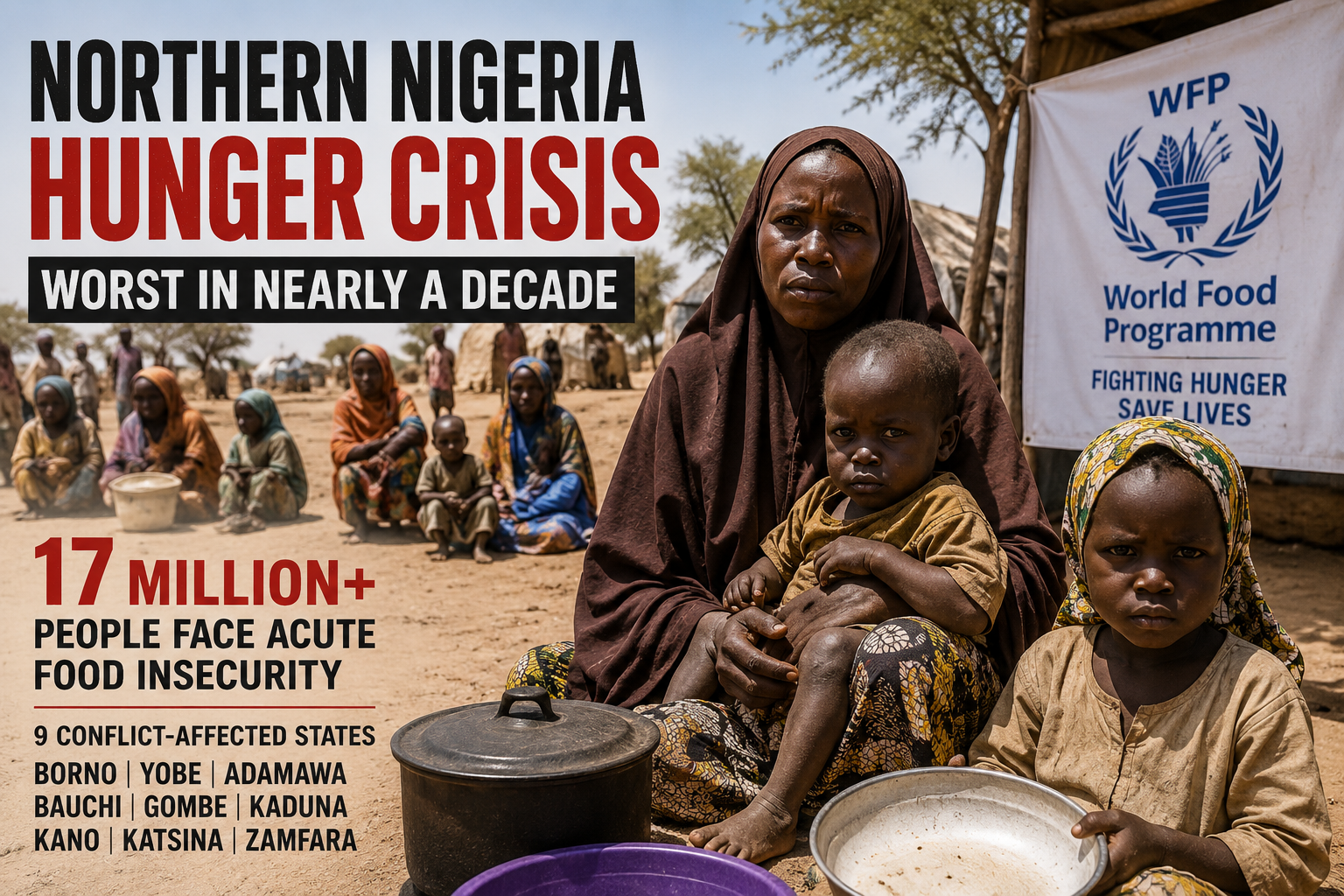
More than 17 million people across nine conflict-affected states in northern Nigeria are facing acute food insecurity, as the region experiences its worst hunger levels in nearly a decade.
The worsening crisis is being driven by persistent insecurity, displacement, disruption to farming and declining humanitarian funding.
New food security assessments show that the number of people facing crisis, emergency or catastrophic levels of hunger has risen by almost two million compared with previous projections.
Conflict Continues to Disrupt Farming
Years of insecurity have severely affected food production across parts of northern Nigeria.
Communities affected by insurgency and attacks by armed groups have been forced from their homes, while many farmers are unable to safely reach or cultivate their land.
The situation has also made it more difficult for humanitarian organisations to reach some vulnerable communities with food and nutrition assistance.
For families that depend heavily on agriculture for both food and income, losing access to farmland can quickly lead to severe hardship.
Borno Among the Hardest-Hit Areas
Borno State remains one of the areas most severely affected by the crisis.
More than three million people in the state are facing acute food insecurity, while over 750,000 are experiencing severe hunger conditions.
The state has suffered years of conflict and displacement, leaving many communities dependent on humanitarian assistance.
The crisis is becoming more severe during the lean season, the period when many households have exhausted food from previous harvests and are waiting for the next farming season to produce new supplies.
Humanitarian Funding Shortages Raise Concerns
The hunger crisis is unfolding at a time when humanitarian organisations are struggling with major funding shortages.
The World Food Programme says it can currently support fewer than half of the 1.3 million people it assisted last year across three northeastern states.
Those states have an estimated 6.2 million people facing food insecurity.
The agency says it urgently needs $89 million over the next six months to maintain food assistance, nutrition programmes and logistics operations across northern Nigeria.
Without additional funding, humanitarian organisations may be forced to further reduce assistance despite the growing number of people in need.
Hunger Could Drive Further Displacement
Beyond the immediate threat to health and survival, worsening hunger could create wider social and security consequences.
When families lose access to food and livelihoods, they may be forced to leave their communities in search of safety, assistance or employment.
Vulnerable people may also face increased risks of exploitation as families struggle to meet basic needs.
The combination of insecurity, displacement and food shortages has created a difficult cycle for many communities. Conflict prevents farming, reduced farming worsens food shortages, and hunger can force more families to leave their homes.
Millions Face an Uncertain Future
The latest figures highlight the growing humanitarian cost of insecurity in northern Nigeria.
With more than 17 million people now facing acute food insecurity across the nine affected states, the scale of the crisis will require both immediate humanitarian assistance and longer-term solutions.
Restoring security, helping displaced farmers return to their land, improving agricultural production and ensuring humanitarian organisations have sufficient funding will be critical to preventing the situation from becoming even worse.
For millions of families across northern Nigeria, access to food and the ability to rebuild their livelihoods remain urgent concerns.