Politics
Osun Election Enters Final Stretch as Adeleke and Oyebamiji Battle for Control
The Osun governorship election has entered its most intense phase, with incumbent Governor Ademola Adeleke facing a major challenge from APC candidate Bola Oyebamiji. With political tensions rising, allegations flying between the camps and new endorsements reshaping the contest, Osun voters are preparing for a closely watched election on August 15.
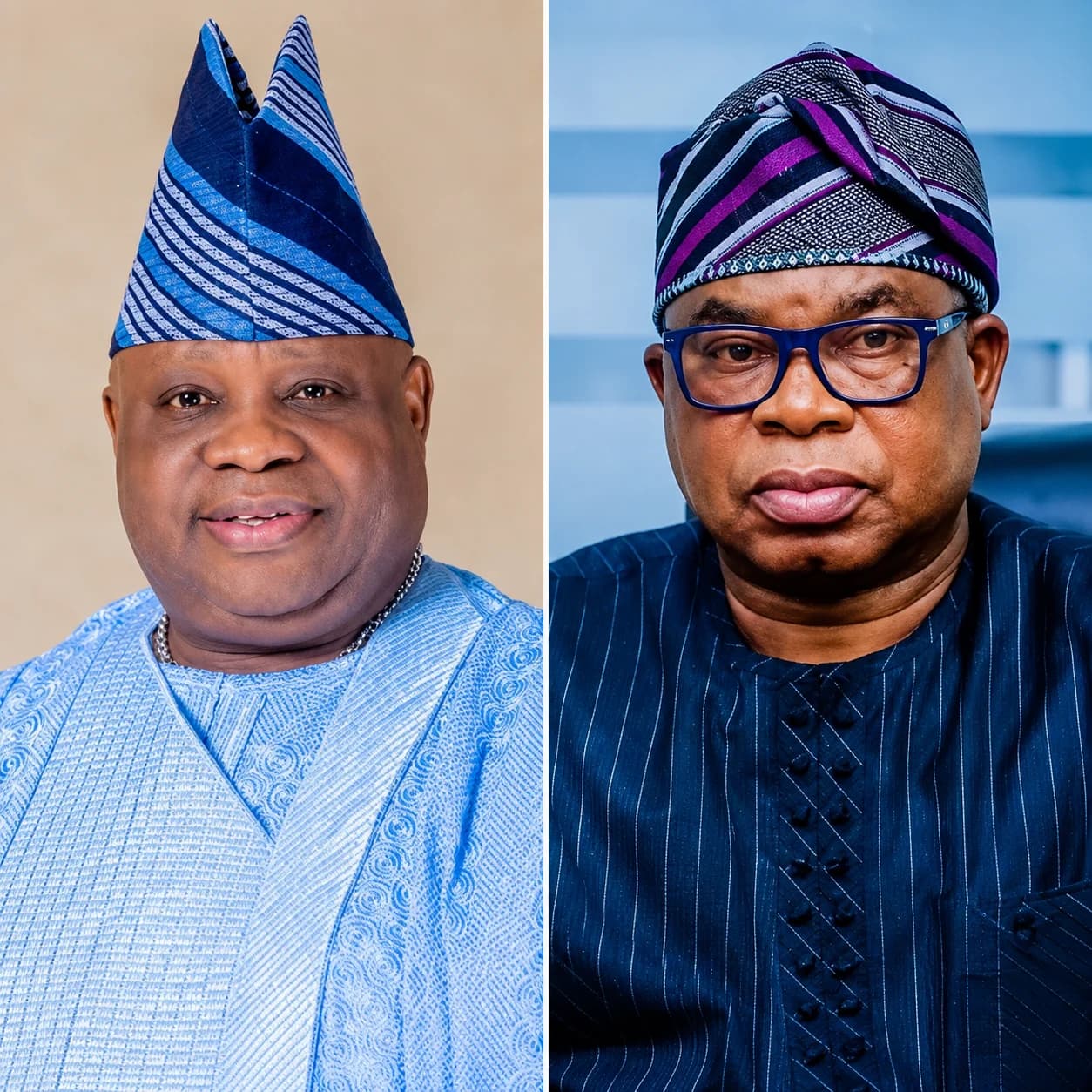
The battle for control of Osun State is entering its decisive stage as Governor Ademola Adeleke faces a determined challenge from the All Progressives Congress candidate, Asiwaju Munirudeen Bola Oyebamiji, ahead of the August 15 governorship election.
Although 14 political parties are fielding candidates, the race is increasingly being dominated by the contest between the incumbent and the APC challenger.
The election has already generated intense political rhetoric, with both camps claiming they have the momentum needed to emerge victorious.
For Adeleke, the election is a referendum on his administration and his bid for another term.
For Oyebamiji, it is an opportunity for the APC to reclaim Osun and return the party to the Government House in Osogbo.
Adeleke Wants Continuity
Adeleke is campaigning on the argument that Osun voters should give his administration another opportunity to continue its programmes.
The governor has repeatedly pointed to his administration's achievements and has expressed confidence that voters will reward his record at the polls.
His campaign has also sought to present the election as a choice between continuity and a return to what his supporters regard as the old political order.
Adeleke's incumbency gives him a major advantage: he has spent the past four years in government and can campaign directly on projects and policies implemented during his tenure.
But incumbency also comes with its own risk.
Every unresolved problem becomes part of the campaign.
Oyebamiji Wants to End Adeleke's Run
The APC's Oyebamiji is presenting himself as the candidate capable of replacing Adeleke and restoring the APC to power.
His campaign has increasingly focused on governance, security and what he describes as weaknesses in the current administration.
The APC candidate has also accused Adeleke of attempting to portray himself as a victim of political attacks.
Oyebamiji recently argued that his camp, rather than the governor, has been the victim of political violence in the state.
The accusation has added another layer of tension to an election already characterised by fierce exchanges between the two camps.
APC Says Adeleke Is Vulnerable
Former Osun governor and current Minister of Marine and Blue Economy Gboyega Oyetola has also entered the debate.
Oyetola recently warned Adeleke that his endorsement of President Bola Tinubu would not save him from defeat in the election.
The statement reflects the confidence within the APC camp that the party can overcome Adeleke's incumbency.
For the APC, the argument is increasingly centred on the idea that Osun voters will judge Adeleke on his performance rather than political alliances.
A New Endorsement for Oyebamiji
The APC campaign received another boost on Sunday after APGA governorship candidate Adesina Adeyemi-Doro withdrew from the race and endorsed Oyebamiji.
Adeyemi-Doro's withdrawal reduces the number of candidates competing directly against the two major camps and gives the APC candidate another political figure to campaign alongside him.
The significance of the endorsement will ultimately depend on whether it translates into actual votes.
In Nigerian elections, endorsements can generate headlines, but transferring an entire support base from one candidate to another is considerably more difficult.
The Social Media Battle Is Getting Intense
The political contest has also moved aggressively onto X.
Supporters of Adeleke have been highlighting the governor's record and portraying him as the candidate with the stronger connection to Osun voters.
APC supporters, meanwhile, have focused on issues including governance, security and the need for political change.
The result is a highly polarised online conversation in which supporters from both sides frequently claim that their candidate is already ahead.
But social-media enthusiasm should not be mistaken for an election result.
The real battle will be fought at polling units across the state.
Violence Has Become a Major Concern
One of the most worrying aspects of the campaign has been the repeated exchange of accusations over political violence.
Oyebamiji has accused the Adeleke camp of playing the victim, while the governor and his supporters have raised their own concerns about opposition activities.
The heightened rhetoric has increased pressure on security agencies to maintain neutrality.
The Inspector-General of Police, Olatunji Disu, recently ordered the Osun Commissioner of Police to step aside after political stakeholders raised concerns about the neutrality of the command.
The police have since introduced a new commissioner to oversee election security.
That development demonstrates just how sensitive the political environment has become.
All Eyes on Security
For many voters, the credibility of the election will depend heavily on security.
Political parties have already signed a peace accord, while INEC has warned candidates and supporters against violence and other forms of electoral malpractice.
The challenge will be ensuring that those commitments survive the intensity of election day.
Osun has witnessed politically charged elections before, and authorities will be under enormous pressure to prevent clashes at polling locations and during the collation of results.
The Federal Factor
Another major issue is the role of the Federal Government.
The APC controls the presidency, giving Oyebamiji's campaign access to the broader political machinery of the ruling party.
That has led some observers to frame the election as more than a contest between two Osun politicians.
It is also being viewed as a test of whether the APC can use its national political strength to regain control of the state.
Adeleke, however, has the advantage of being the sitting governor and has built his own political network within Osun.
The election will therefore test both sides' ability to mobilise voters.
What Are Voters Actually Thinking?
This may be the biggest unanswered question.
Political rallies can create the impression that a candidate has overwhelming support.
Social media can create another impression.
But Osun voters will ultimately decide based on issues that affect their daily lives.
Jobs.
Security.
Healthcare.
Education.
Roads.
Workers' salaries.
Local development.
The cost of living.
And, perhaps most importantly, whether voters believe the government has delivered enough to deserve another term.
A Tight Race With No Guaranteed Winner
The presence of multiple candidates means the election cannot simply be reduced to a two-person contest.
However, the political energy surrounding Adeleke and Oyebamiji has made them the dominant figures in the campaign.
The question is whether one of the other candidates can pull enough votes away from the two leading camps to fundamentally alter the result.
For now, the battle remains difficult to predict with certainty.
The Bigger Stakes
The outcome will have consequences beyond Osun Government House.
A victory for Adeleke would strengthen the argument that opposition-controlled states can withstand the political power of the APC at the federal level.
An APC victory would demonstrate that the ruling party can reclaim ground in states where it has previously suffered major defeats.
That makes Osun an important political test ahead of the wider 2027 political cycle.
The Bottom Line
The Osun governorship election is entering its final and most consequential phase, with Ademola Adeleke and Bola Oyebamiji emerging as the central figures in a fiercely contested race.
Adeleke wants voters to reward his administration with another term.
Oyebamiji wants to convince them that Osun needs a change of leadership.
Meanwhile, allegations of political violence, disputes over police neutrality and a growing series of endorsements have made the election far more than an ordinary state contest.
With voting scheduled for August 15, the biggest question is now no longer who is making the most noise online.
It is who can actually get Osun voters to the polling units.
And on election day, it will be the ballot — not X, campaign rallies or political predictions — that settles the battle.
Tags
EDITORIAL TEAM
About Talk Ya True Editorial Team
The Talk Ya True Editorial Team is an independent newsroom committed to factual reporting, responsible journalism and thoughtful analysis across Africa and around the world.
Related Articles

Stay Informed
Get the biggest stories from Nigeria, Africa and around the world.
Free news updates. Unsubscribe anytime.
By subscribing, you agree to receive free news updates from Talk Ya True. You can unsubscribe at any time.