World
Spain's 'Open Borders' Debate: What Actually Happened and What's Happening Now
Claims that Spain has "opened its borders" have spread rapidly online following a dramatic surge of migrants entering the Spanish enclave of Ceuta from Morocco. But the reality is more complex, involving immigration reforms, legal rulings, and an unprecedented border crisis.
Did Spain Actually Open Its Borders?
No.
Despite viral social media posts suggesting Spain has completely opened its borders, the country has not abolished its border controls or immigration laws.
Instead, Spain has introduced reforms aimed at regularising certain undocumented migrants who were already living in the country, while continuing to police its external borders. The government has also maintained its commitment to international asylum obligations.
However, recent events at the Spanish enclave of Ceuta, on Morocco's northern coast, have reignited the debate over immigration and border security.
What Happened at Ceuta?
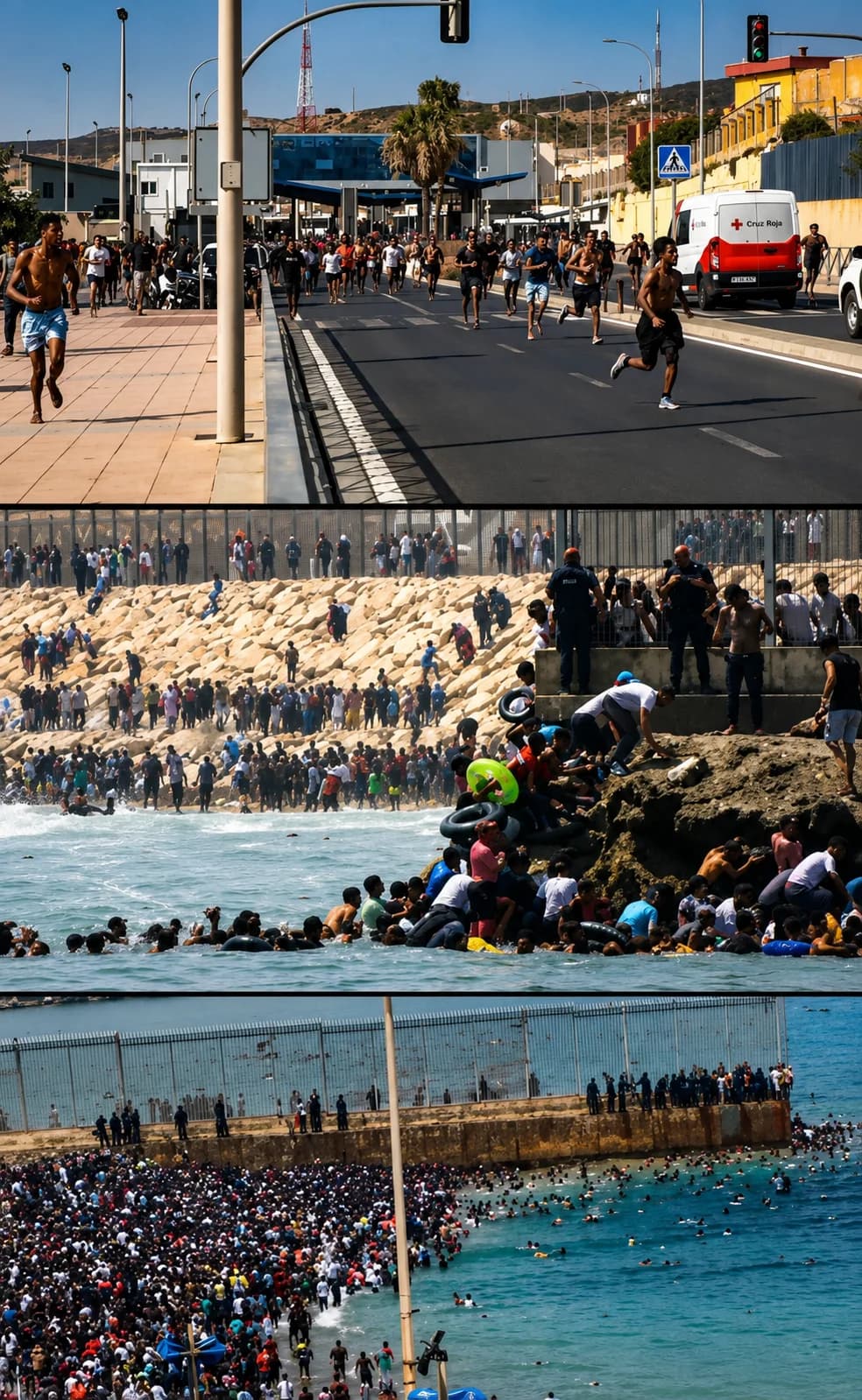
In one of the largest migration surges in recent European history, tens of thousands of migrants crossed from Morocco into the Spanish territory of Ceuta over a very short period.
Many entered by swimming around coastal barriers, climbing fences, or passing through overwhelmed border checkpoints. The sudden influx stretched local resources beyond capacity, leaving authorities scrambling to provide food, shelter, and medical assistance.
The humanitarian situation quickly deteriorated, with dozens of deaths reported during the chaotic crossings. Spain responded by deploying additional police and military personnel to restore order.
Why Did So Many People Cross?
Several factors appear to have contributed to the sudden influx.
Spanish authorities have pointed to misinformation spread by human-smuggling networks, which allegedly convinced many migrants they would be allowed to remain in Spain.
The crisis also coincided with political debate over Spain's immigration reforms and a court ruling affecting how some migrants arriving by sea could be processed, leading to confusion about who could legally stay.
At the same time, economic hardship, unemployment, and instability in parts of Africa continue to drive many people to attempt dangerous journeys into Europe.
How Is Spain Responding?
The Spanish government insists that its borders remain under control and has rejected claims that it is operating an "open border" policy.
Prime Minister Pedro Sánchez described the mass crossings as a serious breach of Spain's territorial integrity.
Spain has worked closely with Moroccan authorities to return many migrants voluntarily or through legal repatriation procedures. Additional security personnel have also been deployed to Ceuta and nearby Melilla to prevent further mass crossings.
Has the Situation Improved?
According to Spanish officials, the immediate crisis has begun to ease.
Authorities say that around half of those who crossed into Ceuta have already returned to Morocco, many voluntarily after finding limited food, shelter, and employment opportunities in the enclave.
Border controls have since been reinforced, and cooperation between Spain and Morocco has helped reduce the pace of new arrivals.
Immigration Remains a Divisive Issue Across Europe
The events in Ceuta have intensified political debate across Europe.
Supporters of Spain's migration policies argue that humanitarian obligations must be balanced with legal pathways for migration and the need for workers in sectors facing labour shortages.
Critics, however, contend that more generous immigration policies may encourage irregular migration and place additional pressure on border communities.
The crisis has also prompted renewed discussions within the European Union about strengthening external border security while ensuring that asylum seekers are treated in accordance with international law.
The Bottom Line
Spain has not declared an open-border policy, but recent immigration reforms and a dramatic surge of crossings into Ceuta have fuelled that perception in parts of the media and on social platforms.
The events highlight the complex challenge facing European governments: balancing humanitarian responsibilities, border security, and domestic political pressures.
As migration pressures continue across the Mediterranean, Spain's response is likely to remain at the centre of Europe's immigration debate for months to come.
EDITORIAL TEAM
About Talk Ya True Editorial Team
The Talk Ya True Editorial Team is an independent newsroom committed to factual reporting, responsible journalism and thoughtful analysis across Africa and around the world.

Stay Informed
Get the biggest stories from Nigeria, Africa and around the world.
Free news updates. Unsubscribe anytime.
By subscribing, you agree to receive free news updates from Talk Ya True. You can unsubscribe at any time.