Politics
Tinubu Pushes State Police Plan Forward as Nigeria Searches for Answer to Insecurity
President Bola Tinubu has inaugurated a Presidential Working Group to develop the legal framework for state police, moving Nigeria closer to one of the biggest changes in its security system in decades. Supporters see local policing as a necessary response to insecurity, while critics fear that powerful governors could turn state police forces into political weapons.
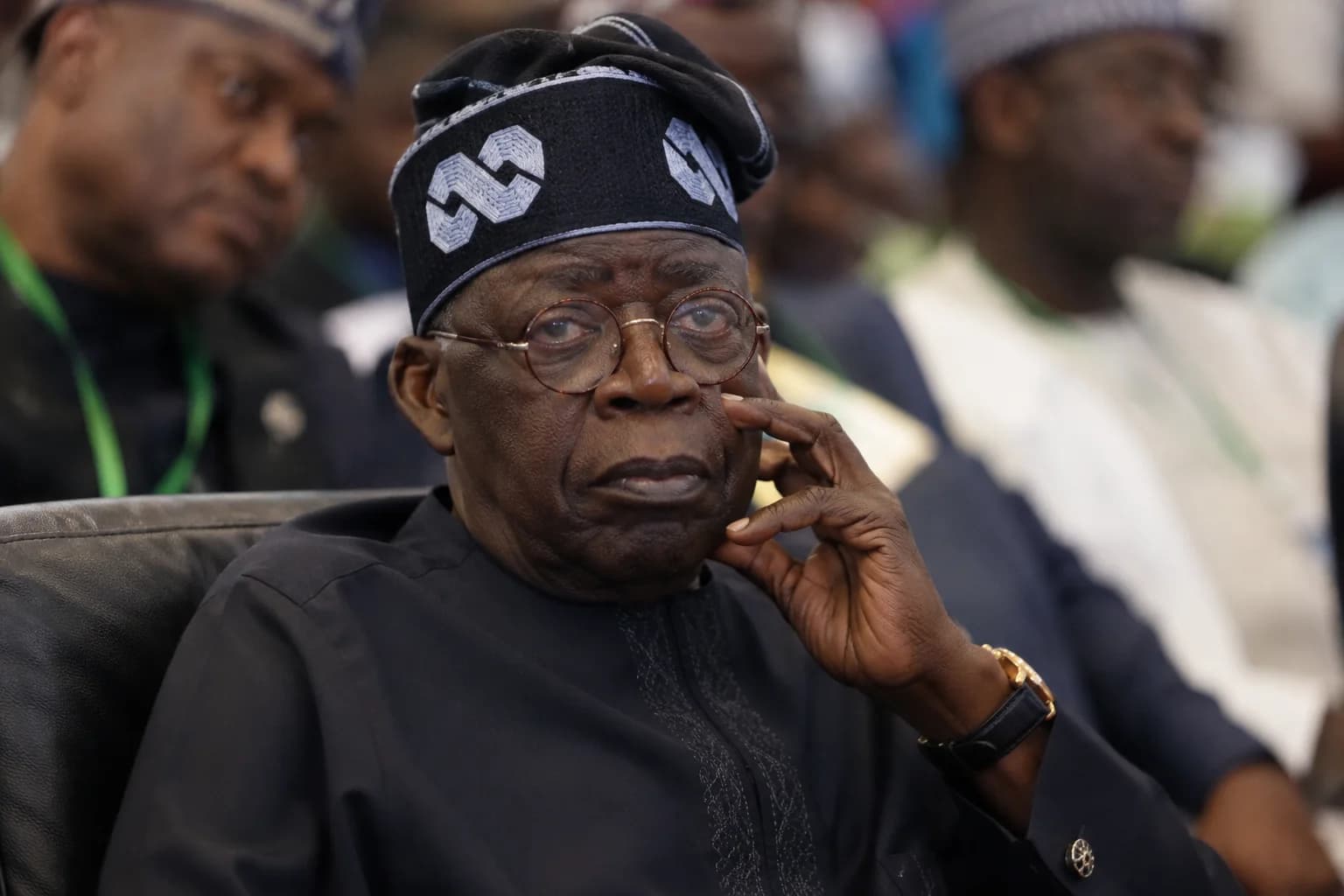
President Bola Tinubu has taken another major step towards the establishment of state police in Nigeria, inaugurating a Presidential Working Group tasked with preparing the legal framework for a new policing system across the country.
The development moves Nigeria closer to what could become one of the most significant transformations of its internal security structure in decades.
The proposed system would create a dual policing arrangement consisting of a Federal Police Service and separate police services for Nigeria’s 36 states.
For years, calls for state police have grown louder as Nigeria struggles with kidnapping, banditry, terrorism, communal violence, armed robbery and other security challenges across different regions.
Supporters of decentralised policing argue that Nigeria is too large, too diverse and too complex to depend almost entirely on a centrally controlled police system.
Critics, however, fear that state governors could abuse control of local police forces, using them against political opponents, journalists, protesters and other perceived enemies.
The debate therefore presents Nigeria with a difficult question.
Can state police bring security closer to communities without bringing political oppression closer to citizens?
That is the challenge the new policing framework must answer.
Nigeria Moves Closer to a Dual Policing System
The Presidential Working Group on the National Policing Bill was inaugurated at the Presidential Villa in Abuja.
President Tinubu was represented at the inauguration by his Chief of Staff, Femi Gbajabiamila.
The development follows progress on the Constitution Alteration (State Police) Bill, 2026, which proposes a new structure consisting of federal and state police services.
However, changing the Constitution alone will not be enough to make state police operational.
The proposed National Policing Bill is expected to provide the detailed rules governing how the new system would actually work.
According to the Presidency, the legislation is expected to address issues including minimum policing standards, certification of states that are ready to establish their own police services, coordination between federal and state authorities, accountability, human rights protections and financial requirements.
The working group is expected to produce an implementation-ready draft bill for transmission to the National Assembly.
If the process succeeds, Nigeria could be heading towards the biggest restructuring of its policing system in generations.
Why the State Police Debate Refuses to Disappear
The argument for state police is not new.
For years, governors, regional organisations, political leaders, security experts and civil society groups have debated whether Nigeria’s centralised policing system is capable of protecting a country of enormous geographical and demographic complexity.
Nigeria’s security challenges are not identical.
The security problems facing communities in Borno are different from those affecting parts of Zamfara.
Kidnapping networks operating around highways may require different responses from communal conflicts in rural areas.
Urban crime in Lagos creates different policing demands from security threats facing remote border communities.
Yet the country largely depends on a police structure controlled from the federal level.
Supporters of state police argue that officers recruited locally would better understand the communities they serve.
They may understand local languages.
They may know the geography.
They may recognise community structures and traditional institutions.
They may also have better access to local intelligence.
In security operations, information can be as important as weapons.
A police officer who understands a community may be better positioned to identify unusual activity, build trust with residents and gather intelligence before a threat becomes a tragedy.
The Central Question: Will State Police Reduce Insecurity?
Nigeria's security crisis has become one of the biggest challenges facing the country.
Communities in different regions continue to experience various forms of violence and criminality.
In some areas, farmers fear travelling to their fields.
Motorists worry about kidnapping on highways.
Rural communities struggle with armed attacks.
Businesses spend significant amounts on private security.
Families raise ransom money after relatives are abducted.
Security has become not only a government problem but also an economic and social burden carried directly by ordinary citizens.
Against this background, supporters of state police argue that the existing structure has reached its limits.
Their position is simple: security should be closer to the people.
A governor who is described as the chief security officer of a state should have meaningful security institutions capable of responding to local threats.
But creating new police forces does not automatically create security.
A poorly trained, badly funded and politically controlled state police service could create new problems while failing to solve existing ones.
The success of state police will therefore depend on design, not simply creation.
The Fear of Political Abuse Is Real
The strongest argument against state police is the fear that governors could turn police forces into political weapons.
Nigeria's political history gives critics reasons to be cautious.
Elections in the country are often highly competitive and sometimes violent.
Political disagreements can become personal.
State institutions can come under pressure during electoral contests.
Opposition politicians frequently accuse governments of using public institutions against rivals.
In such an environment, giving governors influence over armed police services creates obvious risks.
What happens if a governor orders the arrest of opposition campaign organisers before an election?
What happens if state police officers are deployed to disrupt a peaceful protest?
What happens if journalists investigating a state government are harassed?
What happens if a governor refuses to provide security to political opponents?
What happens if state police forces become loyal to individuals rather than the Constitution?
These concerns cannot be dismissed as excuses for maintaining the existing system.
They must be answered directly in the law.
If Nigeria creates state police without strong safeguards, the country could decentralise not only security but also abuse of power.
Human Rights Safeguards Must Be More Than Words
The proposed National Policing Bill is expected to include human rights safeguards.
That is essential.
But writing protections into a law is only the beginning.
Nigeria already has laws protecting citizens from unlawful arrest, torture and other abuses.
The bigger challenge is enforcement.
A credible state police system would require independent mechanisms for investigating complaints against officers.
Citizens must be able to report abuse without fearing retaliation.
Officers accused of serious misconduct must face transparent investigation.
There must be clear limits on the power of governors and political officeholders to direct operational policing.
Recruitment and promotion systems should be based on clear professional standards rather than political loyalty.
Command structures must be carefully designed.
The question of who appoints and removes state police commissioners or chiefs will be particularly important.
If one political officeholder has complete control over appointment, funding, promotion and removal, genuine police independence may be difficult to achieve.
State Readiness Certification Could Be Critical
One important part of the proposed framework is the idea of state readiness certification.
Not every state has the same financial capacity.
A professional police service is expensive.
Officers need salaries.
They need training.
They need vehicles, communication systems, forensic capacity, stations, protective equipment and technology.
A state that struggles to pay existing workers cannot simply announce a new police force and expect it to function professionally.
Poorly paid security personnel with weapons and coercive powers can become a serious threat to society.
The readiness process must therefore be rigorous.
States should demonstrate that they have sustainable funding, professional recruitment systems, training capacity, accountability structures and operational plans before being allowed to establish police services.
Political pressure must not weaken the certification process.
State police should not become another status symbol for governors.
It must be a professional security institution.
Who Pays for State Police?
The financial question may become one of the biggest obstacles to implementation.
Nigeria’s states have vastly different revenue capacities.
Some generate significant internal revenue.
Others remain heavily dependent on allocations from the Federation Account.
If states are responsible for funding their own police forces, wealthier states may build better-equipped services while poorer states struggle.
That could create unequal levels of security across the country.
A citizen's right to protection should not depend entirely on the wealth of the state in which they live.
The National Policing Bill will therefore need to confront difficult financial questions.
Will the Federal Government provide support?
Will states receive dedicated security funding?
What accountability systems will govern the money?
How will Nigeria prevent security budgets from becoming another channel for waste and corruption?
These questions must be answered before the system becomes operational.
Federal and State Police Must Know Who Is in Charge
A dual policing system also creates the possibility of conflict between federal and state authorities.
Imagine a politically sensitive investigation involving a powerful state official.
What happens if the federal police are investigating while the state police claim jurisdiction?
What happens when officers from two services receive conflicting instructions?
Who leads major operations involving terrorism, kidnapping networks or criminals operating across state borders?
How will intelligence be shared?
What happens when a suspect commits a crime in one state and escapes into another?
These are not minor administrative questions.
Poorly defined responsibilities could create dangerous confusion.
The National Policing Bill must clearly establish jurisdiction, command relationships, information-sharing procedures and mechanisms for resolving disputes.
Nigeria does not need 37 police systems working against one another.
It needs a coordinated security network.
Local Knowledge Could Become State Police’s Greatest Strength
Despite the risks, the argument for local policing remains powerful.
Many security experts have repeatedly emphasised the importance of intelligence-led policing.
Local officers can potentially develop deeper relationships with communities than personnel who are regularly transferred between distant parts of the country.
An officer who speaks the local language and understands the environment may find it easier to communicate with residents.
Community trust can help security agencies identify criminal networks, suspicious movements and emerging conflicts.
However, local recruitment also creates risks.
Officers may become involved in local ethnic, religious, family or political disputes.
That is why training and professional standards will be essential.
Local knowledge must strengthen policing without turning police officers into participants in community rivalries.
The system must combine local understanding with national professional standards.
Nigeria Must Avoid Creating 36 Private Armies
The worst possible outcome of the state police project would be the creation of 36 forces personally loyal to governors.
That would not be police reform.
It would be the multiplication of political power backed by weapons.
State police officers must serve the law, not the political party controlling a Government House.
Their oath must be to the Constitution.
Their careers must not depend on campaigning for governors.
Their operations during elections must be governed by clear rules and independent oversight.
Opposition parties must have confidence that state police will protect their rallies rather than disrupt them.
Journalists must be able to report critically without fearing arbitrary detention.
Citizens must be able to protest peacefully.
These are the tests that will determine whether state police strengthens democracy or weakens it.
A Historic Opportunity That Nigeria Cannot Afford to Waste
President Tinubu's move to advance the National Policing Bill creates a historic opportunity.
Nigeria's security system clearly needs reform.
The current arrangement has struggled to respond effectively to the scale and variety of threats facing the country.
Doing nothing is not a serious option.
But reform must be done carefully.
State police could improve intelligence gathering, response times and community trust.
It could allow security strategies to reflect local realities.
It could reduce the distance between communities and those responsible for protecting them.
But without strong safeguards, it could also create political police forces, deepen regional inequalities and introduce new conflicts between levels of government.
Nigeria therefore faces a choice larger than whether to create state police.
The real choice is what kind of state police to create.
The Difference Between Reform and Disaster Will Be in the Details
Nigeria has a habit of producing ambitious policies that fail during implementation.
The state police project cannot be allowed to follow that pattern.
The legislation must be detailed.
The funding must be sustainable.
The recruitment process must be professional.
The training must be serious.
The accountability system must be independent.
The human rights protections must be enforceable.
And the limits of political control must be unmistakably clear.
The country does not need another security institution that citizens fear.
It needs police officers who know the communities they protect and communities that trust the officers policing them.
That will not be achieved by changing uniforms or creating new command structures.
It will require a new culture of policing.
State Police Could Change Nigeria Forever
If successfully implemented, state police could fundamentally change the relationship between Nigerians and law enforcement.
It could bring security closer to communities.
It could improve intelligence gathering.
It could allow faster responses to local threats.
It could make governors more directly accountable for security failures within their states.
But if badly designed, the consequences could be equally historic.
Nigeria could end up with powerful governors controlling armed institutions, unequal policing between rich and poor states and new conflicts between federal and state security authorities.
That is why the work of the Presidential Working Group matters.
The country cannot afford a rushed law written simply to satisfy political demands.
Nigeria needs a policing framework capable of surviving not only good leaders but bad ones.
Laws should not be designed on the assumption that every future governor will be responsible, democratic and respectful of human rights.
They must be strong enough to restrain those who are not.
For decades, Nigerians have asked whether state police could help solve the country's security crisis.
The country may finally be moving towards an answer.
But the success of this historic reform will depend on one thing above all others:
Whether Nigeria creates police forces that belong to the states—or police forces that belong to the people.
Stay Informed
Get the biggest stories from Nigeria, Africa and around the world.
Free news updates. Unsubscribe anytime.
By subscribing, you agree to receive free news updates from Talk Ya True. You can unsubscribe at any time.