Business
World Bank Backs Nigeria’s 2026–2032 Growth Plan With $1.25bn Financing
The World Bank Group has approved a new long-term partnership strategy for Nigeria, backed by $1.25 billion in financing aimed at creating jobs, attracting private investment and expanding access to energy, digital and agricultural services.
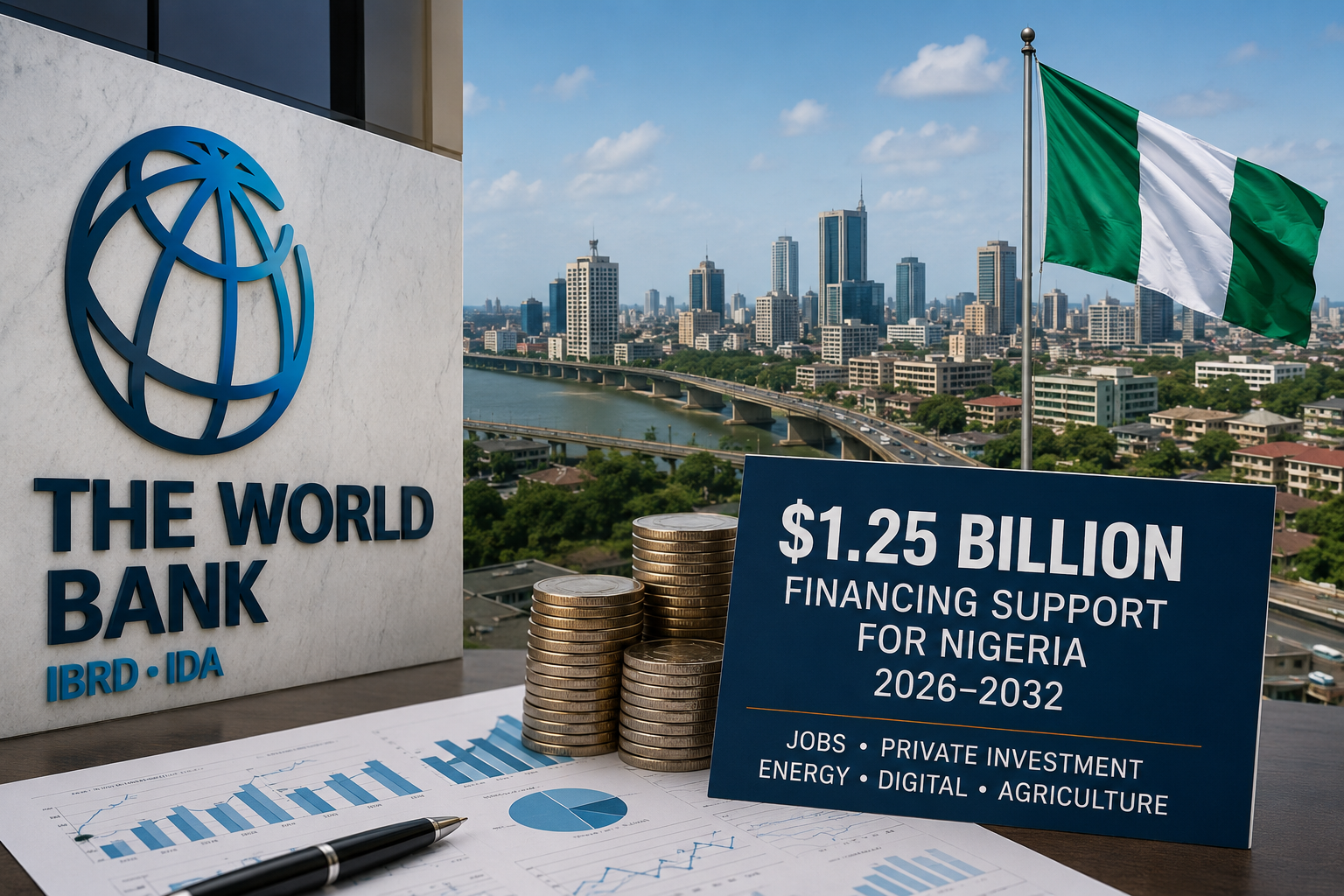
The World Bank Group has approved a new partnership strategy for Nigeria covering the period from 2026 to 2032, alongside $1.25 billion in financing to support job creation and economic growth.
The new framework is expected to focus on strengthening private sector investment and expanding access to essential services in areas including energy, digital technology and agriculture.
The initiative comes as Nigeria continues efforts to strengthen its economy, attract investment and create more employment opportunities for its growing population.
Focus on Jobs and Private Investment
A major objective of the partnership is to create conditions that allow businesses to grow and generate employment.
The strategy places private investment at the centre of Nigeria’s development plans, with efforts expected to focus on reducing obstacles to business growth and improving access to infrastructure and services.
Nigeria has one of the largest and youngest populations in Africa, making job creation a major economic priority. Expanding opportunities for businesses and entrepreneurs will be important in ensuring that economic growth translates into improved livelihoods.
Energy and Digital Access Among Key Priorities
The partnership will also focus on improving access to energy and digital services.
Reliable electricity remains a major challenge for many Nigerian households and businesses. Limited access to stable power supply increases operating costs and affects productivity across different sectors of the economy.
Greater digital access is also expected to play an important role in expanding economic opportunities, supporting innovation and helping more Nigerians participate in the digital economy.
Agriculture Expected to Benefit
Agriculture is another important area covered by the strategy.
Millions of Nigerians depend on farming and related activities for their livelihoods, but the sector continues to face challenges including limited access to finance, insecurity, poor infrastructure and difficulties moving agricultural products to markets.
Support for agricultural services could help improve productivity, strengthen food systems and create more economic opportunities in rural communities.
Long-Term Economic Partnership
The 2026–2032 strategy represents a long-term approach to cooperation between Nigeria and the World Bank Group.
Rather than focusing only on short-term interventions, the programme is expected to support broader economic development by encouraging investment, improving access to important services and creating conditions for sustainable job growth.
The success of the strategy will depend on implementation and whether planned investments translate into visible improvements for businesses, workers and communities across the country.
For many Nigerians, the key question will be whether the new financing and development strategy can help create real employment opportunities and improve access to services that directly affect everyday life.