Politics
APC Ends Months of Speculation, Retains Shettima as Tinubu’s Running Mate for 2027
After months of intense speculation that President Bola Tinubu might replace Vice President Kashim Shettima on the APC's 2027 presidential ticket, the ruling party has moved to end the rumours by reaffirming Shettima as Tinubu's running mate. The decision is more than a personnel announcement - it is a political message about stability, party unity and the strategy the APC believes will deliver another electoral victory in 2027.
For months, Abuja was consumed by one political question.
Would President Bola Tinubu keep Kashim Shettima as his running mate in 2027?
Every week seemed to produce a new rumour.
One day, it was said the Vice President would be replaced.
The next day, another northern politician's name emerged.
Political commentators debated.
Party supporters argued.
Opposition figures watched closely.
Social media exploded with speculation.
Now, the ruling All Progressives Congress (APC) has effectively drawn a line under the debate.
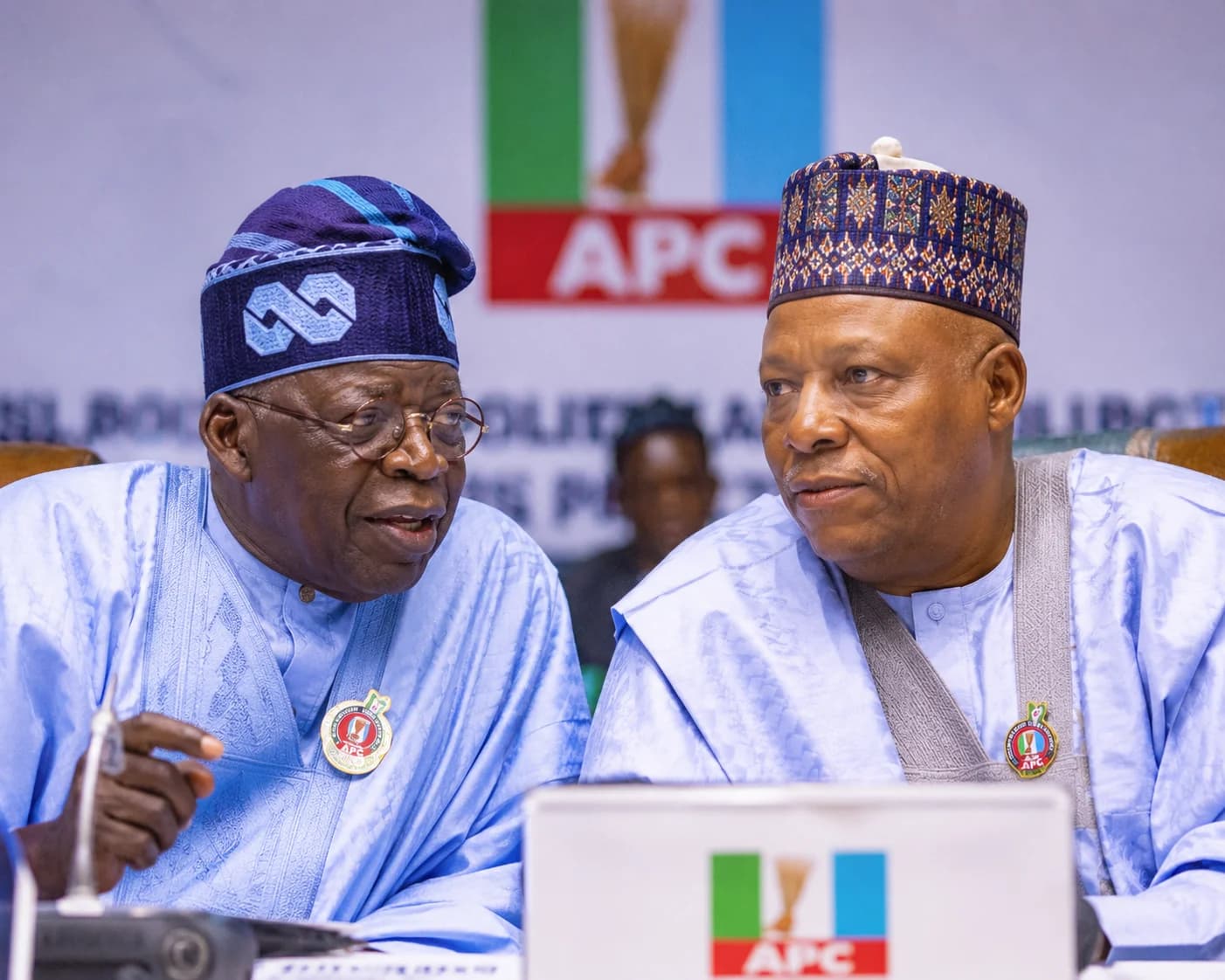
The party has reaffirmed Kashim Shettima as President Tinubu's running mate ahead of the 2027 presidential election, bringing months of uncertainty to an end.
But this announcement is about much more than one politician.
It is about strategy.
Power.
Regional balance.
Party unity.
And the beginning of what promises to be Nigeria's fiercest presidential election in years.
The Rumours Would Not Go Away
The speculation did not emerge from nowhere.
For months, different political interests floated reports suggesting that Tinubu could replace Shettima with another northern politician.
Several names circulated publicly.
Analysts argued over religious balance.
Others focused on electoral mathematics.
Some believed changing the vice-presidential candidate would strengthen the APC.
Others warned it could fracture the ruling party.
Earlier this year, the APC publicly dismissed those reports, calling them "speculative, untrue and utterly baseless."
Despite those denials, the rumours continued.
That is why the latest confirmation carries political weight.
It is designed to remove uncertainty.
Why Shettima Matters
A vice-presidential candidate is never chosen by accident.
Every presidential ticket sends a message.
Shettima brings several political advantages to the APC.
He is a former governor of Borno State.
He has experience at both state and federal levels.
He remains an influential political figure in northern Nigeria.
He also represents continuity.
Changing him now could have created unnecessary internal battles within the ruling party.
Keeping him signals stability.
Whether that strategy succeeds will ultimately be decided by voters.
Tinubu Is Choosing Stability Over Experimentation
Election years often tempt political parties into dramatic decisions.
Replace one candidate.
Change another.
Create headlines.
Generate excitement.
Tinubu appears to be taking a different approach.
Instead of redesigning his presidential ticket, he is presenting continuity.
That decision suggests confidence.
The APC appears to believe its strongest message is consistency rather than reinvention.
It also avoids opening new internal rivalries over the vice-presidential slot.
Anyone chosen to replace Shettima would inevitably create winners and losers inside the party.
By retaining him, Tinubu avoids that immediate fight.
The APC Wants to Project Unity
Politics is as much about perception as reality.
A divided party rarely wins elections comfortably.
The APC understands this.
Retaining Shettima sends a signal to party members that the leadership wants stability rather than prolonged internal competition.
That does not mean every disagreement inside the party has disappeared.
Far from it.
Every major political party contains competing interests.
Governors.
Senators.
Ministers.
Former governors.
Regional leaders.
Youth groups.
Each has expectations.
The challenge is keeping those interests aligned long enough to fight a national election.
The Shettima decision appears designed to strengthen that effort.
The Opposition Will Read This Differently
While APC supporters celebrate continuity, opposition parties will interpret the announcement in another way.
They are likely to argue that changing the running mate was never the country's biggest issue.
Their message will remain focused on the economy.
The cost of living.
Food inflation.
Security.
Youth unemployment.
Electricity.
Healthcare.
From the opposition's perspective, retaining or replacing the Vice President changes none of those realities.
That argument will become one of the defining themes of the 2027 campaign.
The APC will ask Nigerians to judge continuity.
The opposition will ask Nigerians whether continuity is what they actually want.
Elections Are Won Beyond Abuja
Political insiders often become obsessed with elite calculations.
But Nigerian elections are not decided only in conference halls.
They are decided in villages.
Markets.
Universities.
Churches.
Mosques.
Motor parks.
Polling units.
The APC's leadership clearly believes its existing ticket remains capable of connecting with those voters.
Whether ordinary Nigerians agree will become clear only when campaigns intensify.
The Economy Will Overshadow Every Political Calculation
No matter how carefully political tickets are assembled, one issue will dominate 2027.
The economy.
Many Nigerians continue to struggle with rising food prices.
Transport costs.
Rent.
Electricity bills.
Business expenses.
These daily realities matter more to many voters than political permutations.
The APC knows this.
That is why retaining Shettima alone cannot guarantee electoral success.
The government must persuade voters that its economic reforms are beginning to produce lasting results.
The opposition, meanwhile, must convince Nigerians that it has a credible alternative.
Regional Balance Still Matters
Nigeria's politics has always involved careful regional balancing.
North and South.
Christian and Muslim.
Urban and rural.
These considerations continue to influence political strategy.
Retaining Shettima preserves the regional formula that brought Tinubu and the APC victory in the last presidential election.
Changing that formula could have introduced fresh political uncertainty.
The party has clearly decided not to take that risk.
Experience Versus Change
Every election eventually becomes a contest between two competing ideas.
Experience.
Or change.
The APC will present Tinubu and Shettima as experienced leaders who deserve more time to complete reforms.
The opposition will argue that Nigeria needs new leadership and a different direction.
Neither argument wins automatically.
Voters will compare promises with lived experience.
The Campaign Has Already Begun
Official campaign periods may still be ahead.
Politically, however, Nigeria has already entered campaign season.
Every policy announcement.
Every political rally.
Every defection.
Every coalition meeting.
Every endorsement.
Every economic statistic.
Everything is now being viewed through the lens of 2027.
Retaining Shettima is therefore not simply an administrative announcement.
It is an early campaign message.
The APC is telling Nigerians:
We are staying together.
Now the harder task begins.
Convincing voters to stay with them.
The Biggest Battle Lies Ahead
The speculation is over.
The ticket is clearer.
But the real contest has only just begun.
President Tinubu and Vice President Shettima will face an electorate shaped by economic pressure, security concerns and growing political competition.
The opposition is attempting to unite.
The ruling party is strengthening its grassroots structures.
Both sides understand that 2027 could become one of Nigeria's most fiercely contested elections in recent history.
For the APC, retaining Shettima removes one internal distraction.
Now the party must confront the larger challenge.
Winning the confidence of millions of Nigerians who will ultimately decide whether continuity deserves another four years.
The rumours may have ended.
The campaign has not.
It is only beginning.
Stay Informed
Get the biggest stories from Nigeria, Africa and around the world.
Free news updates. Unsubscribe anytime.
By subscribing, you agree to receive free news updates from Talk Ya True. You can unsubscribe at any time.