Africa
“Don’t Wait for Orders, Shoot Terrorists”: Defence Minister Gives Troops Tough New Directive
Nigeria’s Defence Minister, Gen. Christopher Musa, has told deployed security personnel not to wait for further orders when confronting identified terrorists and armed bandits, warning that operatives who refuse to engage criminals under the excuse of awaiting instructions could be treated as collaborators. The unusually forceful directive comes as Nigeria battles kidnappings, banditry and terrorism across several regions.
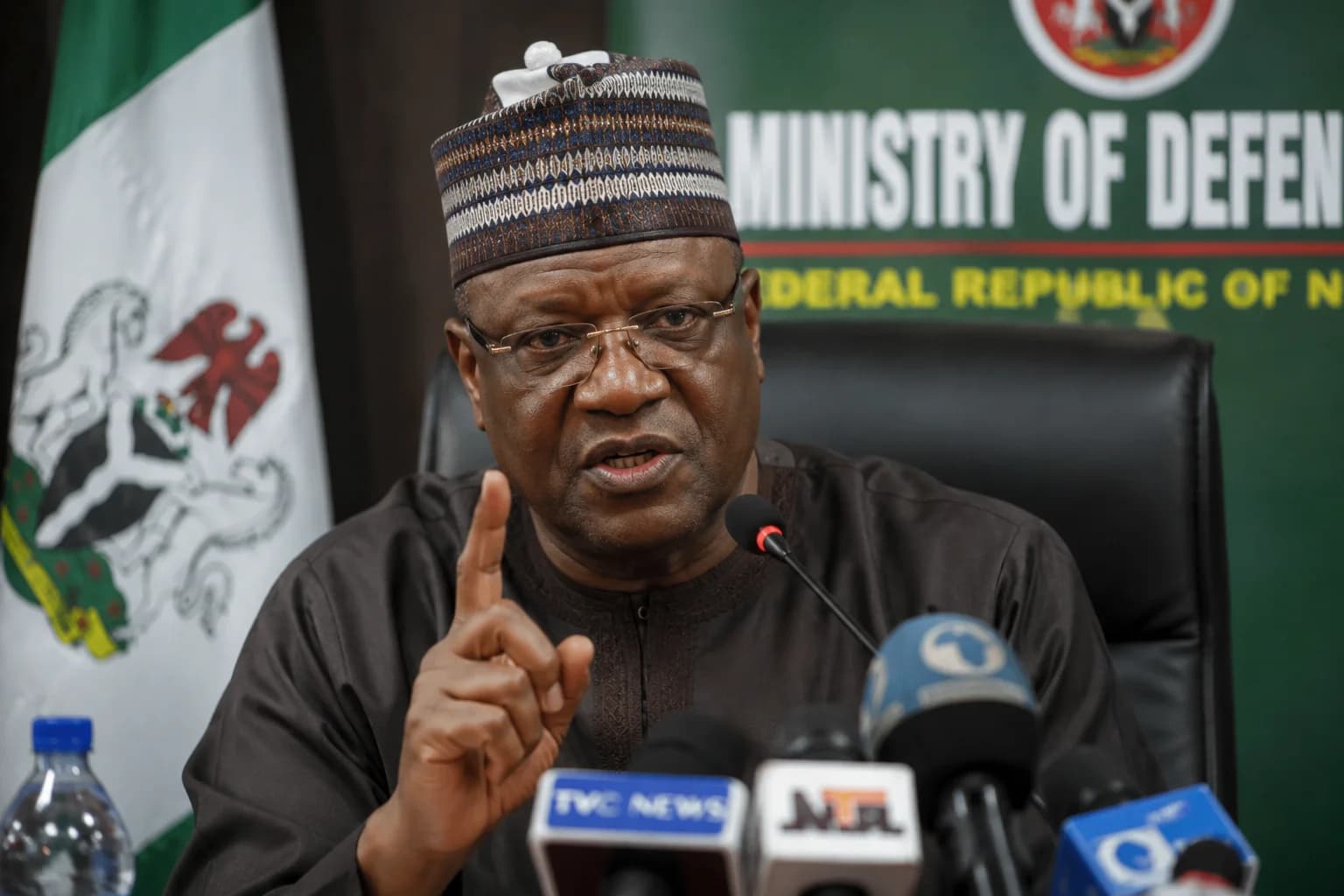
Nigeria’s Defence Minister, Gen. Christopher Musa, has delivered one of the strongest public messages yet to security personnel fighting terrorism and armed banditry.
His instruction was direct.
Do not hesitate.
Do not stand by.
And do not use the absence of further orders as an excuse for failing to confront identified terrorists and bandits.
Speaking in Sokoto on Wednesday, Musa told deployed security personnel that they should act against terrorists and armed bandits without waiting for additional authorisation from superior officers.
He went further, warning that an operative who refuses to engage such criminals under the excuse of waiting for orders could be treated as collaborating with them.
The statement immediately became one of Nigeria’s biggest security stories.
For a country that has spent years fighting Boko Haram insurgents, armed bandit groups, kidnappers and other violent networks, the Defence Minister’s words will be welcomed by Nigerians who believe the security forces have been too slow or restrained in responding to armed threats.
But the statement also raises serious questions.
What exactly should happen when soldiers encounter suspected terrorists?
How will targets be positively identified?
How does the directive interact with military rules of engagement?
And can greater aggression on the battlefield be combined with the intelligence, discipline and accountability necessary to protect innocent civilians?
Nigeria wants its security forces to defeat terrorism.
The challenge is ensuring that decisiveness and professionalism move together.
Musa Tells Troops to Act Without Delay
The Defence Minister made the remarks during the inauguration of new security assets procured by the Sokoto State Government to strengthen operations against insecurity.
The assets were reported to include 62 operational vehicles and other equipment valued at about ₦27.1 billion.
Addressing security personnel, Musa said:
“Once you are deployed, do not wait for any order from anybody to shoot any bandit or any terrorist.”
He then warned that personnel who refused to act against such armed criminals while claiming to be waiting for orders would be treated as collaborators.
The language was unusually uncompromising.
The message appears intended to eliminate hesitation among security personnel already deployed in active operations.
In Musa’s framing, deployment itself carries a responsibility to act when forces encounter terrorists and armed bandits.
For communities that have repeatedly complained about delayed security responses, the message may sound like a long-awaited change in attitude.
But whether the speech translates into improved security will depend on much more than tough language.
Nigerians Have Heard Promises Before
Nigeria’s insecurity crisis has survived many speeches.
Successive governments have announced operations.
Military chiefs have promised decisive action.
Security agencies have reorganised commands.
Governors have purchased vehicles.
Committees have been established.
New strategies have been announced.
Yet kidnapping remains a major fear for many communities, while mass school abductions have again become a national concern. Reuters reported last week that at least 36 children and a staff member were missing after another school kidnapping, describing it as the third mass school abduction since May.
That is why Nigerians will judge Musa’s directive by results.
Will highways become safer?
Will farmers return to areas they have abandoned?
Will children attend school without fear of abduction?
Will kidnapped citizens be rescued?
Will communities receive faster responses when they report approaching armed groups?
Those are the real measurements of security policy.
A strong statement can raise morale.
It cannot replace intelligence, logistics, coordination and effective command.
What Were Troops Waiting For Before?
The Defence Minister’s remarks may also provoke an uncomfortable public question.
If personnel are now being told not to wait for additional orders when facing identified terrorists and bandits, what operational problems existed before?
Were personnel sometimes hesitant because of command structures?
Were opportunities lost because field units were waiting for approval?
Were there communication failures?
Were soldiers uncertain about their authority during encounters?
Or was Musa simply reinforcing existing expectations in stronger language?
The available reports do not establish that his remarks amount to a formal rewriting of Nigeria’s nationwide military rules of engagement.
That distinction is important.
A political speech, even from the Defence Minister, should not automatically be interpreted as a new legal doctrine unless corresponding formal directives establish that.
But the strength of Musa’s language suggests frustration with hesitation or inaction.
That deserves further explanation.
Nigeria’s military leadership should clarify how personnel are expected to distinguish between immediate armed threats, fleeing suspects, surrendered fighters and civilians in complex operational environments.
Clarity protects both soldiers and civilians.
Decisive Action Must Still Be Intelligence-Led
Nigeria needs aggressive action against armed groups.
But aggressive action without intelligence can create new problems.
Bandits and terrorists do not always operate in isolated military formations.
They may move through forests close to civilian communities.
They may use informants.
They may disguise themselves.
They may travel among local populations.
They may force captives to move with them.
This makes intelligence essential.
Security personnel need accurate information about identities, locations, routes, camps, financiers, weapons suppliers and informant networks.
A country cannot shoot its way out of a security crisis if the networks financing and supplying violent groups remain intact.
The gunman in the forest is one part of the system.
Who supplies the ammunition?
Who provides information?
Who launders ransom money?
Who warns criminals about security operations?
Who sells fuel and food to camps?
Who negotiates illegal payments?
Who helps move weapons?
Nigeria’s security response must follow the entire chain.
The Timing of Musa’s Directive Matters
The statement comes at a deeply sensitive moment for Nigeria.
The country has faced renewed concern about school kidnappings, while terrorism and armed banditry continue to affect different regions.
In May, gunmen abducted dozens of students and teachers in attacks on schools, including an incident in Oyo State involving children as young as two years old.
The return of mass school abductions creates enormous pressure on the government.
Few security failures produce as much public anger as the kidnapping of children.
Parents send their children to school expecting them to return home.
When armed groups can enter schools, seize children and disappear, the attack is not only against families.
It is an attack on education itself.
Communities may stop sending children to school.
Teachers may refuse rural postings.
Schools may close.
Families may relocate.
The consequences can continue long after hostages are freed.
Musa’s tough message should therefore be understood in the context of a government under pressure to demonstrate that armed groups will no longer control the initiative.
Sokoto’s Security Investment Is Significant
The venue of the minister’s statement also matters.
Musa was speaking at an event where the Sokoto State Government unveiled a major investment in operational vehicles and security equipment.
The minister described the intervention as evidence of strategic leadership and cooperation between the state government and security agencies.
Nigeria’s federal structure creates a complicated security reality.
The armed forces and major security agencies are controlled federally, but governors are frequently expected by citizens to respond to insecurity in their states.
As a result, state governments often spend large sums purchasing vehicles, equipment and other logistical support for federal security agencies.
This arrangement raises a broader question.
How much are Nigerian states spending on security support?
How is that money audited?
What measurable improvement follows the expenditure?
Security is expensive.
But expenditure alone is not success.
Vehicles must be maintained.
Fuel must be available.
Personnel must be trained.
Intelligence systems must work.
Communications equipment must function.
Operations must be coordinated.
Equipment without a strategy can become an expensive photograph.
The Biggest Battle May Be Intelligence, Not Firepower
Terrorist and bandit groups survive because they have systems.
They need food.
Fuel.
Weapons.
Ammunition.
Information.
Money.
Medical supplies.
Safe routes.
Informants.
Negotiators.
Someone knows where these groups buy supplies.
Someone knows where ransom payments move.
Someone sees unfamiliar armed men travelling through communities.
Someone knows which traders regularly supply forest camps.
Someone knows the local informants who warn criminals before military operations.
This is where Nigeria’s war against insecurity may ultimately be won or lost.
Firepower can destroy a camp.
Intelligence can dismantle a network.
The Defence Minister’s directive may encourage faster battlefield action, but the government must invest equally in intelligence gathering and financial investigation.
Every terrorist network has a support structure.
Find it.
Map it.
Break it.
Security Personnel Also Need Protection From Ambiguity
The public often demands decisive action from soldiers.
But the government also owes personnel clear instructions.
A soldier operating in a dangerous environment must understand the limits and expectations of his authority.
If the rules are unclear, two dangerous outcomes become possible.
One is hesitation.
The other is reckless action.
Neither is desirable.
Professional security forces need clear rules of engagement, reliable intelligence and accountable command structures.
They need to know when lethal force is lawful and necessary.
They need functioning communications.
They need confidence that legitimate operational decisions will be supported.
And they need accountability when force is misused.
Strong armies are not defined by the absence of rules.
They are defined by discipline under pressure.
Human Rights and Security Are Not Enemies
Whenever Nigeria intensifies military operations, a familiar argument appears.
One side says security forces must be given freedom to destroy terrorists.
The other warns about civilian casualties and human-rights abuses.
The country should reject the idea that these goals are automatically opposed.
Protecting civilians is the purpose of security.
Killing innocent people through reckless operations can destroy trust and create new grievances.
At the same time, failing to confront armed groups also violates the rights of citizens who are kidnapped, murdered, displaced or prevented from farming and attending school.
The standard should therefore be professional force.
Fast where necessary.
Decisive where justified.
Intelligence-led.
Legally grounded.
And accountable.
Nigeria does not need a weak military.
It needs an effective one.
Banditry Has Become an Economy
One reason Nigeria’s security crisis has been difficult to defeat is that kidnapping and banditry have developed economic structures.
Ransom creates incentives.
Weapons require markets.
Stolen livestock are sold.
Illegal mining can intersect with armed control.
Communities may be forced to pay levies.
Informants may be paid.
The House of Representatives has also moved to examine the enormous flow of ransom payments and the financial networks sustaining kidnapping and terrorism, with one report putting the figure under scrutiny at ₦2.23 trillion.
If criminal violence is profitable, replacing one gunman with another will not solve the problem.
Nigeria must make the criminal economy harder to operate.
Track ransom networks.
Control weapons flows.
Investigate suspicious financial movements.
Secure vulnerable roads.
Protect telecommunications infrastructure used in investigations.
Strengthen cross-border intelligence.
Target the people who profit from violence without carrying guns themselves.
Communities Must Become Partners, Not Suspects
Security agencies cannot defeat armed groups without local communities.
People living near forests and rural routes often know more about unusual movements than officials sitting in distant headquarters.
But they will only provide information when they trust the system.
If informants believe their identities will be exposed, they will remain silent.
If communities believe security personnel will treat everyone as a suspect, cooperation will collapse.
If people provide intelligence and no action follows, they will stop taking the risk.
Nigeria needs secure reporting channels and genuine protection for informants.
The strongest weapon against armed groups may be a trusted relationship between communities and security forces.
That relationship cannot be built through fear alone.
Tough Words Must Become Safer Roads
The Defence Minister’s message is powerful.
It will generate headlines.
It may encourage personnel in difficult operational environments.
It sends a clear signal that the government wants aggressive action against terrorism and armed banditry.
But Nigerians have reached a point where words are no longer enough.
A mother whose child has been kidnapped does not need another slogan.
A farmer driven away from his land does not need a press conference.
A driver afraid of travelling on a highway does not need political theatre.
They need security.
Musa’s directive will ultimately be judged by whether armed groups lose territory, freedom of movement, financing and operational capacity.
Nigeria has spent years reacting to attacks.
The country needs to reach the point where intelligence identifies threats before communities are attacked.
Where kidnappers cannot move dozens of hostages across large distances.
Where ransom networks are disrupted.
Where terrorists cannot depend on informants inside communities and institutions.
Where troops have the equipment and authority to act decisively while maintaining discipline.
The Real Test Begins After the Speech
“Do not wait for orders” is a powerful headline.
But Nigeria’s security crisis will not be solved by headlines.
The real work begins after the vehicles leave the ceremony.
Will they reach the communities that need them?
Will intelligence improve?
Will commanders coordinate better?
Will troops receive clear operational guidance?
Will financiers and informants be prosecuted?
Will abducted Nigerians return home?
Will armed groups become weaker?
Those are the questions that matter.
Christopher Musa has told security personnel to act decisively against identified terrorists and bandits.
Now Nigerians will expect the state itself to act with equal decisiveness.
Not only in the forest.
At the borders.
Inside financial networks.
Across intelligence systems.
Against arms suppliers.
Against informants.
Against corruption that weakens security operations.
And against every structure that allows violent groups to survive.
The Defence Minister has delivered the tough words.
The country will now wait for the results.
Stay Informed
Get the biggest stories from Nigeria, Africa and around the world.
Free news updates. Unsubscribe anytime.
By subscribing, you agree to receive free news updates from Talk Ya True. You can unsubscribe at any time.