Business
ExxonMobil’s $1 Billion Nigeria Bet: Is Big Oil Confidence Finally Returning?
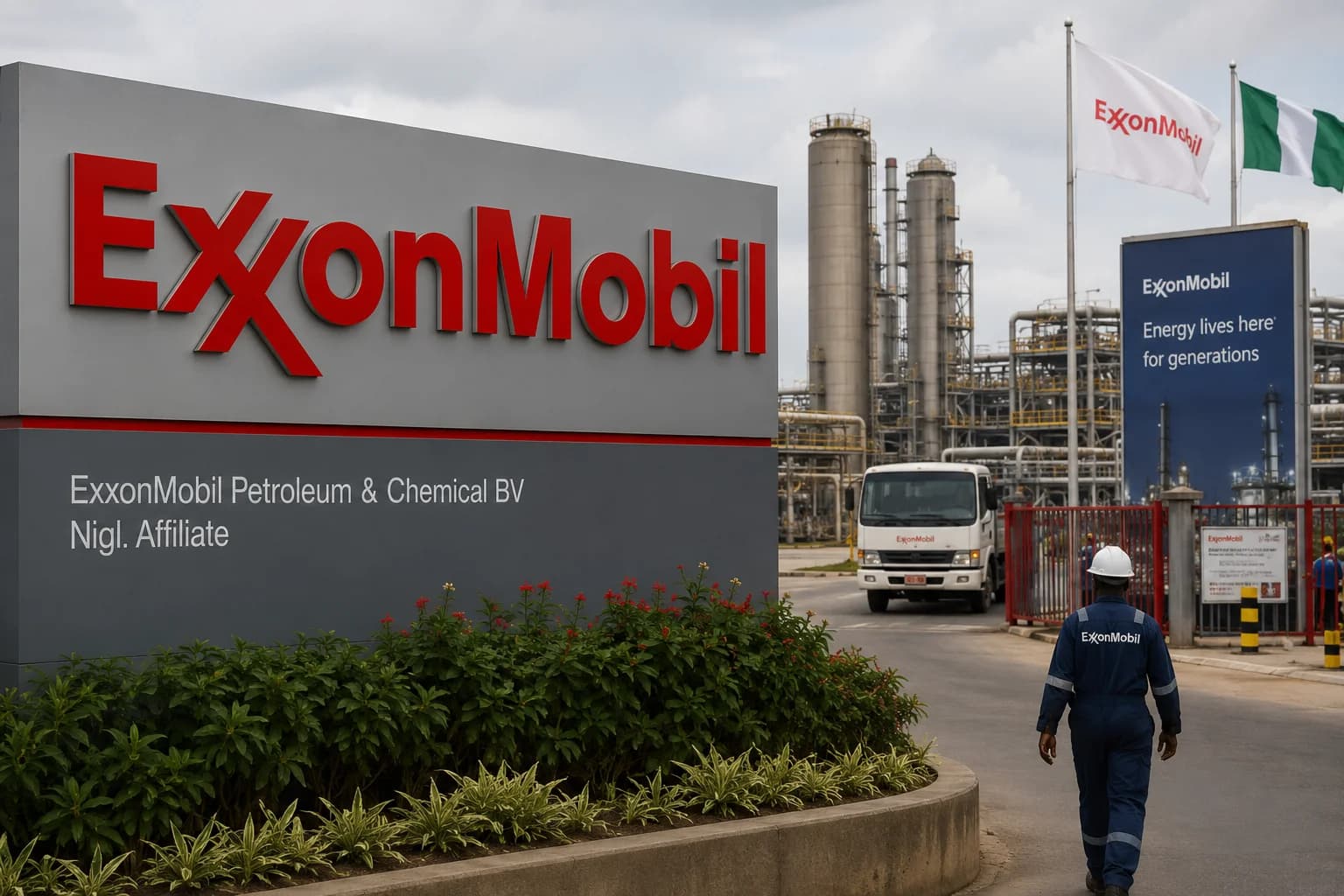
ExxonMobil and its partners are committing $1 billion to the Usan Infill Project offshore Nigeria, a development expected to add around 40,000 barrels of crude oil per day. The investment marks a significant return to drilling activity for the company’s Nigerian affiliate after roughly a decade—but the bigger question is whether renewed oil investment can finally translate into jobs, industrial growth and improved living standards for ordinary Nigerians.
One billion dollars.
Forty thousand additional barrels of oil every day.
And a return to drilling activity after roughly a decade.
On the surface, the announcement surrounding ExxonMobil and its partners’ planned investment in Nigeria’s Usan offshore project is an oil industry story.
It is much bigger than that.
It is a story about confidence.
About reform.
About investment.
About Nigeria’s long and complicated relationship with oil.
And about a question that has followed the country for generations:
If more oil is produced, will ordinary Nigerians finally benefit?
ExxonMobil and its partners plan to invest $1 billion in the Usan Infill Project offshore Nigeria, according to the Nigerian upstream regulator.
The project is expected to add around 40,000 barrels per day to production, while the regulator says the development marks the return of ExxonMobil affiliate Esso Exploration and Production Nigeria to drilling activity in the country after about a decade.
For Nigeria, the announcement is significant.
International oil companies do not invest a billion dollars because of speeches.
They invest when they believe projects can generate returns.
That means the Usan decision will be presented by the government as evidence that investor confidence in Nigeria’s energy sector is improving.
But Nigerians have heard stories about oil wealth before.
They will want to know what this investment changes in their lives.
Why the $1 Billion Investment Matters
Nigeria needs investment.
Its oil industry has struggled for years with underinvestment, theft, insecurity, infrastructure problems, regulatory uncertainty and declining output from mature assets.
Every barrel not produced represents lost export earnings.
Lost government revenue.
Lost foreign exchange.
And potentially lost investment.
The Usan project therefore matters because it suggests capital is returning to a major Nigerian deepwater asset.
The planned investment is expected to increase output by about 40,000 barrels per day.
That is not enough to transform Nigeria’s entire economy by itself.
But it is significant.
At 40,000 barrels every day, the project could produce millions of additional barrels over a year if targets are reached and operations remain stable.
The economic value would depend on oil prices, production costs, contractual arrangements, taxes and other factors.
But increased output can strengthen export earnings and government revenues.
The bigger significance may be psychological.
Investment attracts attention.
If one major project moves successfully, other investors watch.
Capital is cautious.
Success can attract more capital.
Failure can send it elsewhere.
A Return After a Long Drilling Pause
One of the most striking elements of the announcement is the timing.
The Nigerian regulator says the project represents the return of ExxonMobil affiliate Esso Exploration and Production Nigeria to drilling activity in the country after roughly a decade, with its previous drilling activity dating to 2016.
That gives the project symbolic weight.
Nigeria has spent years trying to convince investors that its oil and gas sector remains attractive.
The country has enormous hydrocarbon resources.
But resources alone do not guarantee investment.
Companies compare opportunities across countries.
They examine taxes.
Regulation.
Political stability.
Security.
Project costs.
Infrastructure.
Contract enforcement.
Speed of approvals.
And the likelihood that rules will remain predictable.
Nigeria is not competing only against itself.
It is competing against other oil-producing countries for capital.
A billion-dollar commitment suggests investors see a commercial opportunity.
The government’s challenge is to ensure that this becomes the beginning of a broader investment cycle rather than an isolated announcement.
Is the Petroleum Industry Act Finally Producing Results?
Nigeria spent years debating reform of its petroleum sector before the Petroleum Industry Act was signed into law in 2021.
The purpose was to create a clearer legal and regulatory framework for the industry.
But laws should be judged by outcomes.
Are projects moving?
Are investors committing capital?
Is production increasing?
Are approvals becoming more efficient?
Are host communities benefiting?
Is government revenue improving?
The Usan investment will inevitably become part of the government’s argument that reforms are restoring confidence.
That argument should be examined seriously, but not accepted automatically.
One project does not prove that every problem has been solved.
Nigeria still needs consistent regulation.
Contract stability.
Security.
Efficient approvals.
Infrastructure.
And confidence that policy will not change unpredictably.
Investors need certainty.
Citizens need accountability.
The government must provide both.
Nigeria’s Oil Paradox Has Lasted Too Long
Nigeria has produced oil for decades.
Yet millions of Nigerians still live without reliable electricity.
Roads remain poor.
Unemployment and underemployment remain major concerns.
Communities in oil-producing regions still complain about pollution and inadequate development.
The country has repeatedly experienced fuel-supply problems despite being a major crude producer.
That contradiction has damaged public trust.
When Nigerians hear about another billion-dollar oil project, some will celebrate.
Others will ask:
Where will the money go?
That is not cynicism without reason.
Nigeria’s oil history has taught citizens to separate national wealth from personal welfare.
The country has earned enormous revenue from petroleum.
Yet oil wealth has not produced the level of development many Nigerians expected.
The Usan investment therefore arrives with a challenge.
More production must become more than more revenue on paper.
What Could 40,000 Additional Barrels Mean?
An additional 40,000 barrels per day could strengthen Nigeria’s production profile if the target is achieved.
But the impact depends on context.
Production must be sustained.
Infrastructure must function.
Operational costs matter.
Oil prices matter.
Fiscal terms matter.
Nigeria’s share of revenue matters.
And most importantly, what the country does with its revenue matters.
Oil income can finance infrastructure.
It can support education.
Healthcare.
Power.
Transport.
Security.
Industrial development.
But oil revenue can also disappear into inefficient spending, waste and corruption.
The resource itself does not determine the outcome.
Governance does.
That is why the $1 billion investment should be welcomed without becoming another excuse for complacency.
Nigeria does not simply need more oil.
It needs better use of oil wealth.
Deepwater Could Become More Important to Nigeria’s Future
Offshore and deepwater production carries strategic importance for Nigeria.
Onshore operations have often faced challenges including theft, vandalism and security problems.
Deepwater developments have different technical and economic challenges, but they can offer significant production potential.
The Usan Infill Project is located offshore and is designed to unlock additional production from an existing development.
This type of investment can help Nigeria improve output without depending entirely on new frontier discoveries.
But deepwater projects are expensive.
They require advanced technology.
Specialised engineering.
Large amounts of capital.
Complex supply chains.
That creates another important question.
How much of the economic value will remain in Nigeria?
Local Content Must Be More Than a Slogan
A billion-dollar project can create economic opportunities beyond the oil itself.
Engineering.
Marine services.
Logistics.
Fabrication.
Maintenance.
Catering.
Security.
Technology.
Professional services.
Training.
But local benefit is not automatic.
Nigeria must ensure that qualified local companies and workers can participate meaningfully.
Local content should not mean giving contracts to politically connected middlemen who add no value.
It should mean building Nigerian technical capacity.
Training engineers.
Developing service companies.
Creating expertise that can compete internationally.
Transferring knowledge.
Building industrial capability.
The most valuable outcome of a major project may not be the oil extracted.
It may be the skills and companies that remain after the project is completed.
Will the Investment Create Jobs?
This is the question ordinary Nigerians will ask.
A billion-dollar investment sounds enormous.
But capital-intensive oil projects do not necessarily create huge numbers of permanent direct jobs.
Modern offshore operations rely heavily on technology, specialised equipment and highly trained personnel.
That means Nigeria should be realistic.
The project alone will not solve unemployment.
But it can create direct and indirect opportunities through supply chains, services, engineering and support industries.
The real employment opportunity comes from building clusters around major investments.
Nigeria should not be satisfied with exporting crude and importing almost everything required to produce it.
The country should ask how much equipment can be manufactured locally.
How many Nigerian companies can become serious suppliers?
How many technical professionals can be trained?
How much research can be done in Nigerian institutions?
That is how an oil investment becomes an industrial-development opportunity.
The Environment Cannot Be an Afterthought
Every major oil project also carries environmental responsibility.
Nigeria’s history with petroleum development has included serious pollution concerns, particularly in the Niger Delta.
Economic development cannot mean ignoring environmental protection.
Operators must meet strong safety standards.
Regulators must enforce rules independently.
Monitoring must be credible.
Communities must have trusted channels for raising concerns.
Emergency response systems must function.
Environmental responsibility should not be treated as an obstacle to investment.
It is part of responsible investment.
Nigeria has already paid too high a price for the idea that oil production and environmental protection cannot exist together.
Oil Revenue Should Finance the Economy Beyond Oil
Perhaps the biggest mistake Nigeria could make is using renewed oil investment to postpone economic diversification.
Oil should help finance the transition to a broader economy.
Agriculture.
Manufacturing.
Technology.
Creative industries.
Transport.
Education.
Energy.
Tourism.
Nigeria’s population is too large for petroleum alone to provide prosperity for everyone.
The oil sector can generate significant revenue, but it cannot directly employ tens of millions of people.
That is why oil income should be used strategically.
Build electricity systems that allow factories to operate.
Build roads that reduce logistics costs.
Improve ports.
Invest in education.
Support research.
Create an environment where businesses can grow.
The best future for Nigeria’s oil wealth is one in which it helps create an economy that is less dependent on oil.
Investor Confidence Must Be Protected
A billion-dollar project can be damaged by inconsistent policy.
Nigeria must avoid repeating old patterns.
Investors need clarity.
They need rules that can be understood.
They need contracts that are respected.
They need efficient regulators.
They need security.
They need predictable fiscal conditions.
But investor confidence cannot mean allowing companies to operate without accountability.
Nigeria needs a balanced relationship.
The country should be competitive.
But it should also defend the public interest.
The goal is not to give away resources cheaply.
The goal is to create a system in which investment earns fair returns while Nigeria receives fair value.
The Real Test Is Whether More Investment Follows
One billion dollars is significant.
But the bigger test will be what happens next.
Do other stalled projects move forward?
Does exploration increase?
Does production rise consistently?
Do international and Nigerian companies commit more capital?
Do regulatory approvals improve?
Does local industry grow?
Does government revenue become more transparent?
Does the country reduce the cost of doing business?
One investment announcement cannot answer those questions.
But it can become an important signal.
Capital watches capital.
If the Usan project progresses successfully, it can strengthen confidence.
If it becomes trapped in delays and uncertainty, the opposite message may spread.
Nigerians Will Ask the Most Important Question: What Is in It for Us?
For policymakers and oil executives, the story may be about production volumes and project economics.
For ordinary Nigerians, the question is simpler.
What changes?
Does electricity improve?
Do jobs increase?
Do roads get better?
Does government revenue produce better services?
Do oil-producing communities benefit?
Does the economy become more stable?
Those questions are legitimate.
Nigeria has been an oil-producing country for too long for citizens to be impressed by production figures alone.
The country must move from celebrating extraction to measuring impact.
The success of the Usan project should not be judged only by whether it produces 40,000 barrels per day.
It should also be judged by how much value Nigeria captures.
A Vote of Confidence—but Not a Blank Cheque
The $1 billion Usan investment is good news for Nigeria.
It signals commercial confidence.
It promises additional production.
It marks renewed drilling activity by an ExxonMobil affiliate after a long pause.
And it arrives at a time when Nigeria needs capital to revive and expand production.
But Nigeria should resist the temptation to treat every investment announcement as proof that all problems have been solved.
The country still has work to do.
Regulation must remain predictable.
Security must improve.
Revenue must be managed transparently.
Environmental standards must be enforced.
Local companies must gain meaningful opportunities.
Workers must be trained.
And oil wealth must be invested in the wider economy.
The real victory will not be ExxonMobil investing $1 billion.
The real victory will be Nigeria turning that investment into something larger.
More production.
More technical capacity.
More Nigerian businesses.
More jobs.
More public revenue.
Better infrastructure.
And an economy strong enough that the wellbeing of more than 200 million people does not rise and fall with the price of one commodity.
For decades, Nigeria has had oil.
The challenge has always been turning oil into development.
The Usan investment offers another opportunity.
This time, Nigerians will be watching not only how much comes out of the ground.
They will be watching what comes back to the people.
Stay Informed
Get the biggest stories from Nigeria, Africa and around the world.
Free news updates. Unsubscribe anytime.
By subscribing, you agree to receive free news updates from Talk Ya True. You can unsubscribe at any time.