Politics
Fayose's Unusual Take on Nigeria's Power Crisis Sparks Debate Over Birth Rates
Former Ekiti State Governor Ayo Fayose has sparked a lively debate after suggesting that Nigeria's persistent electricity shortages may be contributing to the country's rising population. His unusual argument is that prolonged blackouts leave people with fewer nighttime entertainment options, prompting Nigerians online to debate whether there is any truth behind the claim.
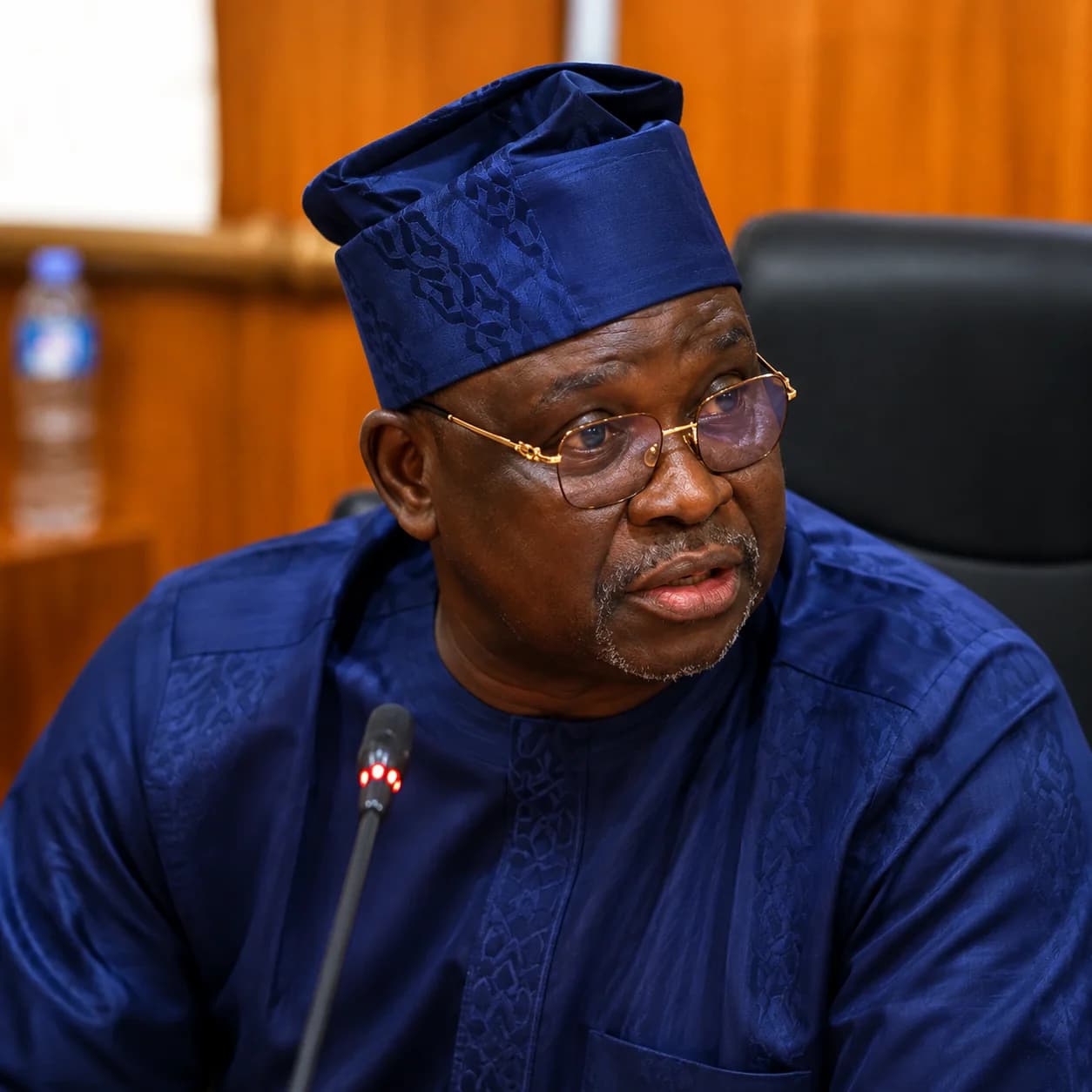
Former Ekiti State Governor Ayo Fayose has sparked a fresh debate online after offering an unusual explanation for Nigeria's population growth: the country's persistent electricity problems.
Fayose reportedly linked Nigeria's unreliable power supply to rising birth rates, arguing that when electricity goes out and entertainment options disappear at night, people may turn to other activities.
The remark has quickly become one of those social-media statements that Nigerians cannot stop debating.
Some users found the argument humorous but surprisingly logical.
Others dismissed it as an oversimplification of a complex demographic issue.
Fayose's Blackout Theory
The argument attributed to Fayose is relatively simple.
Nigeria experiences frequent electricity shortages. When the lights go out, many forms of nighttime entertainment — television, gaming, internet use and other activities that require electricity — become more difficult.
According to the argument, that leaves people with fewer ways to spend their evenings.
And, well, Nigerians know where that particular line of reasoning eventually leads.
The comment has therefore triggered a mixture of laughter, agreement and disbelief online.
Nigerians Take the Debate to Social Media
The reaction has been particularly lively on social media, where users have turned Fayose's statement into a wider conversation about Nigeria's electricity crisis.
Some Nigerians joked that the former governor may have accidentally discovered a "population policy" hidden inside the country's power problem.
Others argued that the comment should not be dismissed entirely because electricity affects far more than businesses and household appliances.
For many Nigerians, power supply determines how people work, study, communicate and entertain themselves after dark.
But whether blackouts are actually responsible for a meaningful increase in births is another question entirely.
The Reality Is More Complicated
Nigeria does have a very large and relatively young population, but fertility cannot realistically be explained by electricity supply alone.
Research into fertility in Nigeria points to a combination of factors, including education, marriage patterns, access to contraception, reproductive-health services, household circumstances and social norms.
Studies have also found persistent gaps in access to modern family-planning services, meaning some women who want to avoid or delay pregnancy may not always have the resources or services needed to do so.
That makes the country's demographic story considerably more complicated than a simple "no light, more babies" equation.
Nigeria's Electricity Problem Is Real
Where Fayose's argument does connect with an undeniable reality is Nigeria's long-running electricity crisis.
Official electricity-sector data show that the country's installed generation capacity is far above what is consistently available for dispatch. The Nigerian Electricity Regulatory Commission reported an average available capacity of about 4,286MW from an installed capacity of 13,625MW in April 2026.
For millions of Nigerians, unreliable electricity means turning to generators, inverters, solar systems or simply accepting hours without power.
The consequences extend into almost every part of daily life.
When the Lights Go Out, Life Changes
Electricity shortages affect businesses that depend on refrigeration, manufacturing, technology and machinery.
They affect students trying to study at night.
They affect people working remotely.
They affect entertainment and communication.
And they can even affect social life.
That last point is what has made Fayose's argument so entertaining online.
But the fact that blackouts can influence people's daily routines does not automatically establish a causal relationship between power shortages and national fertility rates.
The Bigger Population Question
Nigeria's population growth is already one of the most significant demographic stories in the world.
The country has a very large young population, meaning even declining fertility rates can coexist with substantial population growth because of demographic momentum.
This distinction matters.
A country does not need every woman to have more children for its population to continue increasing rapidly.
If a large share of the population is young and entering reproductive age, the number of births can remain high even as fertility gradually falls.
Could Better Electricity Actually Change Behaviour?
There is an interesting question hidden underneath Fayose's unusual argument.
Improved electricity would undoubtedly change how Nigerians spend their evenings.
Reliable power would expand access to television, internet services, businesses, cinemas, sports viewing, education and other forms of entertainment.
But whether that would materially reduce fertility is something that would require proper research rather than assumptions.
Demographers would need to examine electricity access alongside fertility patterns and control for other factors influencing reproductive behaviour.
Without that evidence, Fayose's claim remains an intriguing hypothesis rather than a proven explanation.
The Conversation Is Bigger Than the Joke
The viral reaction should not completely obscure the more serious issue behind the comment.
Nigeria's electricity crisis has consequences far beyond darkness.
Poor power supply increases business costs, reduces productivity and forces households and companies to spend additional money on alternative energy.
The Nigerian Electricity Regulatory Commission recently acknowledged significant generation shortfalls that affected the ability of distribution companies to meet guaranteed service levels for some customers.
So while the birth-rate argument may have generated the jokes, the underlying electricity problem remains very real.
Fayose's Comment Raises an Unexpected Question
Perhaps the most interesting question emerging from the controversy is not whether Fayose is scientifically correct.
It is this:
How much of Nigerian life is shaped by the absence of reliable electricity?
From the way people work to how businesses operate, how students study and how families spend their evenings, the consequences of unreliable power extend far beyond simply having to switch on a generator.
Fayose may have chosen one of the most unusual ways possible to make that point.
The Bottom Line
Ayo Fayose's suggestion that Nigeria's electricity shortages could be contributing to higher birth rates has produced plenty of jokes and debate online.
But behind the humour is a serious demographic and infrastructure question.
Nigeria's population dynamics are shaped by numerous social and economic factors, and there is no established evidence that blackouts are a major driver of the country's birth rate.
What is beyond dispute is that reliable electricity would transform millions of Nigerian lives.
Whether it would also mean fewer babies being born after dark?
That part of Fayose's theory may require considerably more than a power-sector report to prove.
EDITORIAL TEAM
About Talk Ya True Editorial Team
The Talk Ya True Editorial Team is an independent newsroom committed to factual reporting, responsible journalism and thoughtful analysis across Africa and around the world.
Related Articles

Politics
Primate Ayodele Warns Tinubu: Nigeria's Hardship Could Become a Political Problem
Nigeria
308 Kidnap Victims Rescued in Nigeria's Largest Single-Day Rescue Operation

Politics
ADC Fires Back at Wike Over Amaechi Comments
Politics
Catholic Bishops Told Tinubu 'Nigeria Is Bleeding,' Says Cardinal Onaiyekan
Stay Informed
Get the biggest stories from Nigeria, Africa and around the world.
Free news updates. Unsubscribe anytime.
By subscribing, you agree to receive free news updates from Talk Ya True. You can unsubscribe at any time.