Politics
Femi Kuti Takes Aim at Nigeria’s Judiciary in Tinubu Critique, Sparks Fresh Debate Online
Afrobeat musician Femi Kuti has triggered a fresh political debate after a podcast clip surfaced in which he argued that Nigerians should look beyond President Bola Tinubu and scrutinise the judiciary. The comments have divided online opinion, with some praising Kuti’s longstanding anti-establishment stance while others accuse him of oversimplifying Nigeria’s political problems.
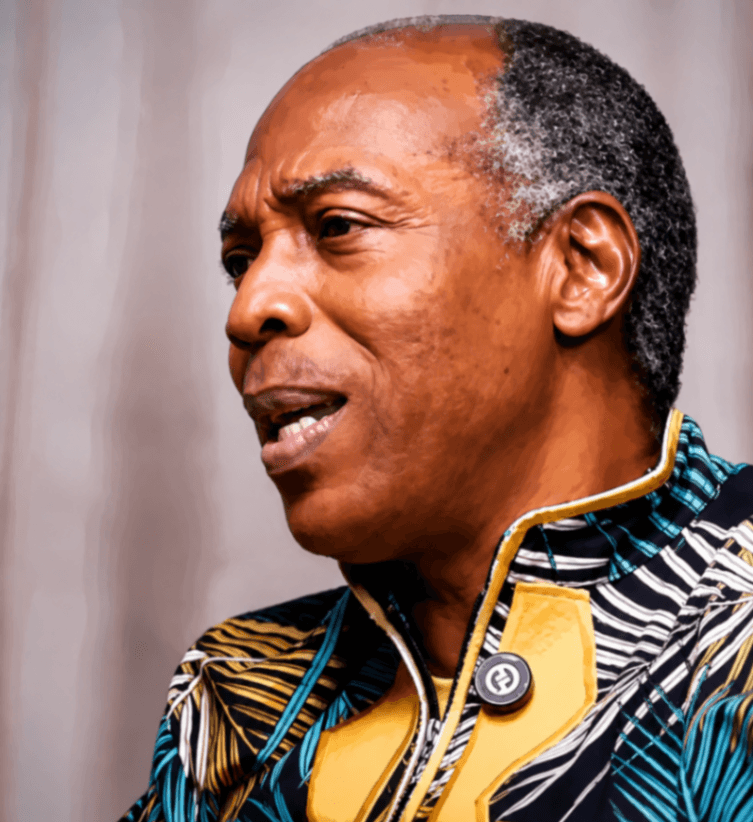
Afrobeat icon Femi Kuti has once again found himself at the centre of Nigeria's political conversation after a clip from a podcast surfaced online in which he turned attention away from President Bola Ahmed Tinubu and towards the country's judiciary.
In the clip circulating on social media, Kuti argues that Nigerians should not focus exclusively on the president when discussing the country's political problems.
Instead, he says attention should also be directed at the institutions that make and uphold important legal decisions.
The remarks have generated a fresh wave of debate, particularly among Nigerians who already hold sharply different views about the Tinubu administration.
"Look Beyond Tinubu"
The central argument attributed to Kuti in the viral clip is that Nigerians need to look beyond the president when assessing the state of the country.
His comments suggest that the executive branch should not be treated as the only source of political responsibility.
For Kuti, the judiciary also has an important role to play in determining how Nigeria's political system functions.
That argument has struck a chord with some Nigerians who believe that discussions about governance frequently focus too heavily on elected politicians while giving less attention to other institutions.
Why the Judiciary Became the Focus
Nigeria's judiciary has faced increasing scrutiny in recent years over politically sensitive cases, election disputes and questions surrounding judicial independence.
Courts routinely make decisions that have major political consequences, particularly during election periods.
For critics of the system, that raises questions about whether Nigerians should be paying greater attention to the independence and accountability of the judiciary.
Kuti's comments have therefore opened a much broader conversation than simply whether people support or oppose Tinubu.
Nigerians React on Social Media
The response on X has been divided.
Some users praised Kuti for challenging what they see as the tendency to blame every national problem on the president.
They argue that Nigeria is governed through multiple institutions and that the judiciary, legislature, civil service and state governments all play significant roles.
Others, however, pushed back against Kuti's argument.
They contend that as president and head of the executive branch, Tinubu still bears substantial responsibility for government policies and the direction of the country.
For these users, shifting attention towards the judiciary should not become a way of reducing scrutiny of the executive.
Others Say Kuti Is Staying True to His Father's Legacy
Another part of the online reaction centres on Femi Kuti's family history.
As the son of legendary Afrobeat pioneer Fela Anikulapo-Kuti, Femi has inherited a long tradition of politically conscious music and outspoken criticism of Nigerian authorities.
Fela's music frequently challenged military governments, corruption and political repression.
Femi has continued that tradition in his own music and public commentary.
He has also repeatedly insisted that he does not belong to any political party.
In January 2026, he rejected claims that he had supported former President Muhammadu Buhari or campaigned for Tinubu, saying such claims were false. (PM News Nigeria)
He Has Criticised Multiple Political Camps
Kuti's political history is important when interpreting the latest clip.
During the 2023 election cycle, he refused to endorse any of the major presidential candidates — Atiku Abubakar, Bola Tinubu and Peter Obi — saying he had reservations about Nigeria's political elite. (Kanyi Daily)
He also previously criticised Tinubu during his time as Lagos governor, recalling conflicts involving the African Shrine and the Lagos State government. (Kanyi Daily)
At the same time, Kuti faced backlash from supporters of Peter Obi after comments that were interpreted as criticism of the Obidient movement.
That history makes it difficult to neatly place him within one political camp.
His Family Has Also Clashed With Tinubu's Campaign
The Kuti family's relationship with the Tinubu political machine has had its own controversies.
In 2022, the estate of Fela Kuti issued a disclaimer after the APC used Fela's song "Eko Ile" in material promoting Tinubu's presidential campaign without the family's permission.
The family said it remained politically neutral and objected to the unauthorised use of Fela's music. (The Guardian Nigeria)
That episode remains part of the wider history surrounding the Kuti family's relationship with Nigerian politics.
Is Kuti Blaming the Judiciary Instead of Tinubu?
That is one of the questions being debated online.
Some critics have interpreted his remarks as an attempt to shift responsibility away from Tinubu.
But another interpretation is possible.
Kuti may simply be arguing that Nigeria's problems are institutional rather than the product of one individual.
Those are two very different arguments.
A president can be held accountable for government policy while the judiciary is simultaneously scrutinised for the decisions it makes.
The Bigger Issue: Institutional Accountability
The most interesting part of Kuti's comments may therefore be the institutional question.
Nigeria's political system is not controlled by the presidency alone.
The National Assembly makes laws.
The judiciary interprets laws and settles disputes.
State governments control major areas of public administration.
Local governments operate at the grassroots.
Regulatory agencies also make decisions affecting millions of Nigerians.
When one institution becomes the sole focus of political criticism, other powerful institutions can escape scrutiny.
That is the concern Kuti appears to be raising.
But Judicial Criticism Is Sensitive
There is also a reason criticism of the judiciary requires particular care.
Courts are supposed to operate independently from political pressure.
If every unpopular judgment results in accusations that judges are acting politically, public confidence in the judicial system can suffer.
At the same time, judicial independence should not mean immunity from legitimate scrutiny.
The challenge is finding the line between holding institutions accountable and undermining their independence.
The Tinubu Administration Remains Under Pressure
None of this removes scrutiny from President Tinubu.
His administration continues to face intense public debate over the economy, taxation, fuel prices, insecurity and the cost of living.
Supporters argue that his reforms are laying the groundwork for long-term economic recovery.
Critics say Nigerians are paying too high a price for those reforms.
That debate will remain central to the 2027 political conversation.
Kuti's Intervention Comes at an Interesting Time
The latest clip has appeared as Nigeria's political environment is already heating up ahead of the 2027 elections.
Tinubu has moved closer to securing the APC's backing for another presidential contest, while opposition parties and politicians are working to build a coalition capable of challenging him.
Celebrities and cultural figures are also increasingly being drawn into political conversations.
Kuti's comments therefore arrive at a moment when almost every prominent political statement can quickly become a campaign talking point.
Some Nigerians Want Artists to Stay Out of Politics
As expected, some online users questioned why entertainers should be commenting on complex political and judicial matters.
Their argument is that popularity does not necessarily equal political expertise.
Others strongly disagree.
They argue that musicians and artists are citizens and have every right to comment on government and society.
In Kuti's case, that argument carries particular weight because political commentary has been a central part of his artistic identity for decades.
Others Say This Is Exactly What Artists Should Do
Supporters believe artists have historically played an important role in challenging authority.
Fela's career is frequently cited as an example.
From that perspective, silence would be more surprising than criticism.
Kuti's supporters argue that his willingness to question government and institutions is part of the tradition he inherited from his father.
The Debate Is Bigger Than Femi Kuti
Whether people agree with Kuti or not, his comments raise an important question:
Who should Nigerians hold accountable when the political system fails?
Is it the president?
The legislature?
The judiciary?
State governments?
Political parties?
Or all of them?
The answer is arguably the last one.
Democracy depends on multiple institutions being subject to public scrutiny.
What Nigerians Are Really Arguing About
The online disagreement is ultimately less about one musician than it is about how Nigerians understand political responsibility.
One side believes the president should carry the greatest burden of accountability because of the enormous powers attached to the office.
Another believes the country has become too obsessed with presidential politics and ignores the institutions that enable or constrain the executive.
Kuti's intervention has given both sides another reason to argue.
The Bottom Line
Afrobeat musician Femi Kuti has sparked fresh political debate after a podcast clip surfaced in which he urged Nigerians to look beyond President Bola Tinubu and pay greater attention to the judiciary and other institutions.
The comments have generated divided reactions online.
Supporters say Kuti is highlighting an important point: Nigeria's problems cannot always be reduced to one politician.
Critics argue that the president remains ultimately responsible for many of the policies and decisions affecting Nigerians and should not escape scrutiny.
Kuti's history suggests that his position is not easily fitted into the traditional APC-versus-opposition divide. He has previously rejected claims that he supported Tinubu, while also criticising supporters of Peter Obi and refusing to endorse the major candidates in the 2023 election. (PM News Nigeria)
His latest intervention therefore appears consistent with his broader anti-establishment outlook.
Whether Nigerians agree with him is another matter.
But the question he has raised is difficult to dismiss:
If Nigeria's democracy is built on multiple institutions, should Nigerians be looking beyond the presidency when demanding accountability?
EDITORIAL TEAM
About Talk Ya True Editorial Team
The Talk Ya True Editorial Team is an independent newsroom committed to factual reporting, responsible journalism and thoughtful analysis across Africa and around the world.
Related Articles

Nigeria
Air Peace Flights Grounded in Lagos and Abuja as Labour Unions Block Terminals, Passengers Stranded

Entertainment
Paul Okoye Was There for Peter's Wedding -- A Look Back as P-Square Feud Explodes Again

Nigeria
FG Deploys 40 Coastal Road Guards as Vandalism Threatens Lagos-Calabar Highway
Nigeria
Lagos Drivers and Riders Face Growing Street Extortion as Demands for Money Spark Outrage
Stay Informed
Get the biggest stories from Nigeria, Africa and around the world.
Free news updates. Unsubscribe anytime.
By subscribing, you agree to receive free news updates from Talk Ya True. You can unsubscribe at any time.