Entertainment
Nigerian Heritage Shines at 2026 Emmys as Ayo Edebiri and Joy Sunday Earn Major Nominations
Actresses of Nigerian descent Ayo Edebiri and Joy Sunday have earned nominations for the 78th Emmy Awards, placing two talents with Nigerian roots among television’s most celebrated performers. Their recognition is more than a story of individual success: it raises important questions about African representation, diaspora talent and whether Nigeria can build an entertainment industry powerful enough to turn its enormous cultural influence into lasting global business.
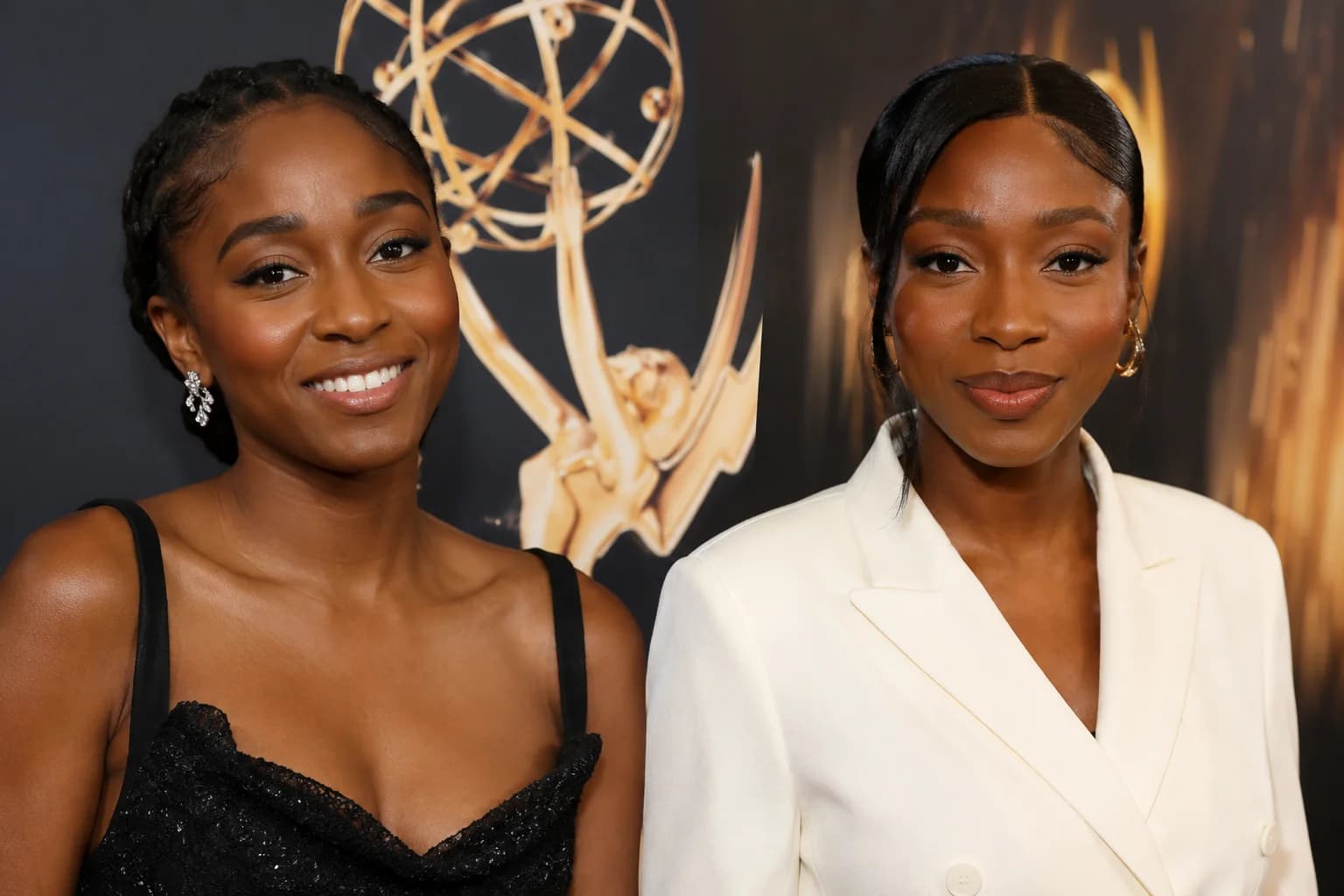
Two actresses.
Two different journeys.
One shared connection to Nigeria.
And one of television’s biggest stages.
Ayo Edebiri and Joy Sunday have earned nominations in the 2026 Emmy Awards cycle, giving Nigerians another reason to celebrate the growing visibility of talent with Nigerian roots across global film and television.
Edebiri appears among the nominees for her work as Sydney Adamu in The Bear, while Sunday has also received recognition in the 2026 nominations. The complete nomination lists confirm both actresses among this year’s contenders.
The nominations are individual achievements.
They belong first to the actresses who worked for them.
But they also belong to a much bigger cultural story.
Across music, film, television, fashion, literature and sport, people with Nigerian roots are becoming increasingly visible on some of the world’s largest stages.
The Nigerian name is travelling.
The Nigerian story is travelling.
Nigerian culture is travelling.
But there is an important question beneath the celebration:
Can Nigeria turn global cultural visibility into an entertainment economy powerful enough to create more opportunities at home?
That may be the bigger story behind these Emmy nominations.
Ayo Edebiri’s Rise Has Been Remarkable
Ayo Edebiri has become one of the most recognisable performers of her generation.
Her role as Sydney Adamu in The Bear helped introduce her to a massive global audience, but her career has expanded far beyond a single performance.
She has worked as an actress, writer and director.
Her growing reputation reflects a type of modern creative career that does not remain inside one box.
That matters.
The global entertainment industry increasingly rewards people who understand storytelling from multiple directions.
Actors become producers.
Writers become directors.
Musicians become executives.
Creators build production companies.
The people who understand both the creative and business sides of entertainment are often the ones who build the longest careers.
Edebiri’s recognition is therefore about more than celebrity.
It demonstrates the value of developing talent across several areas of the creative process.
For young African creatives watching her career, that lesson may be as important as the award nomination itself.
Joy Sunday Represents Another Kind of Global African Story
Joy Sunday’s recognition also carries significance.
Her rise is part of a wider generation of performers with African roots making their presence felt in global television and film.
These performers are not all following the same path.
Some were born on the continent.
Some are children of immigrants.
Some grew up between cultures.
Some have strong professional connections with African industries.
Others built their careers almost entirely abroad.
That diversity matters because the African diaspora is not one story.
And Nigerian success abroad should not be simplified into a claim that every person with Nigerian ancestry is a product of Nollywood.
Accuracy matters.
The real achievement is already powerful enough.
People connected to Nigeria through family and heritage are increasingly visible at the highest levels of international entertainment.
That should be celebrated without rewriting their career histories.
Nigerian Talent Is Everywhere, but Nigeria Must Ask Why
There is a familiar pattern.
A Nigerian name appears on a major international award list.
Nigerians celebrate online.
Flags fill comment sections.
People post messages saying, “Naija no dey carry last.”
Then the moment passes.
A few months later, another Nigerian or person of Nigerian descent achieves something extraordinary abroad.
The celebration begins again.
But Nigeria should ask a more difficult question.
Why does so much Nigerian talent often need to leave the Nigerian system—or grow outside it—to reach its full potential?
This is not an argument against the diaspora.
Diaspora success is valuable.
It creates networks.
It creates representation.
It expands the influence of Nigerian identity.
But a country of Nigeria’s size should also be capable of building more world-class systems at home.
A talented child should not need luck, migration or foreign citizenship to access serious creative opportunities.
Nigeria should be building pathways.
Acting schools.
Film academies.
Writing programmes.
Technical training.
Sound stages.
Production facilities.
Talent agencies.
International distribution systems.
Professional unions.
Strong intellectual-property protection.
The talent already exists.
The question is whether the infrastructure will catch up.
Nollywood Has Scale but Still Needs Greater Global Power
Nollywood is one of the world’s most productive film industries.
It has created stars.
It has employed thousands of people.
It has carried Nigerian stories across Africa and into diaspora communities around the world.
But production volume is not the same as global power.
The industry still faces major challenges.
Financing remains difficult.
Piracy continues to damage creators.
Production budgets can be restrictive.
Cinema infrastructure is limited compared with Nigeria’s population.
Distribution remains a challenge.
Many talented professionals struggle to build stable careers.
International streaming platforms have created opportunities, but they have also raised questions about who owns the distribution relationship and who controls access to global audiences.
Nigeria must think beyond making films.
It must think about owning more of the machinery that turns stories into wealth.
Representation Matters, but Ownership Matters Too
There is enormous value in seeing people with Nigerian roots succeed internationally.
A young person watching television can see a Nigerian surname attached to excellence.
That can change ambition.
It can expand a child’s understanding of what is possible.
But representation is only one level of power.
Ownership is another.
Who owns the production company?
Who controls the intellectual property?
Who finances the film?
Who owns the distribution rights?
Who collects the long-term revenue?
Who decides which stories are funded?
Who controls the platform?
These questions will determine whether African cultural influence becomes African economic power.
Nigeria has already proved it can produce stories the world wants.
The next challenge is building institutions strong enough to benefit from the value those stories create.
The Diaspora Should Become a Bridge
The relationship between Nigerian creatives at home and people of Nigerian heritage abroad should not be competitive.
It should be strategic.
Imagine stronger collaboration between international performers and Nigerian writers.
Between global studios and Nigerian production companies.
Between diaspora investors and local film infrastructure.
Between international directors and young Nigerian filmmakers.
Between Nigerian universities and major creative institutions abroad.
The diaspora can become a bridge.
Not simply a source of individual success stories.
The knowledge, networks and capital accumulated by Nigerians and people of Nigerian descent around the world can help strengthen industries at home.
But that requires deliberate structures.
Talent does not automatically create an ecosystem.
An ecosystem must be built.
Nigeria’s Cultural Influence Is Already a Form of Soft Power
Countries spend enormous amounts of money trying to improve their international image.
Nigeria has something many countries cannot manufacture.
Cultural influence.
People dance to Nigerian music without having visited Lagos.
They watch Nigerian films.
They follow Nigerian celebrities.
They wear Nigerian-inspired fashion.
They repeat Nigerian slang.
They engage with Nigerian comedy.
They read Nigerian authors.
That is power.
Not military power.
Not political power.
Cultural power.
A country that understands this would treat its creative industries as serious national assets.
Entertainment should not be seen only as celebrities attending award ceremonies.
It is export potential.
Tourism.
Employment.
Technology.
Intellectual property.
Advertising.
Fashion.
Hospitality.
Events.
Education.
Digital platforms.
The success of Nigerian talent abroad should push the government and private sector to think more seriously about the creative economy.
The Next Generation Needs Systems, Not Just Inspiration
Inspiration matters.
A young actress in Lagos, Enugu, Abuja, Port Harcourt or Kano may look at global recognition for performers with Nigerian roots and believe a larger career is possible.
That is valuable.
But inspiration without opportunity can become frustration.
Where does that young actress train?
Who helps her build a professional showreel?
How does she find legitimate auditions?
Who protects her from exploitation?
Where does she find representation?
How does she enter international casting networks?
How can a young writer learn the professional systems behind global television production?
Nigeria needs answers to these questions.
Talent should not have to survive entirely through improvisation.
A serious entertainment industry requires structure.
Success Should Be Celebrated Accurately
There is also an important lesson for Nigerian media.
When someone with Nigerian heritage succeeds abroad, the temptation is to claim the achievement immediately as a purely Nigerian victory.
National pride is understandable.
But accurate storytelling is stronger.
Ayo Edebiri and Joy Sunday are actresses of Nigerian descent whose careers have developed within international entertainment.
Their nominations are worth celebrating on those facts alone.
There is no need to exaggerate.
Their Nigerian heritage is meaningful.
Their individual journeys are also meaningful.
Both truths can exist together.
More Than Two Names on an Awards List
The nominations of Ayo Edebiri and Joy Sunday should be celebrated.
But celebration should lead somewhere.
Nigeria should look at the growing success of people with Nigerian roots across global entertainment and ask what it can learn.
How can more young people receive world-class training?
How can Nollywood access greater capital without losing control of its stories?
How can local production standards improve?
How can Nigerian creative companies become international businesses?
How can diaspora success create opportunities at home?
How can the country protect intellectual property?
How can entertainment become a bigger contributor to jobs and exports?
Those questions matter long after the red carpet disappears.
The 2026 Emmy nominations are another reminder that Nigerian talent can compete anywhere.
That part of the story is becoming increasingly difficult to dispute.
The bigger challenge is building systems equal to the talent.
Nigeria has the stories.
It has the performers.
It has the writers.
It has the energy.
It has a global diaspora.
It has cultural influence.
What it needs now is an entertainment economy capable of turning those advantages into lasting institutions.
Ayo Edebiri and Joy Sunday have earned their places in the Emmy conversation.
The next Nigerian entertainment success story should not only be about who reaches the global stage.
It should also be about how Nigeria builds a bigger stage of its own.
Stay Informed
Get the biggest stories from Nigeria, Africa and around the world.
Free news updates. Unsubscribe anytime.
By subscribing, you agree to receive free news updates from Talk Ya True. You can unsubscribe at any time.