Opinion
Nnamdi Kanu’s Imprisonment Will Not Solve Nigeria’s South-East Problem
Nigeria may have imprisoned Nnamdi Kanu, but the grievances that gave rise to his movement remain unresolved. If the government truly wants peace in the South-East, it must recognise that political problems cannot be permanently solved through imprisonment, military pressure and courtroom victories alone.
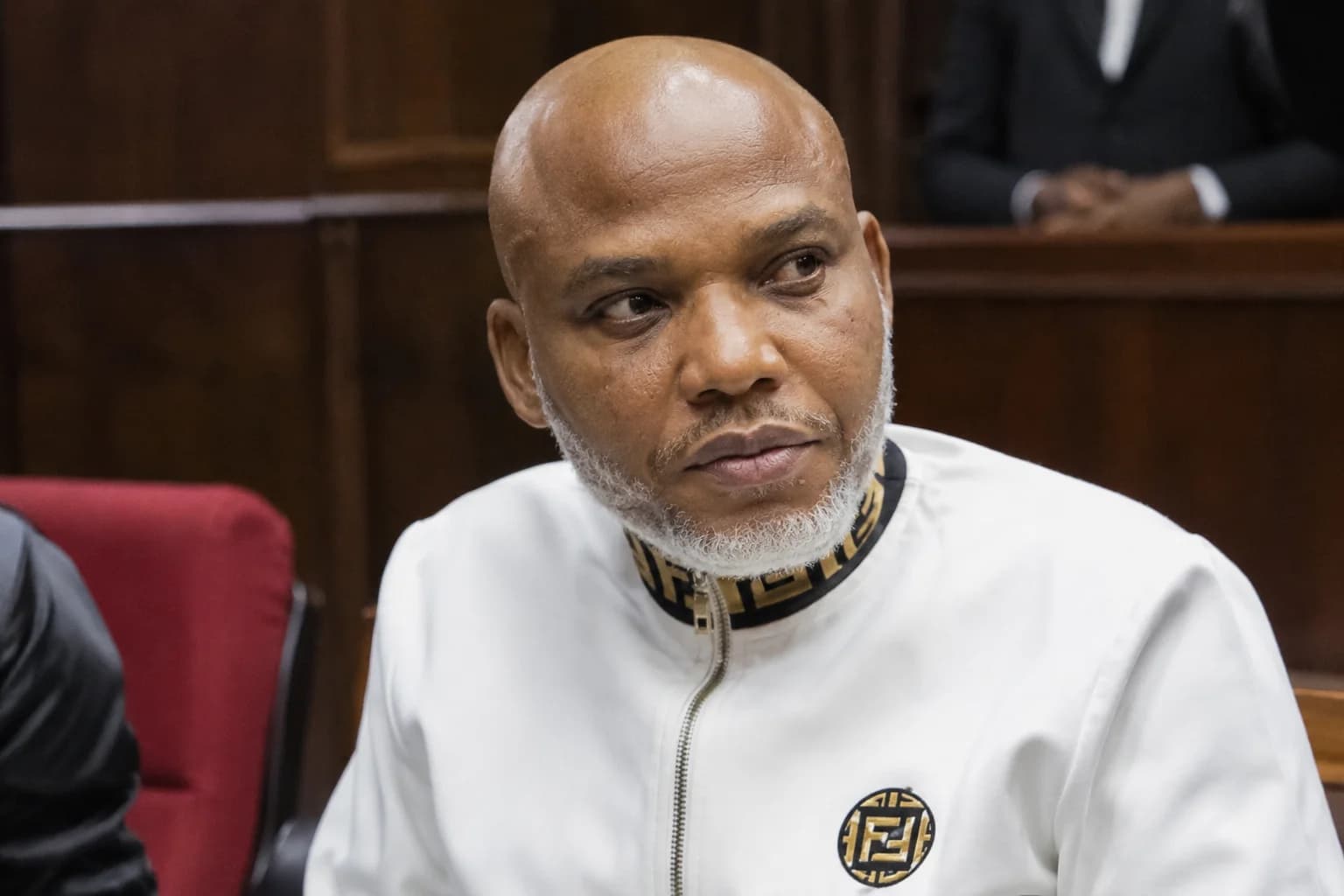
Nigeria has spent years trying to defeat Nnamdi Kanu.
It has arrested him, prosecuted him, detained him, convicted him and sentenced him to life imprisonment.
Yet one uncomfortable question remains unanswered: has any of this solved the problem that made Nnamdi Kanu politically relevant in the first place?
The answer is no.
The agitation in the South-East did not begin because one man woke up one morning and decided to create a national crisis. It grew from decades of political frustration, feelings of exclusion, memories of war, economic grievances and the belief among many people in the region that Nigeria has never fully addressed the wounds of its past.
People may disagree with Kanu's methods.
They may criticise his language, his broadcasts and some of his political decisions.
But pretending that imprisoning him will make the grievances of millions of people disappear is not a serious national strategy.
Nigeria must decide whether it wants to defeat a man or solve a problem.
Those are not the same thing.
Nnamdi Kanu Is Bigger Than a Prison Cell
The Nigerian government may have physical control over Nnamdi Kanu, but it does not have control over the conditions that produced his movement.
That distinction matters.
Political movements rarely disappear simply because their most visible leaders are imprisoned.
History repeatedly shows that when governments refuse to address the grievances behind political agitation, imprisoning leaders can sometimes make them more powerful as symbols than they were as free men.
Nnamdi Kanu has become more than an individual to many of his supporters.
For them, he represents anger over perceived marginalisation.
He represents questions about Nigeria's federal structure.
He represents frustration over political representation.
He represents memories of the Biafran War that Nigeria has never fully confronted through meaningful national reconciliation.
Whether one agrees with those perceptions or not, they exist.
A responsible government cannot arrest a perception.
It cannot imprison frustration.
It cannot sentence historical memory to life imprisonment.
These things must be addressed politically.
The Government Must Separate Agitation From Every Act of Violence
One of the biggest problems surrounding the South-East crisis is the tendency to place every act of violence, every unknown gunman and every criminal incident under one political label.
That approach is dangerous.
The South-East has experienced terrible violence.
Security personnel have been killed.
Civilians have been murdered.
Businesses have been destroyed.
Families have suffered.
No serious person should excuse those crimes.
Anyone who murders innocent people, attacks communities or destroys property should be investigated and prosecuted based on evidence.
But justice must be individual.
A country governed by law should not replace careful investigation with political generalisation.
Not every young person who feels sympathy for Biafran self-determination is a terrorist.
Not every person who questions Nigeria's political structure supports violence.
Not every resident who is angry about the treatment of the South-East wants war.
And not every violent crime in the region can automatically be explained by one man sitting in custody.
Nigeria needs a more intelligent approach.
Criminals should face justice.
Political grievances should face dialogue.
Confusing the two will continue to produce failure.
The Circumstances of Kanu’s Return to Nigeria Cannot Simply Be Forgotten
There is another uncomfortable issue that supporters of the government's position often prefer to ignore: the manner in which Nnamdi Kanu was brought back to Nigeria in 2021.
Whatever anyone thinks about Kanu politically, the rule of law must apply even when dealing with people the government considers difficult or dangerous.
A state cannot demand respect for its laws while appearing willing to bypass legal procedures when convenient.
This is bigger than Nnamdi Kanu.
The question is whether citizens can trust the state to follow legal processes consistently.
If the government believes a person has committed serious crimes, it should pursue that person through lawful extradition, transparent judicial procedures and a fair trial.
The strength of a government is not demonstrated by how easily it can overpower an individual.
It is demonstrated by whether it obeys the law even when dealing with its strongest opponents.
That principle protects everyone.
Today it may be Nnamdi Kanu.
Tomorrow it could be a journalist, an activist, an opposition politician or an ordinary citizen without the international attention surrounding this case.
The South-East Deserves a Political Conversation
Nigeria cannot continue pretending that the political concerns of the South-East will disappear if nobody discusses them.
There are legitimate questions that must be confronted.
Why does a region with enormous commercial energy continue to feel politically alienated?
Why do so many young people believe the Nigerian system does not offer them a fair future?
Why has the memory of Biafra remained politically powerful more than half a century after the civil war ended?
Why has Nigeria struggled to build a national identity strong enough to make separatist movements irrelevant?
These are difficult questions.
But nations grow by confronting difficult questions, not by avoiding them.
The South-East needs economic development, security and infrastructure.
But it also needs political inclusion and dignity.
Development projects cannot substitute for political dialogue.
A new road cannot answer a constitutional question.
A bridge cannot resolve historical trauma.
Infrastructure is essential, but reconciliation requires something deeper.
Nigeria Must Not Be Afraid of Dialogue
There is a strange idea in Nigerian politics that talking to agitators is a sign of weakness.
It is not.
Strong countries negotiate.
Strong governments listen.
Strong leaders understand that dialogue can achieve what years of confrontation cannot.
Nigeria has negotiated with different groups throughout its history.
Governments have held discussions with armed groups, political opponents, regional leaders and organisations whose activities created serious national challenges.
Why should meaningful political dialogue over the South-East be treated as impossible?
Dialogue does not mean accepting every demand.
It does not mean immediately dividing the country.
It does not mean surrendering the Constitution.
It means acknowledging that a serious problem exists and creating a political process through which people can express grievances without violence.
The government should be confident enough to listen.
A united Nigeria maintained only by fear and force is not genuine unity.
Real unity comes when people believe they have a stake in the country.
Tinubu Has an Opportunity to Choose a Different Path
President Bola Tinubu has an opportunity to approach the Nnamdi Kanu question differently from previous administrations.
This does not require the president to agree with Biafran separatism.
It requires him to recognise that continued confrontation has failed to bring lasting peace.
A political solution, pursued within the law and Nigeria's constitutional framework, should not be dismissed.
The president should consider a broader reconciliation process involving respected South-East leaders, traditional institutions, religious leaders, youth representatives, civil society organisations and representatives of the federal government.
The objective should be larger than the fate of one individual.
Nigeria needs a serious conversation about peace, inclusion, federalism, security and the political future of the South-East.
Kanu's case could become an entry point into that conversation rather than a permanent symbol of confrontation.
The Government May Win in Court and Still Lose Politically
Governments often make the mistake of believing that a courtroom victory settles a political argument.
It does not always work that way.
A judge can deliver a sentence.
A prison can hold a person.
Security agencies can restrict a movement.
But none of these automatically changes what people believe.
If a significant number of people continue to see Kanu as a symbol of resistance rather than simply a convicted prisoner, then the government has a political challenge that no prison sentence alone can resolve.
Nigeria must ask itself what outcome it truly wants.
Is the objective punishment?
Is it deterrence?
Is it peace?
Is it national unity?
If peace and unity are the goals, then every policy should be judged by whether it brings the country closer to those outcomes.
Years of confrontation have not delivered lasting peace in the South-East.
Perhaps it is time to admit that a different approach is necessary.
Release Should Be Part of a Wider Peace Process
Calling for a political solution in Nnamdi Kanu's case does not mean ignoring the victims of violence in the South-East.
Their pain matters.
The families of murdered civilians matter.
The families of security personnel who lost their lives matter.
Businesses destroyed by insecurity matter.
A genuine peace process must recognise all of them.
But peace cannot be built through endless retaliation.
The government should explore every lawful avenue available for resolving Kanu's case as part of a wider process of reconciliation and de-escalation.
That process should include clear commitments to peaceful political engagement and the rejection of violence by all sides.
It should also include a serious effort by security agencies to distinguish between peaceful political expression and criminal activity.
Nigeria needs accountability, but it also needs wisdom.
Sometimes leadership means knowing when punishment has stopped producing solutions.
Nnamdi Kanu Is Not the Whole Problem
Even if Nnamdi Kanu remained in prison for the rest of his life, the questions surrounding Nigeria's structure would remain.
The complaints about political exclusion would remain.
The memories of Biafra would remain.
The anger of unemployed young people would remain.
The debate about federalism would remain.
The distrust between citizens and the state would remain.
This is why the government's strategy must go beyond one man.
Nigeria should not be afraid of discussing its future.
Countries are not weakened by honest conversations about their problems.
They are weakened when problems are allowed to grow because leaders are afraid to confront them.
The Nnamdi Kanu question is ultimately a Nigerian question.
It is about whether the country can manage disagreement without turning every political conflict into a security war.
It is about whether the law can remain credible even when dealing with controversial figures.
It is about whether the government understands the difference between silence and peace.
And it is about whether Nigeria is prepared to build unity through justice rather than demand unity through force.
The Time for Political Courage Is Now
Nnamdi Kanu has become one of the most divisive political figures in modern Nigeria.
To some, he is a dangerous separatist.
To others, he is a freedom fighter.
But a serious country must be able to look beyond those competing labels and ask what policy will produce the best outcome for the nation.
The South-East needs peace.
Nigeria needs unity.
Families need security.
Businesses need stability.
Young people need hope.
None of these goals will be achieved by pretending that the imprisonment of one man has solved a decades-old political problem.
Nigeria must find the courage to talk.
It must find the confidence to reconcile.
And it must understand that sometimes the strongest thing a government can do is not to punish harder, but to create a path out of conflict.
Nnamdi Kanu may be behind bars.
The questions that created his movement are not.
Until Nigeria answers those questions, the problem will remain.
Stay Informed
Get the biggest stories from Nigeria, Africa and around the world.
Free news updates. Unsubscribe anytime.
By subscribing, you agree to receive free news updates from Talk Ya True. You can unsubscribe at any time.