Business
Oil Markets on Edge as U.S.–Iran Tensions Raise Fresh Questions for Nigeria's Economy
Global oil markets remain on high alert as tensions between the United States and Iran continue to fuel uncertainty across the Middle East. Investors are closely monitoring developments amid concerns that any further escalation could disrupt global energy supplies. For Nigeria, Africa's largest crude oil producer, the situation presents both economic opportunities and serious challenges.
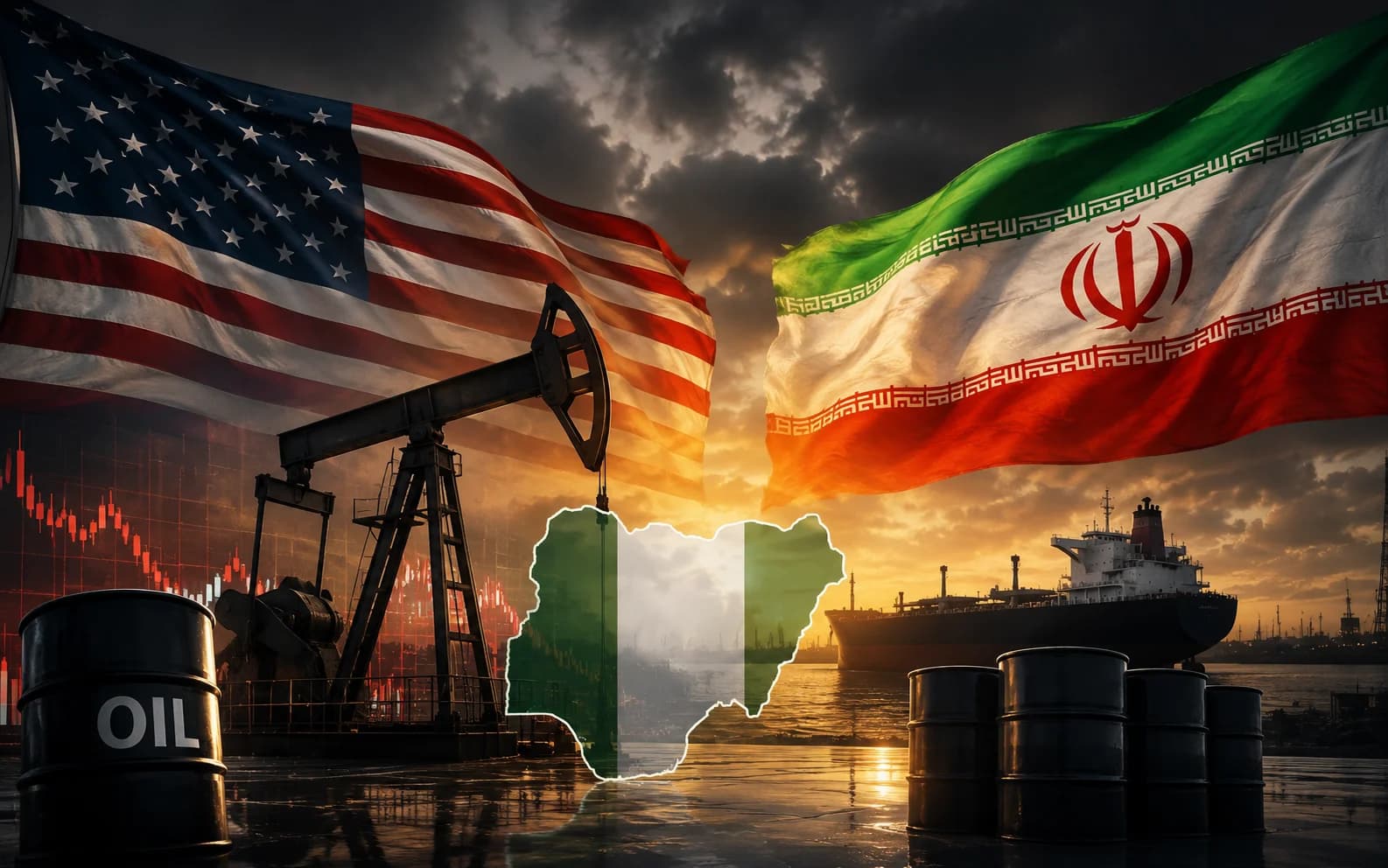
When tensions rise in the Middle East, the effects are rarely confined to the region.
Stock markets react.
Airlines review routes.
Shipping companies adjust risk assessments.
And perhaps most importantly for Nigeria, oil traders begin paying close attention.
This week, the world's energy markets have once again been placed on edge as uncertainty surrounding relations between the United States and Iran continues to dominate international headlines.
Although there has been no major disruption to global oil supplies, the possibility alone has been enough to keep investors cautious and energy prices volatile.
For countries like Nigeria, what happens thousands of kilometres away could soon be felt much closer to home.
Why the World Watches the Middle East
The Middle East is not just another region.
It is the heart of the global oil industry.
Nearly a third of the world's seaborne crude oil passes through the Strait of Hormuz, a narrow waterway between Iran and the Gulf states.
Any threat to shipping in this corridor immediately raises fears of supply disruptions.
Even rumours of escalating tensions can cause oil prices to move sharply.
That is why traders across London, New York, Dubai and Singapore are closely following every diplomatic statement and military development.
Oil Prices React to Uncertainty
Unlike many commodities, oil prices are influenced not only by supply and demand but also by expectations.
If traders believe future supplies could be disrupted, prices often rise before any actual shortage occurs.
That is exactly what has happened repeatedly during periods of heightened tension involving Iran.
Markets dislike uncertainty.
And uncertainty almost always increases volatility.
What It Means for Nigeria
At first glance, higher oil prices appear to be good news.
Nigeria earns billions of dollars from crude oil exports.
Higher international prices can increase export revenues, improve foreign exchange earnings and strengthen government finances.
But the picture is more complicated.
Nigeria still relies heavily on imported refined petroleum products, despite increasing capacity from domestic refining.
Higher global oil prices can therefore lead to:
Increased transportation costs.
Higher food prices.
Rising inflation.
More expensive imports.
Greater pressure on household budgets.
In other words, what benefits government revenue can also increase the cost of living for ordinary Nigerians.
A Boost for Government Revenue?
The Federal Government has been working to improve public finances while increasing crude oil production.
Recent gains in oil output have already strengthened optimism about Nigeria's economic recovery.
If international oil prices remain elevated, government revenues could improve further.
That could provide additional resources for:
Infrastructure projects.
Healthcare.
Education.
Debt servicing.
Social investment programmes.
However, economists caution that temporary price increases should not be mistaken for long-term economic stability.
Businesses Prefer Stability
While higher oil prices may benefit exporters, prolonged geopolitical tensions often discourage investment.
Businesses generally avoid uncertainty.
Investors become more cautious.
Insurance costs rise.
International trade becomes more expensive.
Large companies delay expansion plans until markets become more predictable.
That is why many global financial institutions continue urging diplomatic solutions rather than military escalation.
Nigeria's Energy Opportunity
Current market conditions also highlight an important lesson.
Countries with diversified energy sectors are generally better positioned to withstand global shocks.
Nigeria has enormous natural gas reserves.
Growing refining capacity.
Expanding renewable energy opportunities.
Strengthening these sectors could reduce dependence on international price swings while creating more stable economic growth.
Many analysts believe this is the moment for Nigeria to accelerate investment in domestic energy infrastructure.
Diplomacy Still Offers Hope
Despite rising tensions, diplomats remain engaged.
International leaders continue encouraging dialogue to prevent a wider regional conflict.
Most governments recognise that another major Middle East war would have consequences far beyond the region.
Energy prices.
Global trade.
Inflation.
Food security.
Financial markets.
No major economy would remain untouched.
That is why the world continues watching developments so closely.
Lessons for Nigeria
Every international crisis carries lessons.
For Nigeria, the latest market uncertainty reinforces the importance of building an economy that is less vulnerable to external shocks.
Higher oil prices can provide temporary relief.
But lasting prosperity comes from diversification.
Manufacturing.
Agriculture.
Technology.
Industrialisation.
Reliable electricity.
Strong institutions.
These are the foundations of sustainable economic growth.
More Than an Oil Story
The headlines may focus on missiles, diplomacy and military strategy.
But beneath those headlines lies a much bigger story.
How interconnected the modern world has become.
A diplomatic crisis in the Middle East can influence fuel prices in Lagos.
Food costs in Kano.
Investment decisions in Abuja.
And government revenues across Nigeria.
That reality makes today's international developments impossible to ignore.
For now, energy markets remain cautious.
Investors are watching every move.
Governments are urging restraint.
And Nigeria, like much of the world, is hoping that diplomacy—not conflict—will shape the next chapter.
EDITORIAL TEAM
About Talk Ya True Editorial Team
The Talk Ya True Editorial Team is an independent newsroom committed to factual reporting, responsible journalism and thoughtful analysis across Africa and around the world.
Related Articles
Business
NNPC Signs Six Major Gas Deals to Drive Industrial Growth and Strengthen Nigeria's Energy Future
Business
New Energy Challenge Offers Nigerian Startups a Chance to Transform Rural Electricity
Business
Nigeria's Crude Oil Production Hits Highest Level Since 2020, Surpasses OPEC Target
Business
Nigeria’s Manufacturing and Agriculture Show Signs of Recovery Despite Economic Pressures
Stay Informed
Get the biggest stories from Nigeria, Africa and around the world.
Free news updates. Unsubscribe anytime.
By subscribing, you agree to receive free news updates from Talk Ya True. You can unsubscribe at any time.