Opinion
Opinion: The Real Tragedy in Asaba Isn't Just the Fuel Scooping - It's the Desperation Behind It
The images of people scooping petrol from a leaking tanker in Asaba shocked many Nigerians. But beyond the outrage lies a more uncomfortable question: what kind of economy pushes ordinary people to believe that risking death for a few litres of fuel is a gamble worth taking?
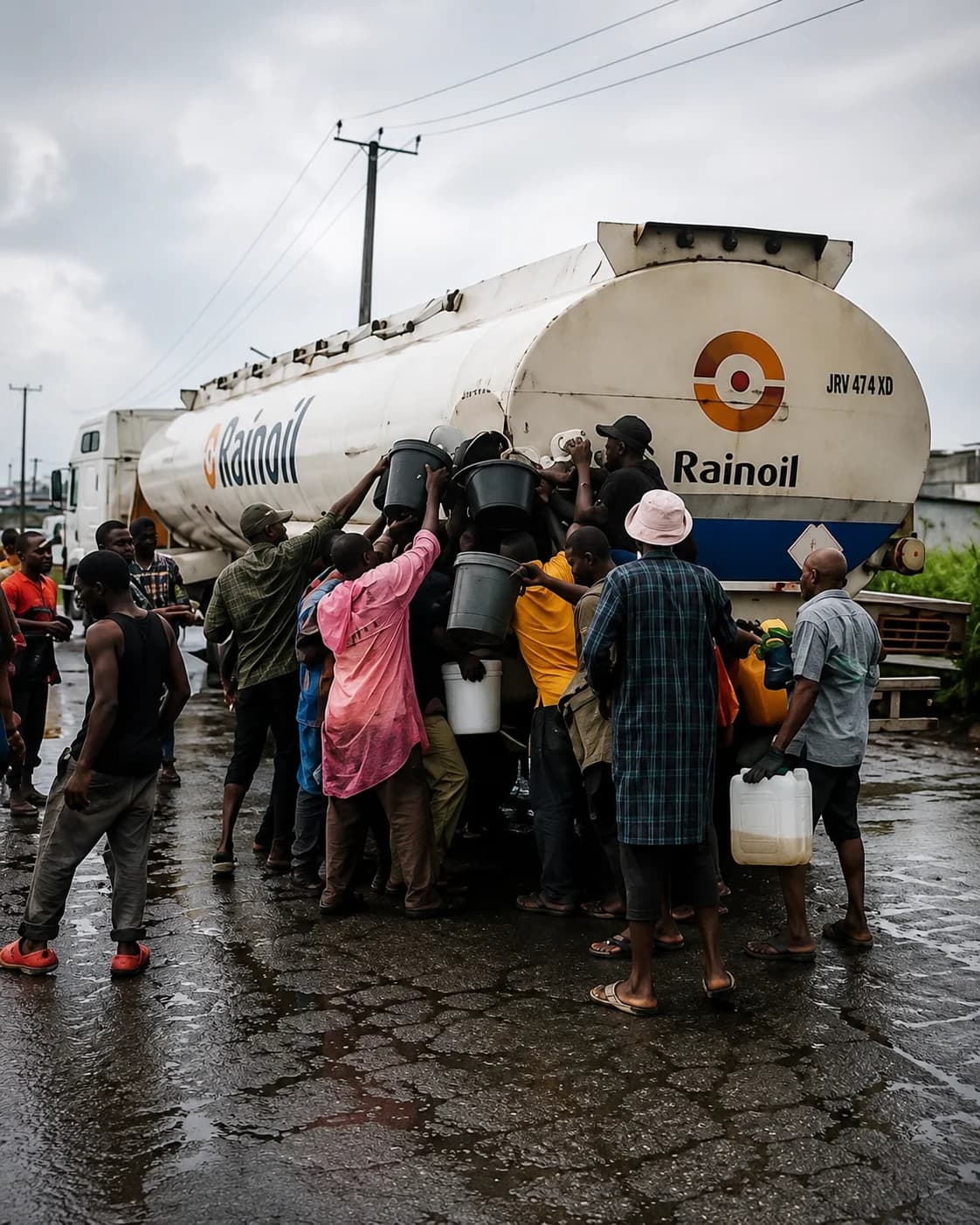
The videos from the City Gate area of Asaba are difficult to watch.
Dozens of people surrounded a leaking petrol tanker, filling buckets, bottles and jerrycans with fuel as it spilled onto the road. To many watching online, the reaction was immediate: "How can anyone be so reckless?"
It is an understandable question.
But perhaps we are asking the wrong one.
The more important question is this: What has happened to our society that makes people see a leaking fuel tanker not as a deadly hazard, but as an opportunity?
This is not an attempt to justify what happened. Petrol is highly flammable, and history has shown us, time and again, how quickly such scenes can end in catastrophe. One spark is enough to turn desperation into mass tragedy.
People should never scoop fuel from a leaking tanker.
But stopping there misses the bigger picture.
Many of those seen in the videos were not wealthy people looking for free petrol. They were ordinary Nigerians living through one of the toughest economic periods in recent memory. Every day, millions wake up wondering how they will pay transport fares, feed their families or keep a small business running.
For someone earning very little—or nothing at all—a container of free petrol may represent several days' income or the difference between working tomorrow and staying home.
That does not make the decision safe.
But it helps explain why it happens.
Too often, we judge desperate actions without acknowledging desperate circumstances.
When inflation continues to erode purchasing power, when food prices climb faster than wages, when fuel costs consume a significant portion of household income, and when unemployment or underemployment leaves many families on the edge, survival begins to influence decisions in ways that outsiders may struggle to understand.
Desperation changes how people assess risk.
A person who feels they have little to lose may be more willing to take chances that others would never consider.
This is why simply calling people "foolish" is unlikely to prevent the next incident.
If we truly want to stop scenes like the one in Asaba from repeating themselves, we must look beyond the crowd around the tanker and ask what drove them there in the first place.
Government has a role to play.
Economic reforms are often necessary, but they also come with real human costs. Those costs cannot be ignored. As difficult reforms continue, there must also be stronger measures to cushion vulnerable households—through job creation, support for small businesses, targeted social assistance and policies that help families cope with rising living costs.
Emergency agencies also have a responsibility. Tanker accidents should trigger immediate road closures, rapid response teams and public safety enforcement to keep civilians away from danger before curiosity or desperation draws a crowd.
Communities, too, must do more to educate one another. Every tanker explosion Nigeria has witnessed should serve as a permanent reminder that no amount of fuel is worth a human life.
But perhaps the greatest lesson from Asaba is this:
People do not usually risk death for a few litres of petrol because they are unaware of the danger. Many know the risk. They do it because hardship has narrowed their choices so much that an opportunity—even a dangerous one—can feel impossible to ignore.
That should concern all of us.
The people scooping fuel must accept responsibility for a dangerous decision. But as a nation, we must also ask why so many Nigerians feel compelled to make that decision in the first place.
Until we confront both the immediate danger and the desperation that fuels it, we may continue to see the same heartbreaking scenes repeated across the country.
EDITORIAL TEAM
About Talk Ya True Editorial Team
The Talk Ya True Editorial Team is an independent newsroom committed to factual reporting, responsible journalism and thoughtful analysis across Africa and around the world.
Related Articles
Politics
Tinubu Declares: "No One Is Taking This Position From Me"
Politics
Tinubu to Catholic Bishops: Nigeria Is Stabilising, Prosperity Is on the Horizon

Nigeria
Samaila Ibrahim Kaigama Still in DSS Custody as Rights Groups Demand Release

Nigeria
Over 30 Killed as Gunmen Launch Deadly Midnight Attack on Kaduna Community
Stay Informed
Get the biggest stories from Nigeria, Africa and around the world.
Free news updates. Unsubscribe anytime.
By subscribing, you agree to receive free news updates from Talk Ya True. You can unsubscribe at any time.