Politics
Orji Kalu Calls for Two-Year Amnesty to Recover Nigeria's Allegedly Looted Funds
Senator Orji Uzor Kalu has called on President Bola Tinubu to create a two-year amnesty window for Nigerians who allegedly looted public funds to return the money without prosecution. His proposal, including a claim that billions of naira may be hidden in private homes in Abuja, has triggered a heated debate over whether recovering stolen wealth should take priority over punishment.
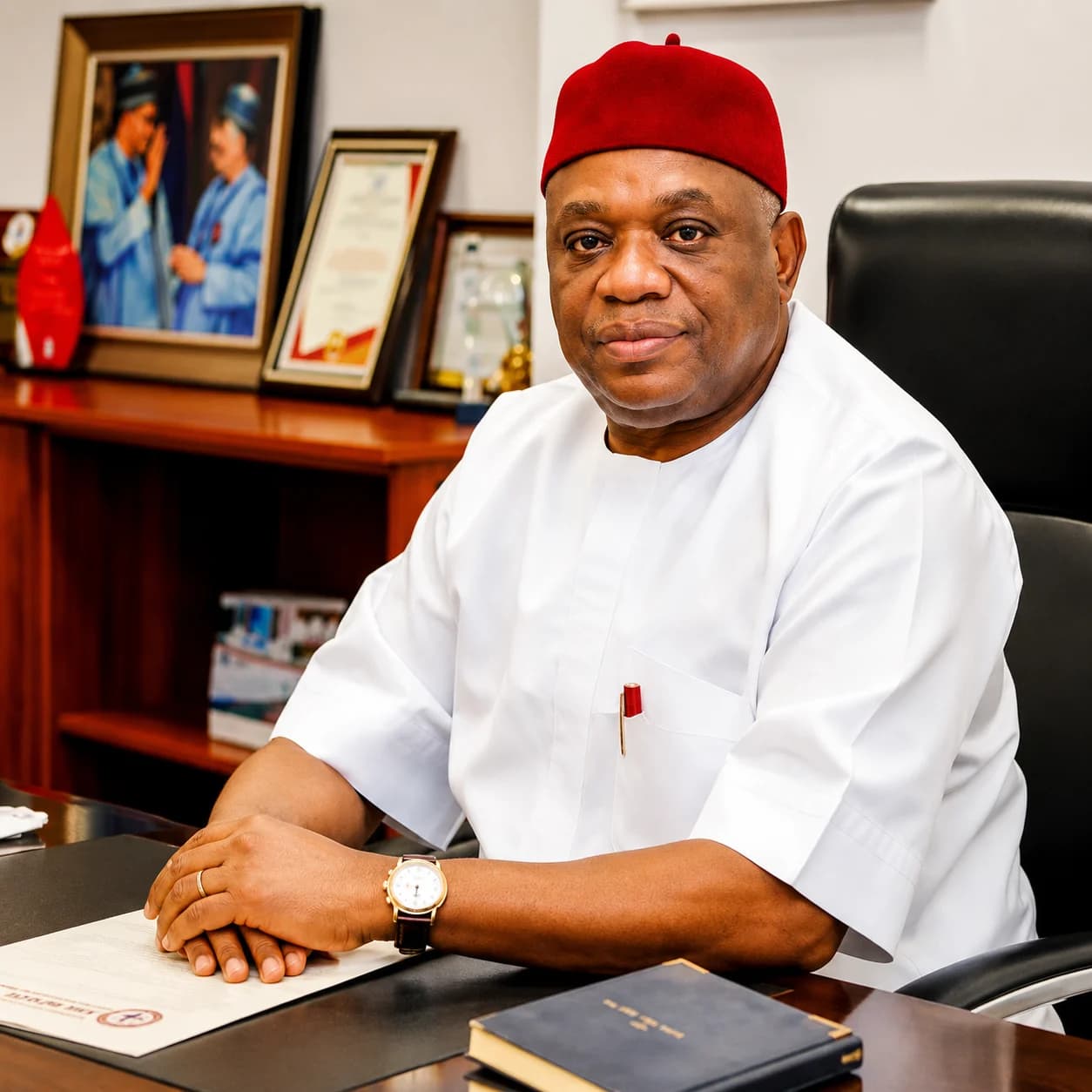
Senator Orji Uzor Kalu has stirred a major national conversation after calling on President Bola Tinubu to offer a two-year amnesty to people who allegedly looted public funds, provided they return the money to Nigeria.
The Abia North senator made the proposal during an appearance on News Central TV's 60 Minutes With Mr Kay, arguing that Nigeria could recover substantial amounts of money by giving people who allegedly took public funds an opportunity to return them without facing prosecution.
The proposal has immediately raised one of Nigeria's most uncomfortable questions:
Should the government prioritise recovering stolen money, even if that means offering forgiveness to those who took it?
Kalu's Two-Year Proposal
Kalu proposed that President Tinubu establish a two-year window during which individuals holding allegedly looted public funds could return the money without facing prosecution.
He said the arrangement should apply regardless of when the money was allegedly taken.
According to Kalu, the amnesty should cover funds dating back to 1960, effectively creating a broad opportunity for people who have held onto allegedly stolen public resources for decades to return them.
The senator argued that the priority should be getting the money back into Nigeria's economy.
Kalu Claims Billions Could Be Hidden in Abuja Homes
One of the most striking parts of Kalu's argument was his claim that billions of naira could be sitting inside private residences in Abuja.
He suggested that searching houses in the nation's capital could potentially uncover ₦50 billion to ₦60 billion.
That figure, however, is Kalu's assertion and has not been independently established.
His broader argument was that money allegedly kept in private homes is effectively removed from productive economic activity.
If such funds were returned and placed into the formal financial system, he argued, they could potentially contribute to economic growth.
"Nobody Will Touch You"
The central attraction of Kalu's proposed amnesty is the promise of protection from prosecution for those who voluntarily return the money.
His argument is based on a simple calculation: if people are currently holding onto allegedly stolen funds because they fear arrest or prosecution, removing that fear could encourage them to surrender the money.
In effect, the government would be saying:
Return the money and walk away.
That is an extraordinary proposition in a country where successive governments have made the fight against corruption a major political issue.
The Proposal Has Divided Nigerians
The reaction online has been sharply divided.
Some Nigerians have argued that getting stolen money back should be the priority.
From this perspective, billions of naira sitting outside the economy do nothing for citizens. If an amnesty could persuade people to return the money, supporters argue that the country could recover resources that might otherwise remain hidden indefinitely.
Others have reacted with anger.
They argue that granting amnesty to people who allegedly stole public funds could send the wrong message to Nigerians who obey the law and pay their taxes.
The concern is simple:
Why should someone who allegedly stole billions receive forgiveness while ordinary citizens face prosecution for much smaller offences?
The Moral Question
The debate goes beyond economics.
It is also about justice.
If someone steals public money, should returning it be enough to erase the offence?
Or should the person still face punishment even after the money has been recovered?
Those questions have no easy answers.
Supporters of Kalu's approach might argue that recovering ₦100 billion is more valuable to Nigerians than keeping a looter in prison while the money remains missing.
Opponents could argue that without punishment, future officials may conclude that stealing public money is worth the risk because they can simply return it if caught.
Could an Amnesty Actually Work?
There is another practical question.
Would alleged looters really surrender billions simply because they were promised immunity?
That would depend heavily on the structure of the programme.
A credible amnesty would likely need clear rules covering:
What qualifies as looted public funds
How returned money would be verified
Whether the source of the money must be disclosed
How assets obtained with stolen funds would be treated
Whether the amnesty applies to people already convicted
Whether money held abroad would qualify
What happens if someone falsely claims the money is part of the programme
Without strong safeguards, critics could argue that the system might create opportunities for money laundering or abuse.
Kalu Wants the Money Back in Nigeria
For Kalu, however, the economic argument appears to be the central issue.
He believes money allegedly taken from government and kept outside the formal financial system should be brought back into circulation.
The senator argued that such funds could be used to benefit the Nigerian economy rather than remaining idle in private residences.
The proposal therefore presents amnesty not as an act of generosity towards alleged looters, but as an economic recovery strategy.
But Nigeria Has Tried Recovery Before
Nigeria has spent years attempting to recover assets linked to corruption cases.
Successive administrations have pursued money and properties allegedly acquired through corruption, both within Nigeria and overseas.
The country has also recovered funds through court proceedings, negotiated settlements and international cooperation.
That history raises another question about Kalu's proposal:
Would a blanket two-year amnesty produce more money than conventional investigations and prosecutions?
There is currently no evidence available to determine the answer.
What Happens to Justice?
The strongest criticism of the proposal is likely to come from Nigerians who believe punishment is necessary to deter corruption.
Nigeria's corruption problem is not simply about missing money.
It is also about incentives.
If public officials believe that stealing government resources carries serious consequences, the risk of prosecution may discourage corruption.
But if the message becomes "return the money and you will be forgiven," critics fear that deterrence could weaken.
Supporters of Kalu's proposal would counter that the existing system has failed to recover enough of the money allegedly stolen over decades.
They may therefore see an amnesty as an imperfect but potentially practical solution.
The Proposal Comes at a Difficult Economic Moment
Kalu's comments come as Nigeria continues to face pressure over revenue, debt, inflation and the cost of government.
The Federal Government has repeatedly emphasised the need to increase revenue and reduce waste.
Against that backdrop, the idea of recovering billions of naira in allegedly stolen public funds naturally has enormous appeal.
Even a fraction of the amount Kalu says could be recovered would represent a significant resource for a government dealing with competing demands.
But the amount of money that could actually be recovered remains unknown.
The Bigger Question: Money or Justice?
That may ultimately be the heart of the debate.
Nigeria could potentially recover substantial amounts of money through an amnesty.
But should that recovery come at the expense of accountability?
Or should the government pursue both — recover the money and prosecute those responsible?
Kalu's proposal forces Nigerians to confront a difficult choice between two powerful objectives:
getting stolen money back and ensuring that those who stole it face consequences.
The Bottom Line
Senator Orji Uzor Kalu's call for a two-year amnesty for people who allegedly looted public funds has opened a major debate about corruption, accountability and economic recovery in Nigeria.
His proposal is bold: give people an opportunity to return allegedly stolen money, including funds dating back to 1960, and offer them protection from prosecution.
His claim that ₦50 billion to ₦60 billion could be sitting in Abuja homes remains unverified, but it has helped put the enormous scale of Nigeria's corruption problem back into the national conversation.
For supporters, the calculation is straightforward: take the money back and put it to work.
For critics, the question is harder:
If stealing public money can eventually be forgiven simply by returning it, what stops the next person from stealing it in the first place?
That is the dilemma President Tinubu would face if Kalu's proposal ever moved from a television interview to government policy.
EDITORIAL TEAM
About Talk Ya True Editorial Team
The Talk Ya True Editorial Team is an independent newsroom committed to factual reporting, responsible journalism and thoughtful analysis across Africa and around the world.
Related Articles
Politics
Drama as INEC Publishes Tinubu's Certificates for Public Scrutiny Ahead of 2027 Election

Politics
Showunmi Praises Seyi Tinubu After City Boy Movement Visit, Highlights Inclusive Leadership
Politics
Fayose's Unusual Take on Nigeria's Power Crisis Sparks Debate Over Birth Rates

Politics
Davido Raises Alarm Over Osun Poll, Says He Could Turn to Trump if Election Is Rigged
Stay Informed
Get the biggest stories from Nigeria, Africa and around the world.
Free news updates. Unsubscribe anytime.
By subscribing, you agree to receive free news updates from Talk Ya True. You can unsubscribe at any time.