Business
Tariffs, Iran War and AI Boom Drive Fresh Inflation Fears as Global Prices Keep Rising
A new report from the U.S. Federal Reserve warns that inflation has intensified in recent months, driven by the combined impact of tariffs, higher energy costs linked to the Iran conflict and massive investment in artificial intelligence infrastructure. While the warning comes from the world's largest economy, its consequences could be felt far beyond America's borders, including in Nigeria and across Africa, where higher import costs and global price pressures continue to squeeze households and businesses.
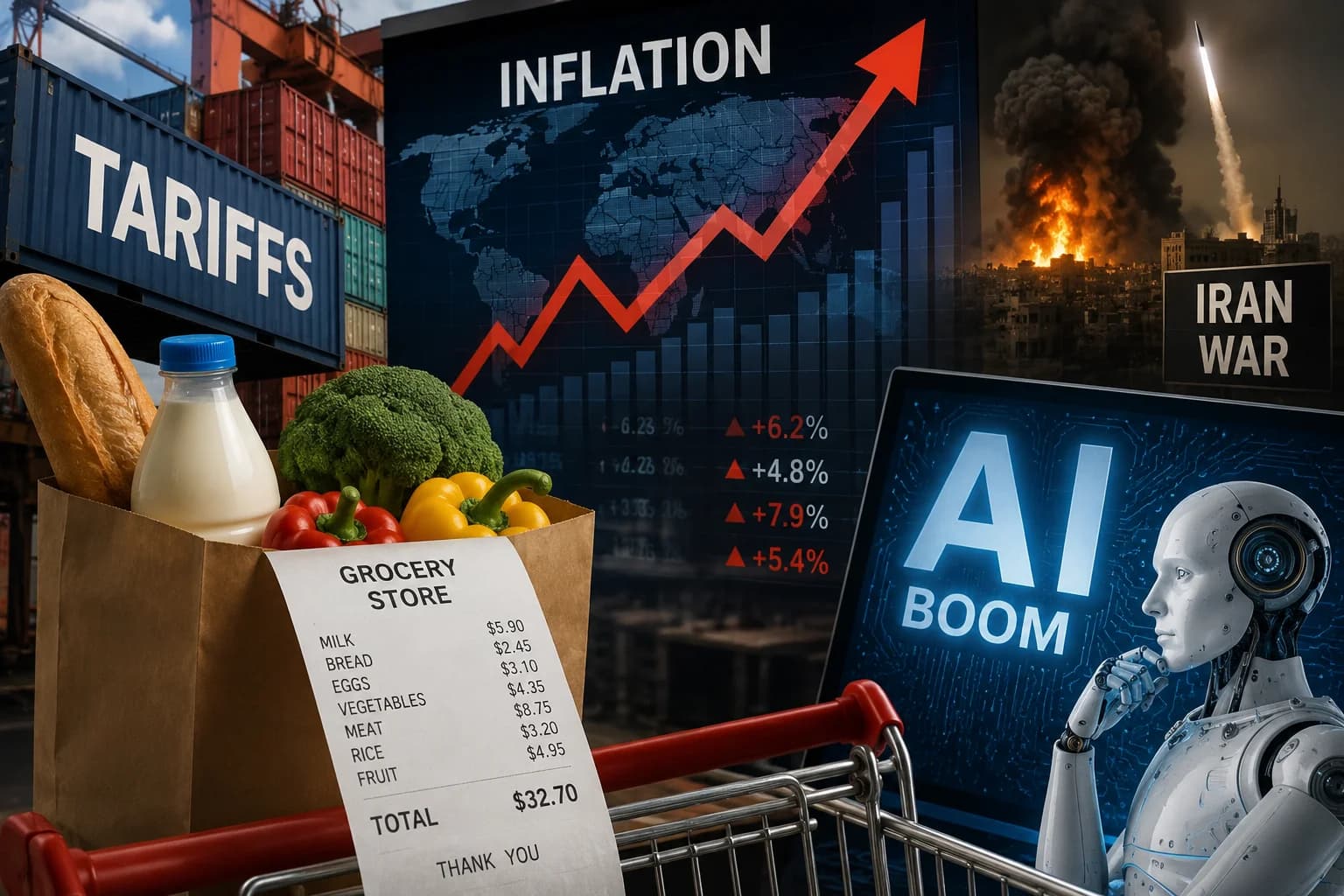
Just when many families hoped prices would finally begin to fall, a new warning has emerged from one of the world's most influential financial institutions.
According to the U.S. Federal Reserve, inflation is proving more stubborn than expected.
The reason is not a single crisis.
It is three major forces colliding at the same time.
Tariffs.
The Iran conflict.
And the global race to build artificial intelligence.
Together, they are creating fresh pressure on businesses, consumers and policymakers around the world.
Although the report focuses on the United States, its message reaches far beyond Washington.
In today's interconnected economy, what happens in one of the world's largest markets often affects prices, investment and trade across continents.
Three Powerful Forces Are Pushing Prices Higher
The Federal Reserve says inflation accelerated further this spring as businesses continued to deal with the lingering effects of tariffs, rising energy costs linked to the conflict involving Iran, and soaring demand for AI-related infrastructure.
Each factor affects prices differently.
Tariffs make imported goods more expensive.
Higher oil prices increase transport and production costs.
The AI boom has triggered enormous spending on data centres, computer chips, electricity and construction, creating additional demand that pushes up prices in key sectors.
Individually, each challenge is manageable.
Together, they create an inflationary storm.
The AI Revolution Has an Unexpected Cost
Artificial intelligence is often celebrated for making businesses more productive.
But building AI systems requires enormous physical infrastructure.
Thousands of advanced computer chips.
Massive data centres.
Large electricity supplies.
Construction workers.
Engineers.
Cooling systems.
As companies race to expand their AI capabilities, demand for these resources has surged.
That demand is now contributing to higher prices in parts of the economy.
The irony is striking.
The technology expected to make businesses more efficient is also helping increase costs in the short term.
Energy Prices Continue to Influence Everything
Oil remains one of the world's most important commodities.
When energy becomes more expensive, almost every industry feels the impact.
Factories pay more to produce goods.
Transport companies pay more to move products.
Airlines face higher fuel bills.
Farmers spend more on machinery and logistics.
Retailers often pass those extra costs on to consumers.
The Iran conflict has added uncertainty to global energy markets, keeping pressure on fuel prices even after the sharpest spikes eased.
For countries that import refined fuel or depend heavily on international shipping, the effects can be significant.
Why Nigerians Should Pay Attention
Some readers may wonder why a report from the U.S. Federal Reserve matters in Nigeria.
The answer is simple.
The global economy is deeply connected.
If inflation remains high in major economies:
Interest rates may stay elevated.
Borrowing could become more expensive.
Investors may become more cautious.
Import costs may remain high.
Global demand could slow.
Nigeria already faces inflationary pressures of its own.
Persistent global inflation can make those domestic challenges harder to manage.
Businesses importing machinery, electronics, pharmaceuticals and industrial inputs often pay prices influenced by global markets.
Central Banks Face a Difficult Choice
High inflation creates a dilemma for central banks.
Raise interest rates too aggressively and economic growth may slow.
Cut rates too early and inflation could accelerate again.
The Federal Reserve has so far kept interest rates unchanged while monitoring how these competing pressures develop.
Other central banks are watching closely because the Fed's decisions often influence financial markets around the world.
Consumers Feel the Pressure First
Economic reports often focus on percentages and policy decisions.
Ordinary families experience something much simpler.
Higher grocery bills.
More expensive transport.
Rising utility costs.
Increased rent.
Businesses facing higher operating costs frequently pass some of those costs to customers.
That is why inflation can affect nearly everyone, regardless of income.
Businesses Must Adapt
Companies are also adjusting.
Some are improving efficiency.
Others are delaying investment.
Some are increasing prices.
Others are absorbing higher costs to remain competitive.
Research cited in recent reports suggests many businesses still expect to pass on additional costs to customers over the coming months.
The challenge for business leaders is finding the balance between protecting profits and keeping products affordable.
Could Inflation Stay High for Longer?
One of the biggest concerns among economists is that inflation may not disappear as quickly as many had hoped.
If energy markets remain volatile...
If trade tensions continue...
If AI investment remains exceptionally strong...
Price pressures could persist longer than expected.
Some economists now expect central banks to keep borrowing costs higher for an extended period.
That could affect everything from mortgages to business loans and investment decisions.
Africa Must Prepare, Not Just React
For African economies, the lesson is clear.
Global shocks can arrive without warning.
Countries that depend heavily on imports are particularly vulnerable when international prices rise.
Governments can reduce that vulnerability by strengthening local manufacturing, improving food production, investing in energy infrastructure and supporting domestic industries.
The more goods a country produces competitively at home, the less exposed it becomes to global price shocks.
Inflation Is No Longer Just an Economic Story
Inflation is increasingly shaped by geopolitics.
By technology.
By supply chains.
By energy security.
By international trade.
The latest Federal Reserve warning shows that today's economy cannot be understood through a single lens.
A conflict thousands of kilometres away can influence fuel prices.
A trade policy can affect supermarket shelves.
An AI data centre can contribute to construction cost increases.
Everything is becoming more connected.
The Road Ahead
The world economy has shown remarkable resilience despite repeated crises.
But resilience does not eliminate pressure.
The Federal Reserve's latest assessment serves as a reminder that inflation remains one of the biggest economic challenges facing governments, businesses and households alike.
For consumers, the message is straightforward.
Relief may take longer than expected.
For businesses, efficiency and innovation will become even more important.
For policymakers, balancing growth with price stability remains one of the toughest tasks in modern economics.
And for countries like Nigeria, where global developments often influence local markets, the report is another reminder that the world's economic problems rarely stay within national borders.
EDITORIAL TEAM
About Talk Ya True Editorial Team
The Talk Ya True Editorial Team is an independent newsroom committed to factual reporting, responsible journalism and thoughtful analysis across Africa and around the world.
Related Articles
Business
Nigeria’s Manufacturing and Agriculture Show Signs of Recovery Despite Economic Pressures
Business
From Nigeria’s Biggest Gamble to Global Energy Powerhouse: How the Iran War Changed Dangote Refinery’s Fortunes
Business
ExxonMobil’s $1 Billion Nigeria Bet: Is Big Oil Confidence Finally Returning?

Business
Nigeria’s Economy Is Growing, So Why Are Nigerians Still Getting Poorer? IMF Raises Fresh Warning
Stay Informed
Get the biggest stories from Nigeria, Africa and around the world.
Free news updates. Unsubscribe anytime.
By subscribing, you agree to receive free news updates from Talk Ya True. You can unsubscribe at any time.