World
Trump Renews Push for US Control of Greenland as NATO Faces a Crisis From Within
US President Donald Trump has renewed his demand for American control of Greenland at the NATO summit in Ankara, reopening a dispute with Denmark and exposing a deeper question facing the Western alliance: what happens when its most powerful member places pressure on the territory of another ally?
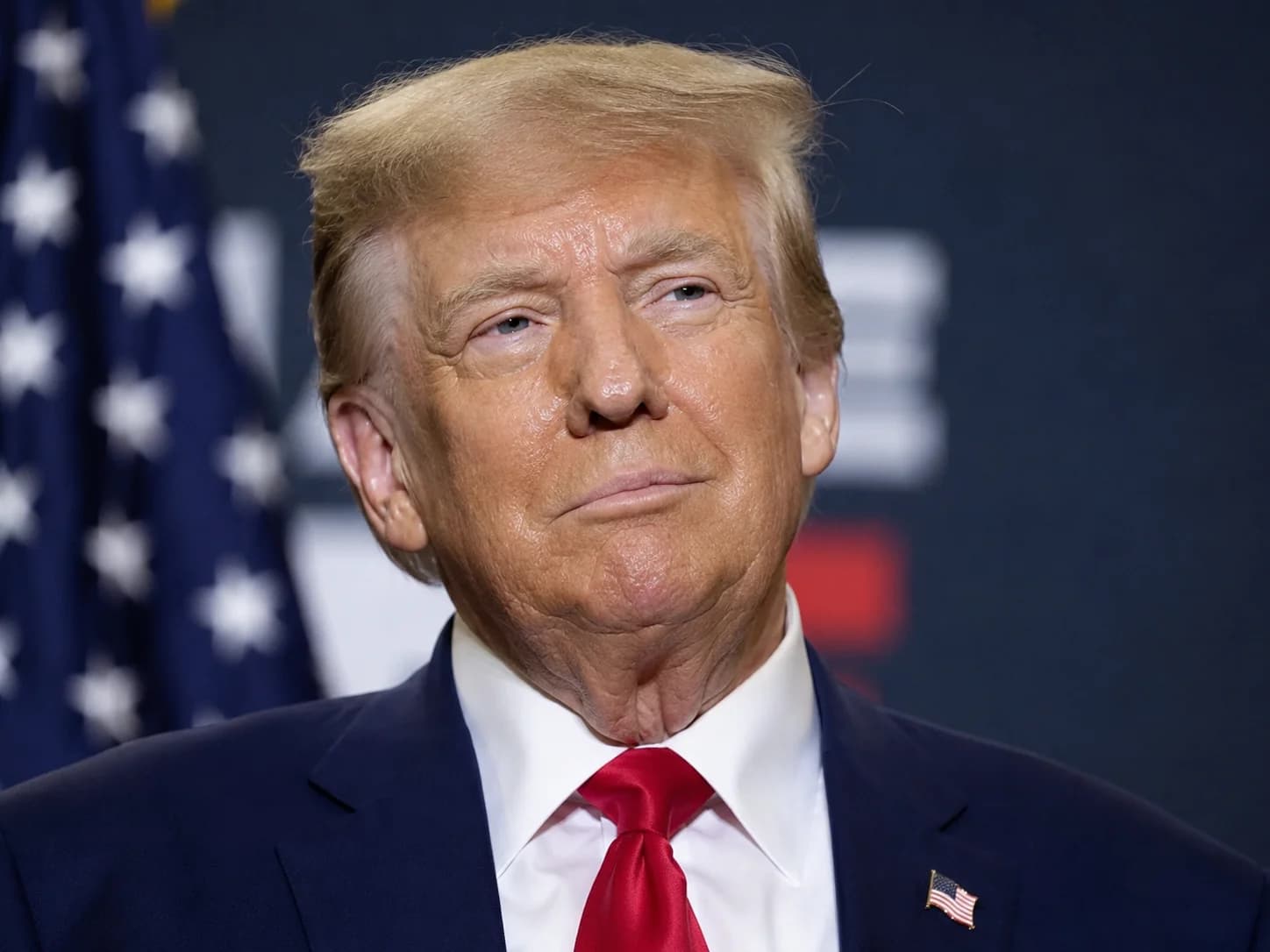
US President Donald Trump has once again declared that Greenland should be controlled by the United States rather than Denmark, bringing one of the most extraordinary territorial disputes in modern Western politics directly into the heart of the NATO summit.
Speaking in Ankara, Turkey, as leaders of the military alliance gathered to discuss collective defence, military spending and the future of transatlantic security, Trump argued that Greenland was strategically important to the United States and criticised Denmark’s management of the vast Arctic territory.
His renewed demand immediately revived tensions between Washington and Copenhagen, two founding members of NATO.
But the controversy is bigger than Greenland.
It strikes at one of the most uncomfortable questions facing the Western alliance.
NATO was created on the principle that its members would protect one another from external threats.
But what happens when the source of pressure is the alliance’s most powerful member?
That is the contradiction now hanging over the summit in Ankara.
Greenland Returns to the Centre of Global Politics
For much of the world, Greenland was once seen primarily as a remote Arctic territory known for its vast ice sheet, small population and extraordinary natural environment.
That perception is changing rapidly.
Greenland has become one of the most strategically important locations in the emerging competition for control and influence in the Arctic.
The territory sits between North America and Europe and occupies a critical position along military and maritime routes in the North Atlantic and Arctic regions.
The United States already has a significant security interest in Greenland because of its location.
But Trump has repeatedly argued that American influence is not enough.
He wants control.
At the NATO summit in Ankara, Trump again made his position clear.
He argued that Greenland should be controlled by the United States rather than Denmark and linked the territory to wider security concerns involving Russia and China.
For Denmark and Greenland, however, the issue is not simply about military strategy.
It is about sovereignty.
Why Greenland Matters So Much to Washington
Trump’s interest in Greenland may sound extraordinary, but the strategic calculations behind American interest in the territory are real.
The Arctic is becoming increasingly important to global security.
Russia has a major military presence across its Arctic territory.
China has expanded its economic and strategic interest in the region.
Western governments are paying closer attention to Arctic shipping routes, surveillance capabilities, missile defence and access to critical minerals.
Greenland sits at the centre of many of these calculations.
Its geographical position makes it important for monitoring activity between the Arctic and North Atlantic.
As competition between major powers intensifies, the territory's strategic value is likely to increase.
Greenland is also associated with significant mineral potential, including resources considered important for modern technology and the global energy transition.
For Washington, the argument is therefore about more than land.
It is about military positioning, economic security and the balance of power in a region that is becoming increasingly important.
But strategic importance does not erase sovereignty.
That is where Trump’s argument becomes deeply controversial.
A NATO Alliance Facing an Internal Contradiction
The Greenland dispute creates a problem NATO was never designed to handle.
The alliance was built around collective defence against external threats.
Its famous Article 5 principle declares that an attack against one member is considered an attack against all.
For decades, the central question was how NATO would respond if one of its members were threatened by an outside power.
The Greenland controversy creates a different question.
What happens when the pressure comes from inside the alliance?
The United States is NATO’s most powerful military member.
Denmark is also a member.
Trump’s demand therefore places the alliance in an extraordinary position.
European governments depend heavily on American military power for the defence of the continent, particularly as Russia remains a major security concern.
At the same time, one of those European allies is being pressured over the future of territory within the Kingdom of Denmark.
The contradiction is difficult to ignore.
An alliance based on mutual security is now being forced to confront a dispute over sovereignty among its own members.
Trump Links Greenland Dispute to US Troops in Europe
The controversy became even more serious after Trump linked disagreements with Europe to the possibility of removing American troops from the continent.
The United States has maintained a major military presence in Europe for decades.
American troops, aircraft, bases and military equipment remain central to NATO’s deterrence strategy.
Any significant reduction in that presence would have major consequences for European security.
Trump has repeatedly criticised European allies for depending too heavily on American military protection while failing to spend enough on their own defence.
That criticism has already pushed European governments toward higher military spending.
But linking the future of American military commitments to disagreements over Greenland raises the stakes considerably.
The message being received in European capitals is increasingly clear: the security relationship with Washington can no longer be taken for granted.
Europe Is Spending More, but Trump Remains Dissatisfied
The irony of the Ankara summit is that European NATO members arrived prepared to demonstrate that they had listened to years of American criticism.
Alliance leaders showcased major defence agreements worth tens of billions of dollars.
European governments have increased military spending and expanded defence production.
NATO leaders have repeatedly emphasised the need for stronger military capabilities and greater burden-sharing.
In other words, Europe is doing much of what Washington demanded.
Yet the political relationship remains deeply strained.
Trump has continued to criticise major European allies while expressing dissatisfaction over issues extending beyond defence spending.
The Greenland dispute demonstrates that even increased European military investment may not be enough to repair the deeper political divide across the Atlantic.
The problem is no longer simply about money.
It is about trust.
Denmark Faces an Impossible Strategic Position
For Denmark, the Greenland dispute creates a difficult strategic challenge.
The country is a longstanding American ally and NATO member.
It depends on the same collective security system that the United States leads.
Yet it must also defend the principle that the future of Greenland cannot be decided by pressure from Washington.
Copenhagen cannot simply accept American control over the territory without abandoning fundamental principles of sovereignty and self-determination.
At the same time, an open confrontation with the United States carries significant diplomatic and security risks.
Greenland itself also has a voice in the debate.
The people of Greenland are not simply pieces on a geopolitical chessboard to be transferred between powerful countries.
Any serious discussion about the territory’s future must recognise the political rights and aspirations of Greenlanders themselves.
The strategic importance of a territory does not give outside powers the right to decide its future without the consent of its people.
The Arctic Is Becoming the Next Great Arena of Competition
Behind the diplomatic drama lies a larger transformation.
The Arctic is no longer at the edge of world politics.
It is moving toward the centre.
Climate change, technological development, military competition and interest in natural resources are changing the strategic importance of the region.
Major powers are preparing for a future in which the Arctic plays a greater role in trade, defence and global competition.
Russia already possesses an enormous Arctic coastline and has invested heavily in military infrastructure across the region.
China has declared itself a near-Arctic stakeholder and has pursued economic interests in the region.
The United States and its allies are increasingly concerned about protecting northern approaches and maintaining strategic advantage.
Greenland is therefore caught between geography and great-power rivalry.
Its location makes it valuable.
Its resources make it attractive.
Its political status makes it vulnerable to pressure.
The danger is that the people who actually live there could find their future discussed mainly through the language of military competition.
Is Trump Negotiating or Redefining American Foreign Policy?
One of the biggest questions surrounding Trump’s Greenland campaign is whether the president genuinely expects the United States to gain control of the territory or whether the demand is part of a broader negotiating strategy.
Trump has often used maximum pressure in international negotiations.
He makes large demands, creates uncertainty and forces allies and opponents to respond.
From that perspective, the Greenland campaign could be designed to secure greater American military access, stronger Arctic cooperation or increased European defence commitments.
But there is another possibility.
Trump may genuinely believe that American security requires direct control over strategically important territory.
If so, the implications extend far beyond Greenland.
The post-Second World War international order was built around principles including territorial sovereignty and opposition to the acquisition of territory through coercion.
The United States has traditionally presented itself as a defender of that system.
If Washington begins arguing that strategic importance gives powerful countries a right to control smaller territories, it weakens the principles the West invokes when criticising territorial ambitions elsewhere.
That is the deeper danger.
A Test of Whether NATO Is More Than Military Power
NATO possesses enormous military strength.
Its members have advanced aircraft, submarines, intelligence systems, nuclear weapons and some of the most powerful armed forces in the world.
But alliances are held together by more than weapons.
They require trust.
European members must believe that American security commitments are dependable.
The United States must believe that European allies are willing to carry a fair share of the defence burden.
Smaller members must believe that the alliance protects their sovereignty regardless of their size.
The Greenland dispute touches all three issues.
Trump believes Europe has taken American protection for granted.
European leaders increasingly question whether Washington can still be considered a predictable partner.
Denmark faces pressure over territory connected to its kingdom from the country that is supposed to be the alliance’s security backbone.
No defence spending target can solve that problem.
Only political trust can.
Greenland Is About More Than Greenland
The argument over Greenland may appear to concern a remote Arctic territory.
In reality, it is about the future of Western power.
It is about whether Europe can continue depending on the United States for its security.
It is about whether Washington still views alliances as permanent strategic partnerships or temporary arrangements that must continuously prove their value.
It is about whether small territories can determine their own future when major powers decide their geography is too important to ignore.
And it is about whether NATO can remain united when the biggest threat to its cohesion may no longer come only from outside its borders.
Trump’s renewed Greenland demand has exposed these tensions at the worst possible moment.
Europe is facing continuing security challenges from Russia.
The Arctic is becoming more strategically contested.
China’s global influence continues to grow.
The international system is becoming increasingly unstable.
NATO should be discussing how to confront those challenges together.
Instead, its members are being forced to consider what happens when their most powerful ally wants control over territory linked to another member.
That is not a normal diplomatic disagreement.
It is a warning about how rapidly the global order is changing.
The World Is Watching What NATO Does Next
The outcome of the Greenland dispute will matter far beyond the Arctic.
Russia will be watching.
China will be watching.
Countries across Africa, Asia and Latin America will be watching.
For decades, Western governments have argued that international borders and sovereignty must be respected.
Their response to pressure over Greenland will therefore carry global significance.
If the principles of sovereignty apply only when convenient, the credibility of the international system becomes weaker.
Trump may see Greenland primarily as a strategic asset that the United States cannot afford to leave outside its control.
Denmark sees a question of sovereignty.
Greenlanders see their homeland and their future.
Europe sees another warning that its security relationship with Washington is changing.
And NATO faces perhaps the most difficult question in its history.
The alliance was built to defend its members from threats outside its borders.
It may now have to prove that the principles holding it together can survive pressure from within.
Stay Informed
Get the biggest stories from Nigeria, Africa and around the world.
Free news updates. Unsubscribe anytime.
By subscribing, you agree to receive free news updates from Talk Ya True. You can unsubscribe at any time.