Politics
Zacch Adedeji Defends Tinubu's Economic Reforms as Nigerians Debate Whether the Pain Is Worth It
Nigeria Revenue Service Chairman Zacch Adedeji has defended President Bola Tinubu's economic reforms during a live television appearance, arguing that the government's tax and fiscal changes are designed to strengthen Nigeria's economy. His defence has reignited a heated online debate over whether rising government revenue is translating into better living conditions for ordinary Nigerians.
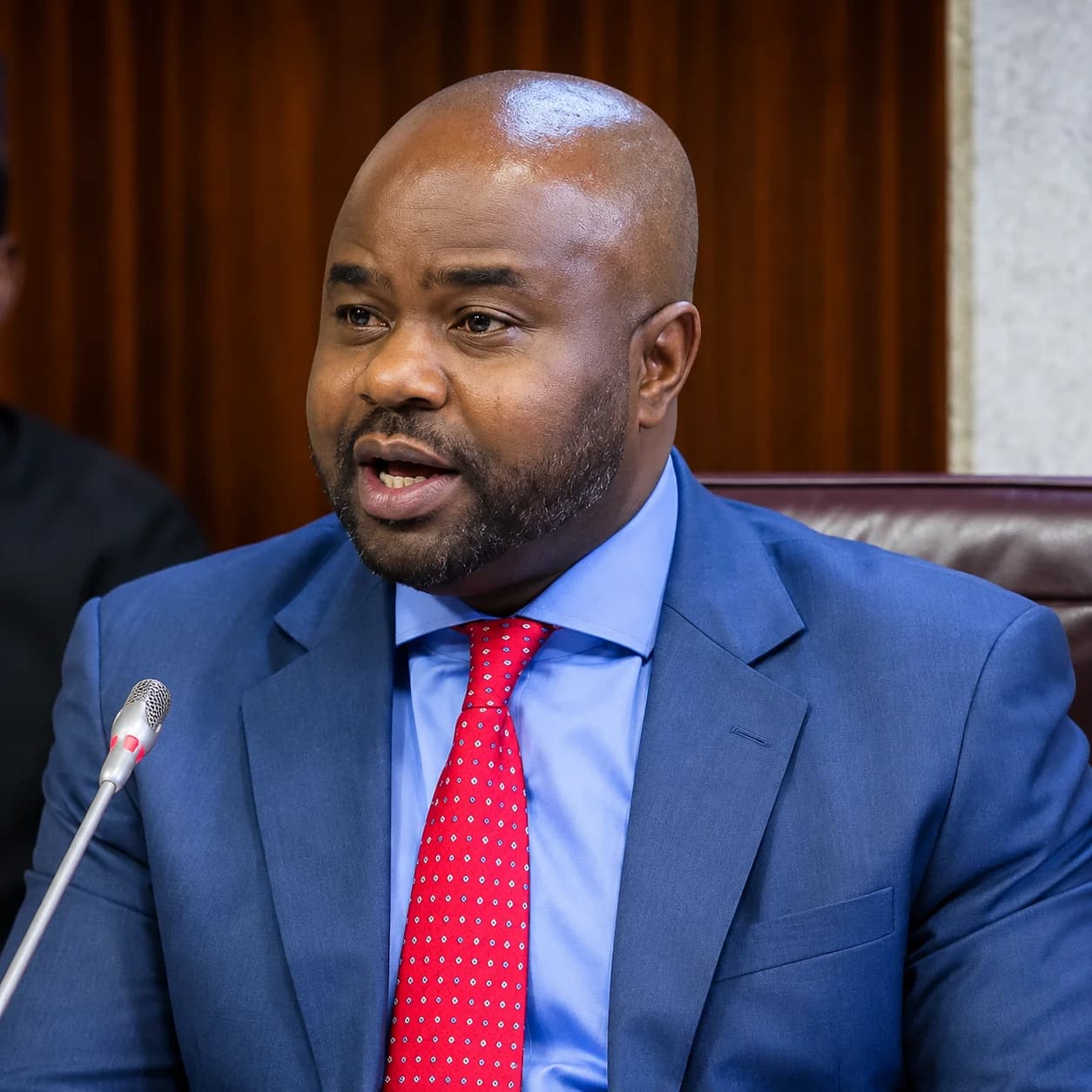
Nigeria's economic reform debate has returned to the spotlight after Zacch Adedeji, Chairman of the Nigeria Revenue Service, appeared on live television to defend the economic direction of President Bola Tinubu's administration.
Adedeji's appearance on Channels Television's Politics Today came at a time when the government's tax reforms remain one of the most controversial aspects of its economic agenda.
While the administration maintains that the reforms are necessary to rebuild Nigeria's finances and create a stronger foundation for growth, critics continue to question whether the benefits are reaching ordinary Nigerians quickly enough.
That disagreement was once again reflected in the reaction online.
Adedeji Defends the Reform Agenda
Adedeji's central message was consistent with the government's broader defence of the reforms: Nigeria needed to change the way it raises and manages revenue.
For years, the country has struggled with a narrow revenue base, heavy dependence on oil earnings and an inefficient tax administration system.
The new tax framework, which took effect from January 1, 2026, was designed to modernise tax administration, improve compliance and make the system more efficient.
The Federal Government has described the reforms as among the most significant changes to Nigeria's tax system in decades.
Why Tax Reform Has Become So Important
Nigeria's economic problem is not simply that the government spends too much.
It also has historically struggled to generate enough domestic revenue to fund infrastructure, healthcare, education, security and other public services.
The International Monetary Fund has identified domestic revenue mobilisation as a critical priority for Nigeria, noting the country's low revenue-to-GDP ratio and the need for stronger tax administration.
That is the economic argument behind the reform programme.
The government wants more Nigerians and businesses operating within the formal tax system while reducing duplication and improving compliance.
Government Says the New System Is Not Simply About More Taxes
One of the strongest arguments from supporters of the reforms is that tax reform should not be confused with simply increasing tax rates.
The new framework includes changes intended to simplify tax administration, reduce overlapping obligations and improve certainty for businesses.
The government has also argued that lower-income Nigerians should receive protection under the new system.
Former Presidential Fiscal Policy and Tax Reform Committee chairman Taiwo Oyedele, for example, previously said households earning ₦250,000 or less monthly would not be brought into the personal income-tax burden under the new framework.
But Nigerians Are Asking a Different Question
This is where the online conversation becomes much more complicated.
For many Nigerians, the question is not:
"Is tax reform technically necessary?"
The question is:
"When will I actually feel the benefit?"
A government can increase revenue and improve its fiscal position while households continue to struggle with food, transportation, rent, electricity and other costs.
That disconnect is what continues to fuel criticism.
The X Debate: Numbers Versus Real Life
The reaction on X has largely fallen into two camps.
Supporters of Tinubu's reforms argue that the administration inherited a severely distorted economy and that difficult structural changes were unavoidable.
Some Nigerians have even argued that the reforms should have happened years earlier and that the real problem is implementation rather than the direction itself.
Critics, however, argue that economic indicators and government revenue figures do not automatically translate into improved living standards.
For them, the ultimate measure of success is what happens to the average household.
Revenue Is Rising — But So Are Expectations
The government has pointed to several indicators as evidence that its economic programme is beginning to work.
President Tinubu recently praised his economic team after the Nigerian Exchange Group reported that market capitalisation had risen from about ₦30 trillion in 2023 to ₦160 trillion.
Tinubu said the reforms were laying the foundation for sustainable economic growth, while members of his economic team argued that the country could ultimately achieve a $1 trillion economy.
Those figures are significant.
But they also create a higher expectation from citizens.
If the economy is improving, Nigerians naturally want to know when that improvement will translate into cheaper food, more jobs, better infrastructure and greater purchasing power.
The Pain of Reform Remains the Biggest Political Problem
There is little doubt that Tinubu's reforms have been painful for many Nigerians.
The removal of fuel subsidies fundamentally changed the economics of transportation and energy.
The liberalisation of the foreign-exchange market also created major price adjustments.
The government argues that maintaining the previous system was unsustainable and simply postponed the problem.
Critics counter that the government should have done more to protect vulnerable households from the immediate consequences.
That disagreement is unlikely to disappear before the 2027 election.
Adedeji's Defence Comes at a Political Moment
The timing of the conversation is significant.
Nigeria is already moving deeper into the political cycle ahead of 2027.
The APC will want voters to judge Tinubu on the economic trajectory at the end of his first term.
Opposition parties, meanwhile, are likely to argue that Nigerians should judge the government by the hardship experienced during the reform period.
That means economic statistics will increasingly become political weapons.
The government will highlight growth, revenue, investment and market performance.
The opposition will highlight food prices, unemployment, taxes and household hardship.
Both sides will attempt to define what "economic progress" actually means.
The Tax System Is Being Restructured
The reforms are not limited to one new tax.
Four major tax laws came into force in 2026, creating a new framework covering tax administration, revenue collection and institutional responsibilities.
The government has also been developing a new VAT framework to support implementation of the Nigeria Tax Act.
Finance Minister Taiwo Oyedele said the new VAT framework should be practical, clear and responsive to the changing economy while protecting vulnerable Nigerians and supporting investment.
That demonstrates how extensive the restructuring has become.
Businesses Are Watching Closely
Businesses are another major part of the debate.
For companies, tax reform can either simplify operations or create additional compliance costs depending on how it is implemented.
The government insists that the reforms are intended to reduce uncertainty and make Nigeria more competitive.
The private sector, however, will ultimately judge the system by how easy it is to understand, comply with and operate under.
That is why implementation may matter just as much as the legislation itself.
Why Adedeji's Role Matters
As head of the Nigeria Revenue Service, Adedeji is effectively one of the key officials responsible for translating the government's tax policy into actual revenue administration.
That puts him directly in the middle of one of the administration's biggest economic experiments.
If revenue increases without excessive pressure on productive businesses and households, the government will have a strong argument that its approach is working.
If compliance becomes too burdensome or drives businesses further into informality, critics will have ammunition.
Nigerians Want Results, Not Just Explanations
This may be the biggest lesson from the reaction to Adedeji's appearance.
Nigerians are listening to the government's explanations.
But many are becoming less interested in explanations alone.
They want results.
They want to know whether higher government revenue will produce better roads.
Whether economic reforms will create jobs.
Whether food prices will become more manageable.
Whether electricity will improve.
Whether businesses will expand.
And whether their incomes will eventually catch up with the cost of living.
The Bottom Line
Zacch Adedeji's defence of President Tinubu's economic reforms has reignited one of Nigeria's biggest political and economic debates.
The government argues that difficult reforms were necessary to repair structural weaknesses, modernise taxation and build a stronger revenue base. The IMF has similarly identified domestic revenue mobilisation and improved tax administration as important priorities for Nigeria.
But the public is asking a more immediate question:
If the reforms are working, when will ordinary Nigerians feel the difference?
That may ultimately be the most important test of Tinubu's economic agenda.
Because economic reform is not judged only by government revenue, stock-market figures or policy documents.
It is judged by what happens in the pockets, businesses and homes of ordinary Nigerians.
Tags
EDITORIAL TEAM
About Talk Ya True Editorial Team
The Talk Ya True Editorial Team is an independent newsroom committed to factual reporting, responsible journalism and thoughtful analysis across Africa and around the world.
Related Articles
Politics
Nigeria's Opposition Searches for Common Ground as 2027 Grand Alliance Talks Gather Momentum
Nigeria
Muslim-Muslim Ticket Debate Intensifies as Calls for Continued Northern Political Dominance Resurface
Politics
Orji Kalu Calls for Two-Year Amnesty to Recover Nigeria's Allegedly Looted Funds

Politics
Showunmi Praises Seyi Tinubu After City Boy Movement Visit, Highlights Inclusive Leadership
Stay Informed
Get the biggest stories from Nigeria, Africa and around the world.
Free news updates. Unsubscribe anytime.
By subscribing, you agree to receive free news updates from Talk Ya True. You can unsubscribe at any time.