Africa
₦100,000 to Face Terrorists? Soldiers’ Pay Controversy Overshadows Tinubu’s Security Meeting
President Bola Tinubu has met Nigeria’s military, intelligence and security chiefs as anger grows over the disclosure that the minimum monthly salary of a Nigerian soldier is now ₦100,000. With troops being asked to confront terrorists, bandits and kidnappers across multiple fronts, the controversy has raised a difficult national question: can Nigeria win a dangerous war while the people fighting it struggle to support their own families?
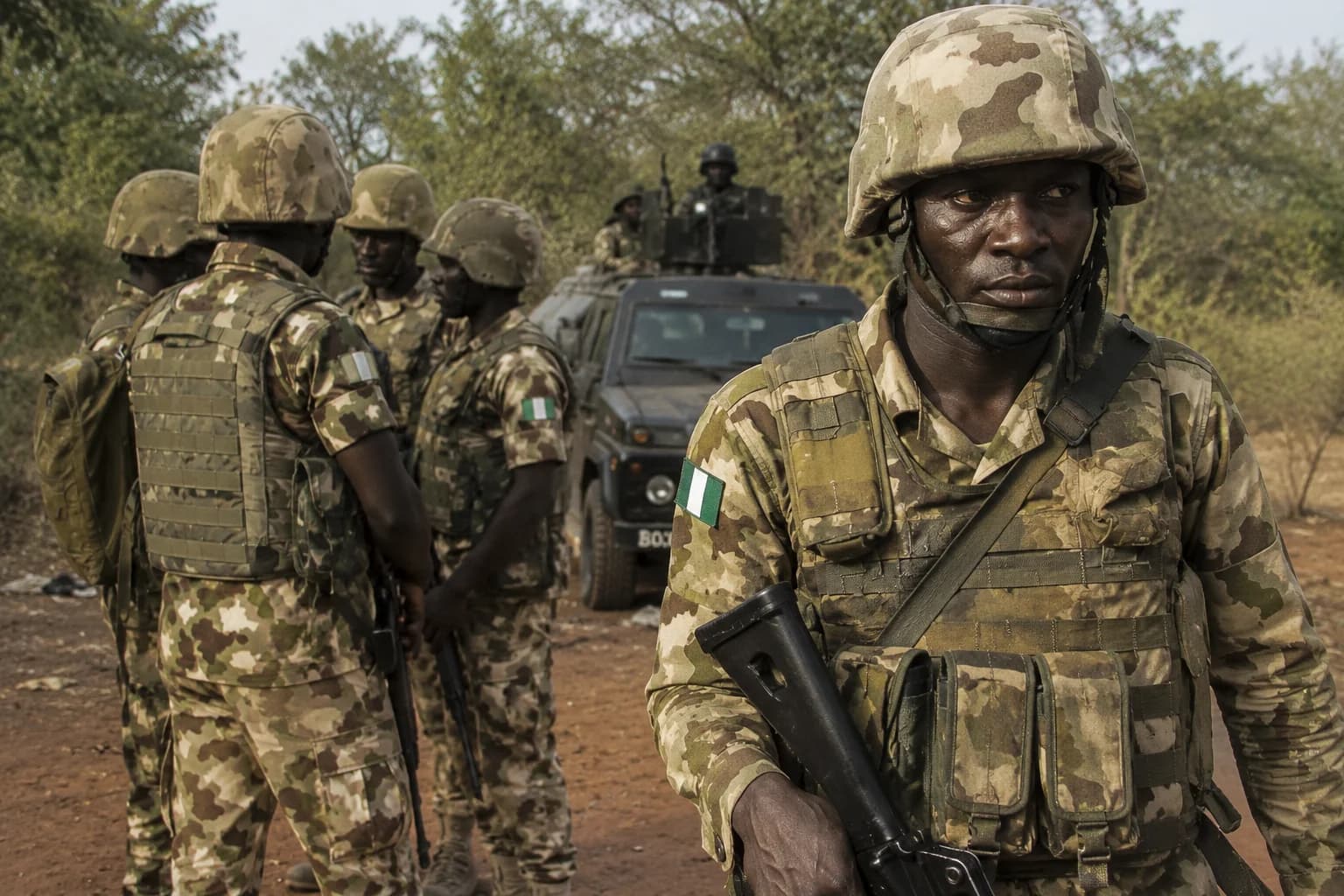
Nigeria is asking its soldiers to do an extraordinary job.
Enter forests controlled by bandits.
Confront terrorists armed with assault rifles and explosives.
Rescue kidnapped children.
Defend military bases from insurgent attacks.
Patrol dangerous highways.
Spend long periods away from their families.
And accept that every operation could be their last.
Then came a figure that has shocked many Nigerians.
₦100,000.
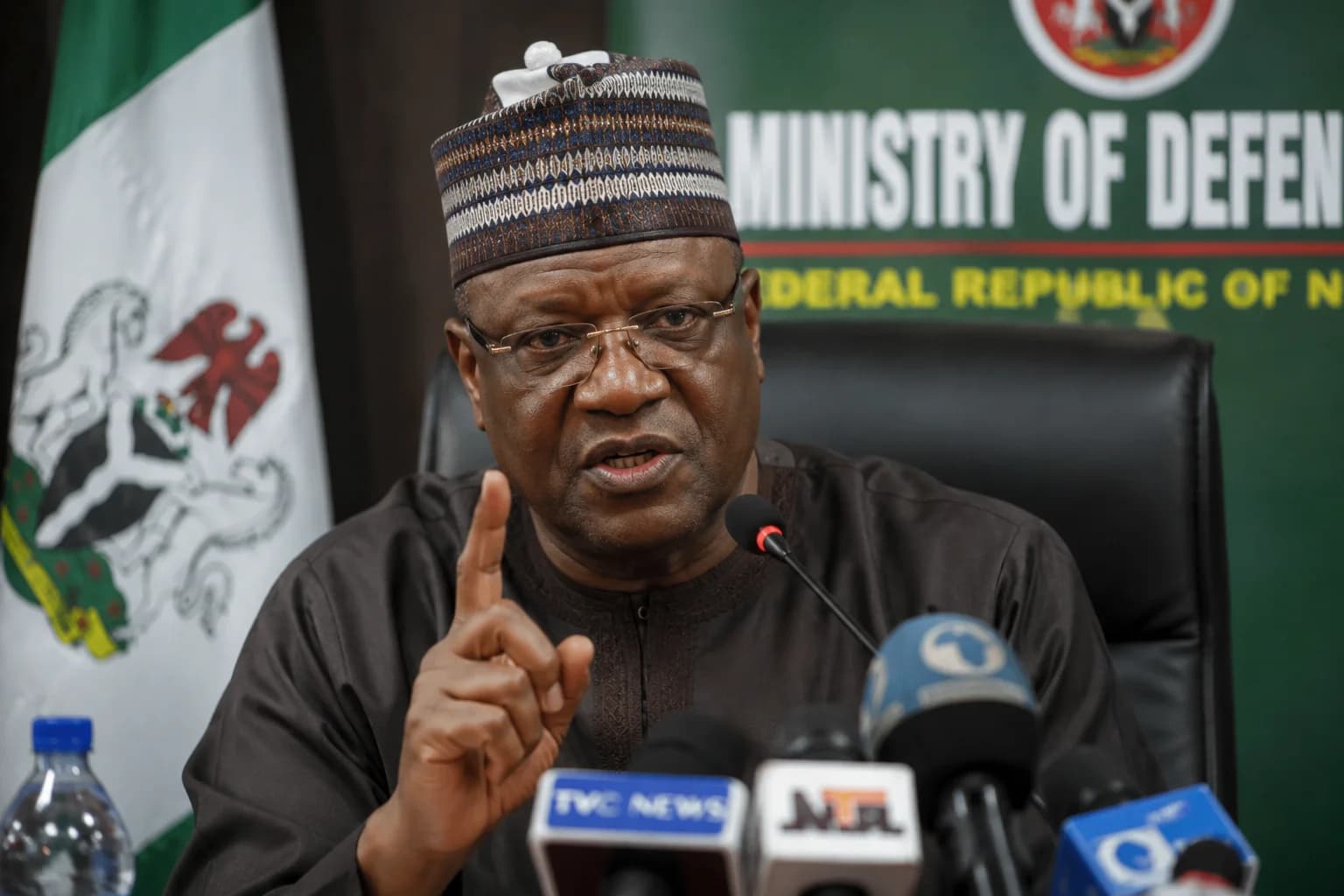
Defence Minister Christopher Musa said that, following welfare improvements, the minimum monthly salary of a Nigerian soldier had risen from ₦49,000 to ₦100,000. The disclosure triggered criticism from veterans and serving personnel who argued that the figure remains inadequate considering Nigeria’s cost of living and the dangers associated with military service.
At the same time, President Bola Tinubu held a closed-door meeting with Nigeria’s military command, intelligence leadership and senior security advisers at the Presidential Villa in Abuja.
Officials familiar with the agenda said the meeting involved a comprehensive review of Nigeria’s security situation and developments across several operational theatres. It lasted for more than two hours, but the Presidency had not publicly released detailed conclusions from the meeting at the time of the report.
The timing has created a powerful national conversation.
Nigeria wants stronger action against terrorism.
But who is looking after the people being sent to fight the terrorists?
The ₦100,000 Figure Has Touched a Nerve
The controversy began after Musa discussed military welfare during an interview.
According to him, a soldier who previously earned ₦49,000 now receives ₦100,000 monthly following improvements to personnel welfare.
But the minister also acknowledged that the military remains underfunded.
The reaction from veterans was immediate.
They argued that ₦100,000 cannot adequately support a soldier and his family in the current economy, especially when housing, food, transport and children's education are considered.
Serving personnel who spoke anonymously also called on the government to implement a salary increase announced by Tinubu in March, arguing that poor welfare was damaging morale and making military service less attractive.
That is where this story becomes bigger than salary.
Military welfare is a national security issue.
A poorly motivated soldier is not only a labour problem.
It can become a security problem.
Nigeria Is Demanding More From Its Troops
The salary controversy comes at a moment when the government is demanding increasingly decisive action from security forces.
Only recently, Musa told deployed personnel not to hesitate when confronting identified terrorists and bandits.
His message was aggressive.
Act.
Engage.
Do not hide behind bureaucracy when facing an armed enemy.
Many Nigerians welcomed that position because communities affected by violence have repeatedly complained about slow security responses.
But the government must recognise the other side of the equation.
If Nigeria expects courage from its soldiers, the state must provide something in return.
Adequate pay.
Good equipment.
Reliable medical care.
Decent accommodation.
Insurance.
Support for families.
Mental-health services.
And confidence that if a soldier dies in service, his dependants will not be abandoned.
Patriotism is powerful.
But patriotism does not pay school fees.
The Soldier Has a Family Too
When Nigerians see soldiers in uniform, it is easy to see only the weapon.
Behind the uniform is a human being.
A father.
A mother.
A husband.
A wife.
A son.
A daughter.
Someone who also worries about rent.
Food.
School fees.
Medical bills.
Transport.
Dependants.
The difference is that while many Nigerians go to work hoping to return safely in the evening, military personnel deployed to active operations face dangers that most citizens will never experience.
That difference should be reflected in how the country values their service.
This does not mean every soldier should become wealthy.
It means military compensation should reflect responsibility, hardship and risk.
The question Nigerians are asking is simple:
Does ₦100,000 do that?
Tinubu Had Promised Better Welfare
The controversy is particularly sensitive because President Tinubu had already spoken publicly about improving military welfare.
At an interfaith breaking of fast with service chiefs on March 7, 2026, Tinubu said his administration would prioritise military welfare, accommodation and opportunities for personnel and their families. Serving personnel cited that announcement while calling for the promised salary review to become reality.
Promises matter.
But implementation matters more.
Soldiers cannot spend promises in the market.
Their landlords do not accept speeches.
Their children’s schools do not collect presidential assurances as payment.
When a government publicly promises improved welfare, personnel will naturally expect to see the change in their bank accounts and living conditions.
If there are administrative reasons for delay, the government should explain them.
Silence creates frustration.
Morale Cannot Be Bought With Speeches
Every successful military depends on morale.
Weapons matter.
Aircraft matter.
Armoured vehicles matter.
Intelligence matters.
But people operate all of them.
A country can buy sophisticated equipment and still struggle if the personnel expected to use it feel neglected.
Serving personnel quoted in the reporting linked inadequate compensation with declining morale, personnel going absent without leave and difficulty attracting new recruits.
Those claims should concern the government.
Nigeria is fighting multiple security threats.
It cannot afford a military struggling to retain experienced personnel.
Training a soldier takes time and money.
Losing experienced personnel because service no longer appears economically sustainable weakens institutional knowledge.
Recruitment also matters.
The military needs talented young Nigerians.
But young people compare careers.
They ask what the work pays.
They consider the risks.
They look at how retired personnel live.
They observe how families of fallen personnel are treated.
A country that wants excellent soldiers must make military service worthy of the sacrifice it demands.
The Security Meeting Came at a Critical Moment
Tinubu’s meeting brought together senior figures from across Nigeria’s security architecture.
Those present included National Security Adviser Nuhu Ribadu, Defence Minister Christopher Musa, Chief of Defence Staff Olufemi Oluyede, senior military commanders, intelligence chiefs, the Inspector-General of Police and other security representatives.
The meeting came amid intense security operations.
According to the report, troops and air assets had recently disrupted a large armed movement in the North-West, while military forces in the North-East continued facing attacks on bases. At least 13 attacks on military bases had been recorded in 2026, predominantly in Borno State, according to the same reporting.
This is the environment in which the salary debate is taking place.
Not peacetime.
Not a period of low operational activity.
Nigeria’s forces are under pressure.
That makes welfare even more important.
A Soldier Worried About Home Carries Two Battles
There is a psychological dimension to military welfare that salary discussions often ignore.
A soldier deployed in a dangerous area already carries the pressure of the operation.
If that person is also constantly worried about unpaid bills at home, the burden becomes heavier.
Can the family afford food?
Has the rent been paid?
Can a sick child receive treatment?
Will school fees be paid?
These concerns affect ordinary workers.
But a soldier cannot simply leave an active operation at lunchtime to solve a family problem.
Deployment creates separation.
That means military welfare systems must compensate for the unique conditions of service.
Good militaries understand that caring for the family helps the soldier concentrate on the mission.
Nigeria should understand the same.
Military Welfare Must Be More Than Basic Salary
The public debate should not focus only on one figure.
Military compensation can include allowances, accommodation, medical services, pensions and other benefits.
A serious national discussion should examine the entire welfare package.
What does a newly enlisted soldier actually receive?
What operational allowances apply?
Are payments made on time?
What housing is available?
What happens after injury?
What compensation reaches families after death?
How effective is military healthcare?
What happens after retirement?
Transparency around these questions would improve public understanding.
It would also allow Nigerians to distinguish between genuine welfare improvements and political claims.
The Defence Minister says progress has been made.
Personnel and veterans say much more is needed.
The government should provide the full picture.
Nigeria Cannot Fight a Cheap War Against Expensive Violence
Terrorism is expensive.
Banditry is expensive.
Kidnapping is expensive.
Weapons cost money.
Aircraft operations cost money.
Intelligence costs money.
Vehicle maintenance costs money.
Training costs money.
And professional personnel cost money.
Nigeria cannot expect to defeat sophisticated violent networks while treating security as an area where human welfare can be managed cheaply.
This does not mean throwing money at the problem without accountability.
Defence spending must be transparent.
Procurement must be monitored.
Ghost workers must be eliminated.
Corruption must be punished.
But the legitimate needs of serving personnel should not be confused with waste.
Paying soldiers properly is not charity.
It is part of maintaining national defence.
The Government Must Match Tough Security Language With Tough Welfare Action
Nigeria’s recent security conversation has been full of strong language.
Shoot terrorists.
Destroy bandit camps.
Rescue hostages.
End kidnapping.
Defeat insurgents.
Those objectives are understandable.
But the men and women expected to carry them out are not machines.
If the government wants a stronger military response, it must build stronger military welfare.
The two are connected.
A government cannot continually demand greater sacrifice while leaving personnel to question whether their families can survive economically.
Nigerians Need Results From the Security Meeting
The closed-door meeting at the Presidential Villa may have discussed sensitive matters that cannot be made public.
That is normal in national security.
But Nigerians need to see results.
Safer highways.
Fewer kidnappings.
Protected schools.
Secure farming communities.
Weaker terrorist networks.
Better intelligence.
And a military whose personnel believe the country values their service.
The salary controversy has created an opportunity for the government to review more than basic pay.
It should examine the full life of the Nigerian soldier.
Recruitment.
Training.
Deployment.
Accommodation.
Healthcare.
Family support.
Insurance.
Retirement.
A military is not only a collection of weapons.
It is an institution made of people.
₦100,000 Has Become More Than a Number
The figure has become a symbol.
For the government, it represents improvement from the previously cited ₦49,000 minimum.
For critics, it represents how far military welfare still has to go.
Both can be true.
An increase can be real and still be inadequate.
The government deserves recognition for genuine welfare improvements where they exist.
But improvement should not end the conversation.
Nigeria’s security crisis is too serious.
The country is asking soldiers to risk everything.
The least it can do is ensure that the people defending the nation do not feel forgotten by it.
Tinubu has met the security chiefs.
Strategies will be discussed.
Operations will be planned.
Orders will be issued.
But somewhere in Nigeria, a soldier will still check his bank account.
And the strength of Nigeria’s security system may depend partly on what he sees there.
Stay Informed
Get the biggest stories from Nigeria, Africa and around the world.
Free news updates. Unsubscribe anytime.
By subscribing, you agree to receive free news updates from Talk Ya True. You can unsubscribe at any time.