World
China and North Korea Close Ranks as Xi Calls for “Strategic Resolve” in an Increasingly Divided World
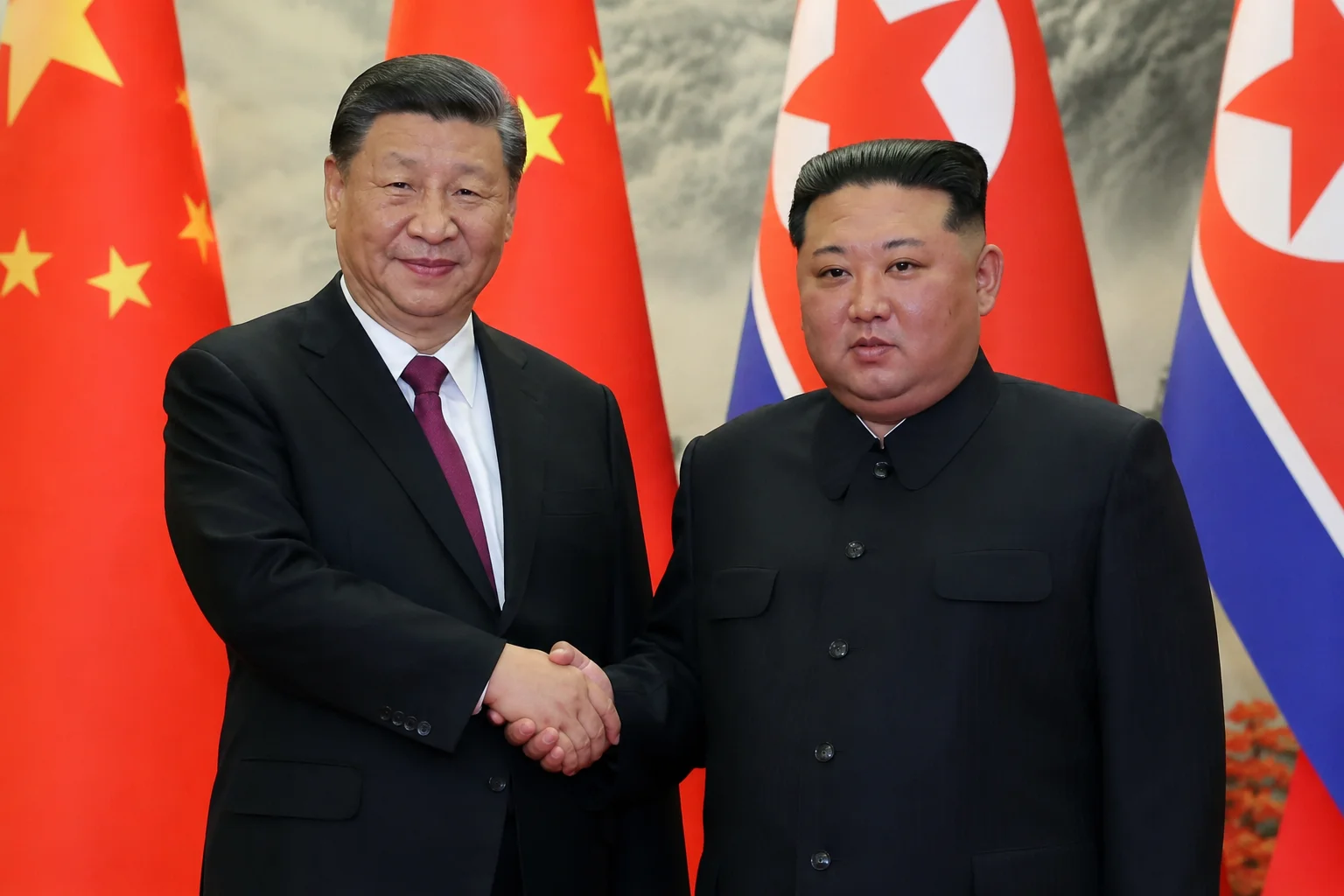
Chinese President Xi Jinping has called on China and North Korea to maintain “strategic resolve” and deepen cooperation as global instability reshapes international alliances. His meeting with North Korean Premier Pak Thae Song in Beijing comes amid renewed ties between the neighbours, Pyongyang’s growing relationship with Russia and intensifying geopolitical competition involving the United States and its Asian allies.
The world is becoming more divided.
Wars are reshaping alliances.
Old partnerships are being revived.
Countries are calculating who will stand with them if the international situation becomes even more dangerous.
And in Beijing, two old allies have sent a message that deserves attention.
China and North Korea are moving closer again.
Chinese President Xi Jinping has called on Beijing and Pyongyang to maintain what he described as “strategic resolve” amid international instability and accelerate the implementation of agreements reached between Xi and North Korean leader Kim Jong Un.
Xi made the remarks during talks with North Korean Premier Pak Thae Song, who visited Beijing as the two countries marked the 65th anniversary of their friendship treaty.
That treaty is not simply symbolic.
It remains China’s only active mutual-defence pact.
The meeting therefore matters far beyond China and North Korea.
It matters to Washington.
Seoul.
Tokyo.
Moscow.
And anyone trying to understand how the balance of global power is changing.
This Is More Than a Friendship Meeting
Diplomatic meetings are often filled with familiar language.
Friendship.
Cooperation.
Mutual respect.
Shared development.
But the context surrounding this meeting gives Xi’s words greater significance.
According to the latest reporting, Xi urged the two countries to strengthen political, economic and cultural cooperation while adapting their relationship to changing international circumstances.
The meeting follows a wider warming of relations after the disruption caused by the COVID-19 pandemic, with diplomatic exchanges increasing and transport connections being restored.
But there is another country standing in the background of this relationship.
Russia.
North Korea has developed much closer economic and military ties with Moscow, creating a complicated triangle involving Beijing, Moscow and Pyongyang.
That does not necessarily mean the three countries are becoming one unified alliance.
Their interests are not identical.
But it does mean the geopolitical map is changing.
North Korea Has More Options Than Before
For decades, China was widely regarded as North Korea’s most important external partner.
Geography made the relationship unavoidable.
Trade made it essential.
Diplomacy made Beijing one of Pyongyang’s most important links to the outside world.
But North Korea’s growing relationship with Russia has changed the equation.
Analysts cited in current reporting suggest Pyongyang may remain cautious about becoming too dependent on deeper cooperation with China because its ties with Moscow have expanded significantly.
This gives Kim Jong Un something every smaller state wants.
Options.
If North Korea can maintain strong relations with both China and Russia, it gains greater diplomatic room to manoeuvre.
It can seek economic cooperation from one partner.
Military cooperation from another.
Political protection from both.
For Beijing, that creates a challenge.
China wants influence over developments on the Korean Peninsula.
It does not necessarily want to watch Russia become Pyongyang’s dominant strategic partner.
The renewed warmth between China and North Korea should therefore be understood partly as friendship—and partly as geopolitics.
China Does Not Want to Lose Influence on Its Own Border
North Korea shares a border with China.
That makes the stability of the Korean Peninsula a direct Chinese national-security concern.
Beijing does not want instability that could produce uncontrolled refugee flows.
It does not want war on its doorstep.
It does not want the complete collapse of North Korea.
And it certainly does not want a strategic outcome that dramatically expands American military influence close to Chinese territory.
This helps explain why China’s relationship with Pyongyang remains strategically important even when the two neighbours have disagreements.
North Korea can be difficult.
Unpredictable.
Independent-minded.
But geography does not disappear.
China cannot simply ignore what happens next door.
The United States Will Be Watching Closely
From Washington’s perspective, the relationship between China and North Korea is part of a much larger strategic challenge.
The United States already has important security alliances with South Korea and Japan.
North Korea’s nuclear and missile programmes have remained central security concerns.
China is America’s most powerful long-term strategic competitor.
Russia remains a major military and geopolitical rival.
When relationships among Beijing, Moscow and Pyongyang strengthen, American strategists pay attention.
The danger is not necessarily that these countries will suddenly become one perfectly coordinated military bloc.
International relationships are rarely that simple.
The deeper concern is that countries under pressure from Washington may increasingly support one another economically, diplomatically and strategically.
Sanctions become harder to enforce.
Diplomatic isolation becomes less effective.
Military pressure becomes more complicated.
The world begins to divide into networks of countries capable of helping one another resist Western pressure.
South Korea Faces a Difficult Security Environment
No country will study these developments more carefully than South Korea.
Seoul lives with the North Korean security challenge every day.
The Korean Peninsula remains divided.
Military forces face one another across the border.
North Korea possesses nuclear weapons.
Every improvement in Pyongyang’s external partnerships matters to South Korean security planners.
If North Korea can strengthen its economic resilience through external relationships, pressure becomes more difficult.
If it improves military capabilities through cooperation with partners, the security calculation changes.
If China becomes more diplomatically protective of Pyongyang, negotiations become more complicated.
South Korea must therefore balance defence, diplomacy and alliance management.
It needs a strong relationship with the United States.
It must manage relations with China, one of the region’s most important economic powers.
And it must remain prepared for unpredictable developments from the North.
That is an extraordinarily difficult position.
Japan Also Has Reasons to Be Concerned
Japan’s security concerns are closely connected to the same geopolitical environment.
North Korean missile tests have repeatedly created anxiety in the region.
China’s growing military power has become a major strategic concern for Tokyo.
Russia remains an important factor in the wider Asian security environment.
As cooperation among America’s strategic rivals becomes more visible, Japan is likely to continue strengthening its own defence capabilities and security relationships.
This is one of the consequences of geopolitical competition.
One country strengthens its military.
Its neighbour feels threatened and strengthens its own.
The first country sees the neighbour’s response and concludes that further strengthening is necessary.
A security dilemma develops.
Asia is becoming one of the most important places where this dynamic is playing out.
“Strategic Resolve” Is the Language of a Changing World
Xi Jinping’s choice of language matters.
Calling for strategic resolve suggests patience.
Consistency.
Long-term thinking.
A willingness to maintain a relationship despite changes in the international environment.
China is increasingly presenting itself as a country that thinks in decades rather than election cycles.
Whether one agrees with Beijing’s policies or not, that long-term approach is central to understanding Chinese strategy.
China wants influence.
Trade routes.
Energy security.
Technological strength.
Military capability.
Diplomatic partnerships.
Access to critical resources.
And a global system in which Washington is not able to dictate outcomes alone.
Its relationship with North Korea fits into that larger picture.
Russia Has Changed the China–North Korea Equation
North Korea’s growing relationship with Russia is one of the most important developments affecting the Beijing-Pyongyang relationship.
For China, Russia is itself a major strategic partner.
But friends can also compete for influence.
Beijing may welcome a world in which Moscow and Pyongyang resist American pressure.
At the same time, it will want to preserve its own influence over North Korea.
This creates a complicated relationship rather than a simple alliance structure.
China, Russia and North Korea may cooperate in some areas while still pursuing their own national interests.
That distinction is important.
The world should be careful about describing every relationship among American rivals as one unified anti-Western alliance.
Countries cooperate where interests overlap.
They also compete where interests diverge.
North Korea Is Trying to Escape Isolation
For Pyongyang, closer relations with major powers offer a path out of isolation.
North Korea has lived under extensive international sanctions and diplomatic pressure.
The country’s leadership has long sought ways to reduce vulnerability to outside pressure.
Relationships with China and Russia provide economic and political space.
The more alternatives North Korea has, the less effective isolation becomes.
That does not mean Pyongyang will surrender its independence to either Beijing or Moscow.
North Korea has historically guarded its autonomy carefully.
But strategic partnerships can give it leverage.
The Friendship Treaty Still Matters After 65 Years
The timing of Pak Thae Song’s visit is significant because it marks 65 years since the friendship treaty between China and North Korea.
Treaties survive only when governments continue to believe they serve a purpose.
The fact that the relationship is being publicly reaffirmed during a period of global instability sends a message.
China is reminding the world that North Korea is not completely isolated.
North Korea is reminding the world that it has powerful friends.
And both governments are signalling that their relationship still has strategic value.
The World Is Moving Toward More Flexible Blocs
The Cold War was often described as a competition between two large blocs.
The world emerging today may be more complicated.
Countries can cooperate militarily with one partner.
Trade with another.
Buy technology from a third.
Join diplomatic initiatives with a fourth.
China and Russia cooperate closely but still have separate interests.
North Korea can deepen ties with Moscow without abandoning Beijing.
Countries in the Global South can work with China while maintaining relationships with the United States and Europe.
This is a more fluid international system.
And fluid systems can be difficult to predict.
What Happens Next Matters More Than the Ceremony
The real test of the China–North Korea relationship will not be diplomatic language.
It will be implementation.
Will trade increase?
Will transportation links expand further?
Will there be new infrastructure projects?
Will political coordination deepen?
Will China provide greater economic support?
Will North Korea balance Beijing and Moscow against one another?
Those are the developments to watch.
Xi has called for faster implementation of agreements and stronger cooperation.
The coming months will show how far the relationship actually moves.
A Warning to the West: Isolation Has Limits
There is also a broader lesson in this story.
The international system is large enough for isolated countries to search for alternative partnerships.
A government under Western sanctions may turn toward China.
Or Russia.
Or regional powers.
This does not mean sanctions are always ineffective.
It means their effectiveness depends partly on how much international cooperation exists around them.
As global divisions deepen, coordinated pressure becomes more difficult.
Countries under pressure become more creative.
Alternative trade routes emerge.
New financial arrangements develop.
Political partnerships strengthen.
That is one reason the relationship between China and North Korea matters.
It is part of a wider story about a world in which power is becoming more distributed and international pressure more complicated.
China and North Korea Are Sending a Message
The meeting in Beijing may not immediately change the world.
There was no dramatic declaration of a new military alliance.
No sudden crisis.
No announcement that transforms Asia overnight.
But geopolitics often moves through gradual changes.
More meetings.
More trade.
More coordination.
More shared interests.
More strategic trust.
Until, one day, the balance of power looks different.
Xi Jinping’s call for strategic resolve should therefore be understood in context.
China is preparing for a more competitive world.
North Korea is expanding its options.
Russia has become more important to Pyongyang.
The United States and its allies are watching.
And Asia is becoming an increasingly important centre of global strategic competition.
The China–North Korea relationship is old.
But in a rapidly changing world, it may be entering a new chapter.
Stay Informed
Get the biggest stories from Nigeria, Africa and around the world.
Free news updates. Unsubscribe anytime.
By subscribing, you agree to receive free news updates from Talk Ya True. You can unsubscribe at any time.