World
China Deepens African Footprint as Namibia Secures Major Mining, Energy and Infrastructure Deals
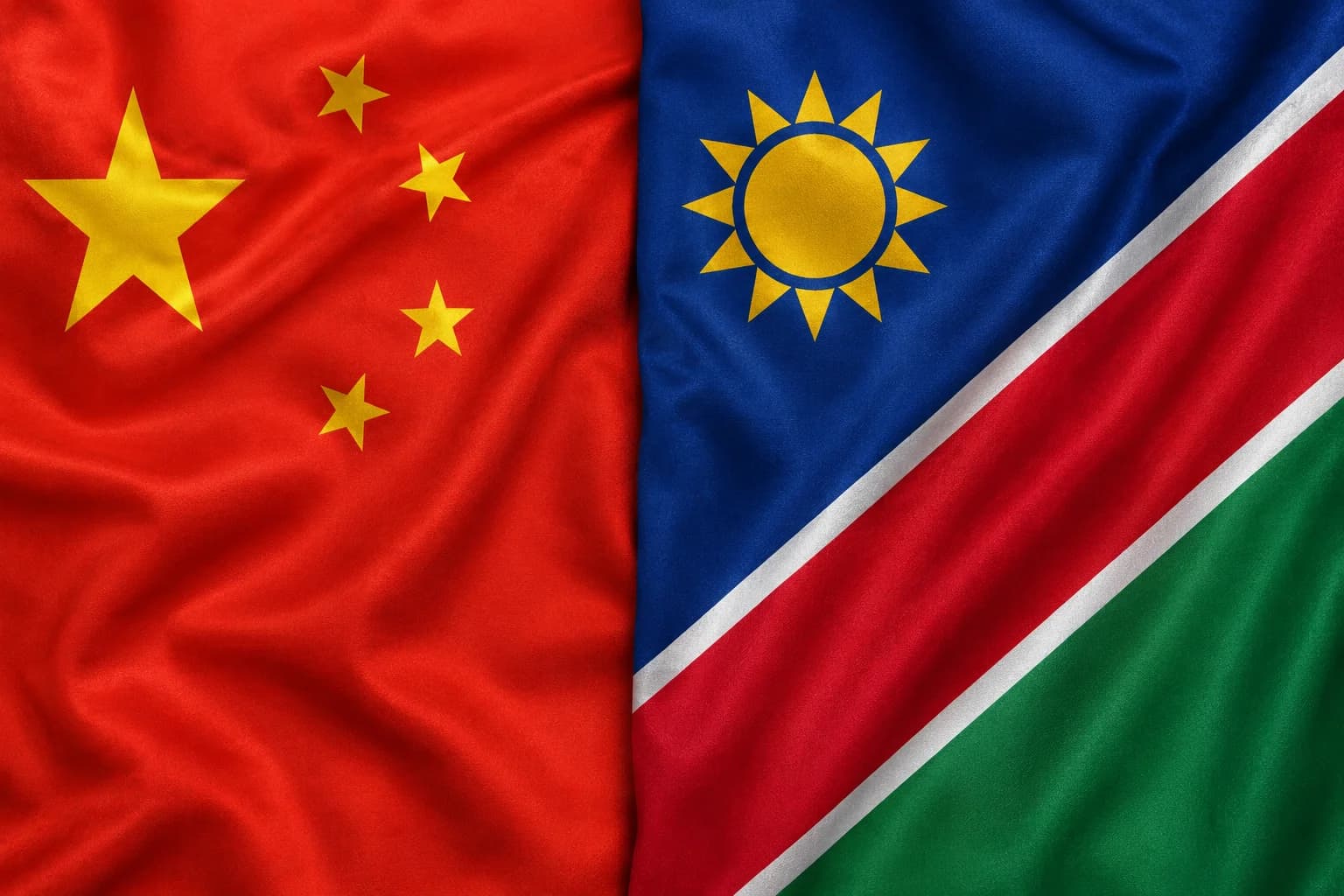
Namibia and China have signed eight cooperation agreements covering critical minerals, infrastructure and wider economic cooperation during President Netumbo Nandi-Ndaitwah’s state visit to Beijing. With Namibia rich in uranium, lithium and rare earths and preparing for a potential oil boom, the agreements highlight a bigger global struggle: the race for Africa’s resources—and whether African countries can finally turn strategic wealth into industries, jobs, technology and lasting prosperity at home.
Africa has the resources the world wants.
Oil.
Gas.
Uranium.
Lithium.
Rare earths.
Copper.
Cobalt.
The minerals needed for electric vehicles.
The materials needed for batteries.
The resources needed for nuclear power.
The metals needed for modern technology.
For decades, the problem has not been whether Africa possesses wealth.
The problem has been what happens to that wealth after it leaves African soil.
Namibia now finds itself at the centre of that question.
During President Netumbo Nandi-Ndaitwah’s state visit to China, Namibia and Beijing signed eight cooperation agreements covering areas including critical minerals, infrastructure and wider economic partnership.
The visit is significant.
China is already a major economic partner and lender to Namibia.
Chinese companies have invested billions of dollars in the country.
China buys a substantial share of Namibian exports.
And now Namibia is preparing for the possibility of becoming one of Africa’s important oil producers while sitting on minerals that are increasingly valuable to the global economy.
The opportunity is enormous.
But so is the question.
Will Namibia simply export another generation of raw materials?
Or can it use this moment to build industries at home?
Eight Agreements, but One Bigger Story
The eight agreements signed during the visit cover areas including green minerals, infrastructure and economic cooperation.
The two countries also recognised the importance of critical minerals such as uranium, lithium and rare earths, with commitments touching on local processing, technology transfer and skills development.
Those words matter.
Local processing.
Technology transfer.
Skills development.
For decades, African countries have exported raw materials and imported expensive finished products.
A mineral leaves Africa at one price.
It returns inside a battery, vehicle, electronic device or advanced machine at a much higher price.
The countries that control processing and manufacturing capture more of the value.
That is why Namibia must focus not only on how much investment enters the country.
It must ask what remains after the resources leave.
Namibia Is Becoming Strategically Important
Namibia has a relatively small population, but its economic importance could grow significantly.
The country has major mineral resources and is moving toward potential large-scale oil production.
Reuters reports that discoveries by major international energy companies have been estimated at around 2.6 billion barrels of crude, with Namibia positioned to potentially become Africa’s fourth-largest oil producer by 2030.
That could transform the country.
Oil revenue can finance infrastructure.
Education.
Healthcare.
Industrial development.
Energy systems.
Technology.
But Africa also knows the dangers.
Resource wealth can create corruption.
Waste.
Debt.
Political conflict.
Economic dependence.
A weak manufacturing sector.
A currency vulnerable to commodity prices.
The difference between a resource blessing and a resource curse is governance.
China Already Has Deep Economic Interests in Namibia
China is not arriving in Namibia for the first time.
It already has significant economic interests there.
China imports roughly a quarter of Namibia’s exports, with uranium making up the largest share, while Chinese companies have invested around $4.2 billion in Namibia, mainly in metals.
That gives the relationship depth.
It also gives Namibia leverage—if that leverage is used intelligently.
China needs resources.
Namibia needs investment, infrastructure, industrial development and jobs.
A strong agreement should recognise both sides of that relationship.
African countries should move beyond negotiating only about how much foreign investment will arrive.
They should negotiate about what the investment will build.
How many local workers will be trained?
How much processing will happen domestically?
How many local suppliers will participate?
What technology will be transferred?
What environmental protections will exist?
How much tax will be paid?
What happens when the resource is exhausted?
Those are the questions that determine whether a resource deal changes a country.
The Global Race for Critical Minerals Has Given Africa New Power
The transition toward electric vehicles, renewable energy, advanced electronics and modern defence technologies has made critical minerals strategically important.
The countries that control these supply chains have power.
China has spent years building strong positions in mineral processing and manufacturing.
Western governments are now trying to diversify their supply chains.
Africa is therefore being courted by multiple sides.
This gives African governments an opportunity.
They do not have to accept the first deal placed in front of them.
They can negotiate.
They can demand local value addition.
They can diversify partnerships.
They can build regional supply chains.
They can require training.
They can invest revenues in education and infrastructure.
But leverage exists only if leaders know how to use it.
Africa Must Stop Exporting Jobs With Its Minerals
Every time a raw mineral leaves Africa without meaningful processing, part of the economic opportunity leaves with it.
The extraction creates some jobs.
But refining creates more.
Manufacturing creates more.
Engineering creates more.
Research creates more.
Logistics creates more.
Supporting industries create more.
Africa cannot become wealthy only by digging things out of the ground.
The continent must build.
Namibia’s emphasis on local processing and skills transfer is therefore potentially one of the most important elements of the new cooperation with China.
The test will be implementation.
A promise in an agreement is not a factory.
A memorandum is not a job.
A diplomatic statement is not technology transfer.
Results must be measured.
Namibia Must Learn From Other Resource-Rich Countries
Africa is full of examples of countries rich in natural resources but unable to convert that wealth into broad prosperity.
The lesson is not that resources are bad.
The lesson is that institutions matter.
Namibia should prepare before oil production reaches full scale.
Transparent contracts.
Clear tax systems.
Independent regulation.
Strong environmental rules.
Public reporting of revenues.
Responsible savings.
Investment in education.
Investment in infrastructure.
Economic diversification.
These policies are easier to discuss before the money becomes enormous.
Once powerful interests become dependent on resource revenue, reform becomes harder.
President Nandi-Ndaitwah Has a Historic Opportunity
President Netumbo Nandi-Ndaitwah’s government has emphasised economic diversification and job creation, objectives that align with recommendations for structural reforms in areas including agriculture, fisheries and green energy.
That is important because oil and mining cannot employ everyone.
Extractive industries can generate enormous revenue without creating enough jobs for a growing population.
A successful resource strategy therefore uses mining and energy income to build other sectors.
Agriculture.
Tourism.
Manufacturing.
Technology.
Fisheries.
Renewable energy.
Transport.
Education.
A country becomes stronger when resource wealth finances diversification rather than replacing it.
China Offers Something Many African Governments Want
One reason China has become such an important partner across Africa is its willingness to engage around infrastructure and large-scale economic projects.
African governments need roads.
Railways.
Ports.
Power systems.
Industrial facilities.
Telecommunications infrastructure.
China has often positioned itself as a partner willing to finance and build large projects.
That approach has created strong relationships.
It has also created criticism and questions about debt, transparency, labour practices and the long-term terms of some agreements.
The correct response is not to reduce the debate to “China good” or “China bad.”
International relations do not work that way.
Countries pursue interests.
China pursues Chinese interests.
Namibia must pursue Namibian interests.
The responsibility of African governments is to negotiate agreements that serve their citizens.
Africa Should Negotiate as a Strategic Continent
The biggest mistake Africa can make is continuing to think like a poor continent begging rich countries for help.
Africa is not empty-handed.
It has resources.
Young populations.
Growing markets.
Important shipping routes.
Agricultural potential.
Energy potential.
Strategic minerals.
Political influence in international institutions.
The global energy transition cannot happen easily without African resources.
That reality should change negotiations.
The question should not be:
“Who will come and help us?”
The question should be:
“What partnership creates the greatest long-term value for our people?”
That is a stronger negotiating position.
China’s Interest Is Part of a Much Bigger Global Competition
China’s deepening relationship with Namibia should also be understood in the context of international competition for strategic resources.
Critical minerals have become part of national-security planning.
Governments worry about dependence on a single country for processing.
Manufacturers worry about supply disruption.
Energy companies are searching for new opportunities.
Technology industries need reliable access to materials.
Namibia’s uranium, lithium and rare-earth potential therefore gives the country importance beyond its size.
The danger is that African countries could once again become arenas where outside powers compete while local populations see too little benefit.
The opportunity is that competition can give African countries more bargaining power.
The outcome depends on leadership.
The Oil Boom Could Change Everything
Namibia’s potential emergence as a major oil producer adds another layer to the story.
A successful petroleum industry could transform government finances and infrastructure investment.
But oil booms can also distort economies.
Governments can become dependent on one source of revenue.
Other industries can be neglected.
Corruption can grow.
Public spending can become unsustainable.
When prices fall, the economy suffers.
Namibia has the advantage of being able to study the experiences of other countries before large-scale production begins.
It does not have to repeat every mistake.
Transparency Will Decide Whether Citizens Trust the Deals
Large international agreements often fail politically when citizens do not understand them.
Governments announce billions in investment.
But people ask:
Where are the jobs?
Who owns the project?
What did the government promise?
How much revenue will the country receive?
What environmental damage is possible?
How much land is involved?
Who benefits?
Transparency protects both the government and the investor.
If agreements are genuinely good, governments should be able to explain them.
If some provisions must remain commercially confidential, the broad public-interest terms should still be clear.
Citizens should not learn about strategic national agreements only after problems appear.
Technology Transfer Must Be Real
“Technology transfer” is one of the most attractive phrases in international economic agreements.
But it can mean almost anything.
Real technology transfer should be measurable.
Are Namibian engineers being trained?
Are local universities involved?
Are research partnerships being created?
Are local companies entering supply chains?
Are technical skills remaining in the country?
Can Namibians eventually manage and operate advanced facilities themselves?
If the answer is yes, the partnership can build long-term capacity.
If the answer is no, the country may remain dependent even after decades of extraction.
Namibia Can Become a Model—If It Gets the Strategy Right
Namibia has an opportunity many countries would want.
Strategic minerals.
Potential oil wealth.
Political stability.
International interest.
Major partners willing to invest.
The challenge is converting opportunity into transformation.
The country must avoid becoming only a place where resources are extracted.
It must become a place where value is created.
Where young people are trained.
Where industries grow.
Where infrastructure improves productivity.
Where revenues are managed transparently.
Where economic growth reaches ordinary citizens.
That is the real measure of success.
The China Deals Are the Beginning, Not the Victory
Eight agreements can create opportunities.
But agreements themselves are not development.
Development is what happens afterwards.
The factory that opens.
The road that reduces transport costs.
The worker who gains a new skill.
The local company that enters a global supply chain.
The university that develops technical expertise.
The community that receives reliable electricity.
The country that moves from exporting raw material to producing higher-value goods.
Namibia and China have opened another chapter in their economic relationship.
China gains deeper engagement with a resource-rich African partner.
Namibia gains access to investment, infrastructure cooperation and a major global market.
But history will judge the partnership by something much simpler.
Did ordinary Namibians become better off?
Africa Is Entering a New Resource Age
The world’s demand for minerals, energy and strategic supply chains is giving Africa another historic opportunity.
The first era of resource extraction enriched foreign empires.
Later eras enriched multinational corporations and local elites while too many ordinary Africans remained poor.
The next era must be different.
African countries must negotiate harder.
Process more resources locally.
Train their people.
Build industries.
Protect the environment.
Publish contracts.
Manage revenues responsibly.
And refuse to measure success only by the amount of foreign investment announced at a ceremony.
Namibia’s new agreements with China could become part of a powerful development story.
Or they could become another chapter in the old story of Africa exporting wealth and importing finished products.
The difference will not be decided in Beijing.
It will be decided by what Namibia does with the opportunity after its president returns home.
Stay Informed
Get the biggest stories from Nigeria, Africa and around the world.
Free news updates. Unsubscribe anytime.
By subscribing, you agree to receive free news updates from Talk Ya True. You can unsubscribe at any time.