Sports
Morocco Denies Viral Claim Minister Said World Cup Team Represents Morocco, Not Africa
Morocco has denied viral reports claiming that Sports Minister Mohamed Saad Berrada said the country’s national team represents only Morocco and not Africa at the 2026 World Cup. The controversy has nevertheless reopened a wider debate about national identity, African solidarity and what it means when one country becomes the continent’s last representative on football’s biggest stage.
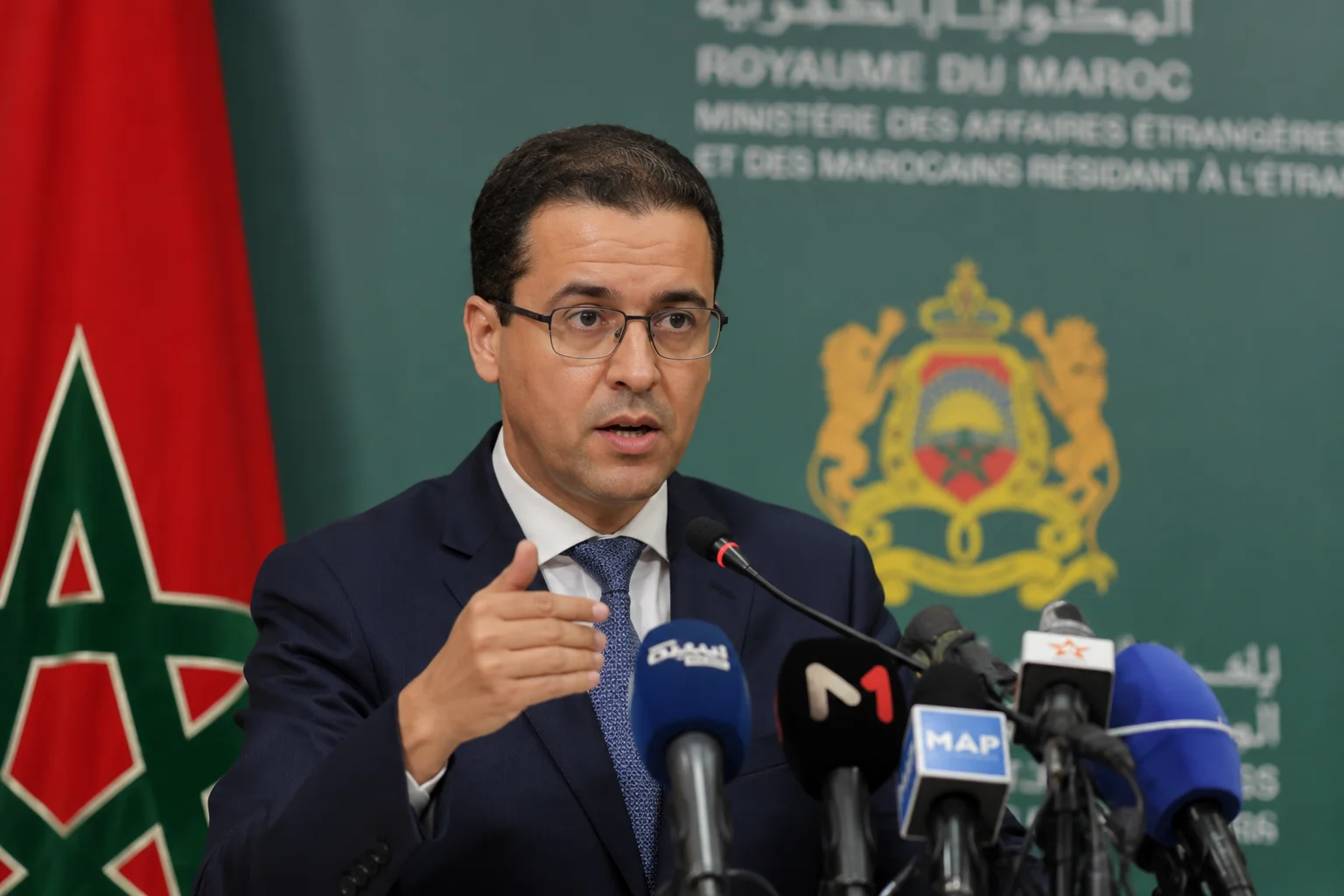
A viral statement attributed to a Moroccan government minister has triggered a heated debate across Africa just as Morocco prepares for one of the biggest matches in its football history.
The claim was explosive.
According to posts circulating widely on social media and repeated by some online platforms, Morocco’s Minister of National Education, Preschool and Sports, Mohamed Saad Berrada, had allegedly declared that the Moroccan national team was representing Morocco at the World Cup—not Africa.
The supposed statement quickly spread.
Some African football supporters reacted angrily.
Others argued that Morocco had every right to prioritise its national identity.
Another group questioned why African countries are often expected to carry the entire continent’s identity when they succeed internationally.
But there is one major problem with the controversy.
The Moroccan government says the minister never made the statement.
Morocco’s Ministry of National Education, Preschool and Sports has denied the remarks attributed to Berrada, describing the circulating claim as false and saying no such statement was made by the minister or through the ministry’s official channels.
The denial changes the factual basis of the story.
But it does not erase the debate the false claim has already created.
Because within hours, one fabricated statement had exposed a complicated question that African football has been wrestling with for decades:
When an African country succeeds at the World Cup, is it playing only for itself—or for an entire continent?
The Claim That Set African Football Social Media on Fire
The alleged statement spread at the perfect moment for controversy.
Morocco are preparing for a World Cup quarterfinal against France after another remarkable tournament run.
The Atlas Lions are the only African team remaining in the competition and have become the first African country to reach consecutive World Cup quarterfinals after their historic semifinal run in 2022.
That naturally led football supporters, commentators and media organisations across the continent to describe Morocco as “Africa’s hope.”
Then came the viral claim.
The statement attributed to Berrada suggested that Morocco rejected that wider continental identity and saw itself as representing only the Moroccan nation.
For many people who believed the quote was genuine, it sounded like a rejection of African solidarity.
But according to the ministry’s denial, the controversy was built around words the minister did not say.
This is an important distinction.
There is nothing wrong with debating whether Morocco represents Africa symbolically.
But that debate should not be built around a fabricated statement attributed to a real person.
Morocco Is Representing Morocco—But Africa Is Still Watching
Even without the disputed quote, the underlying debate remains interesting.
Officially, Morocco are competing as Morocco.
The players wear the Moroccan flag.
They sing the Moroccan national anthem.
Their federation selected and prepared the team.
Their government and football institutions invested in the infrastructure that helped develop the country's football system.
If Morocco defeat France, the result will enter the record books as a Moroccan victory.
Not an African victory.
That is the technical reality.
But football has never existed only inside technical definitions.
When Senegal defeated France in 2002, millions of Africans outside Senegal celebrated.
When Ghana came within a penalty kick of reaching the 2010 World Cup semifinals, supporters across the continent felt the pain.
When Morocco became the first African team to reach a World Cup semifinal in 2022, its achievement was celebrated far beyond Rabat and Casablanca.
A national team can represent its own country officially while becoming a source of inspiration for people far beyond its borders.
The two ideas are not necessarily contradictory.
Why the False Claim Was So Easy to Believe
Perhaps the most revealing part of this controversy is how quickly people believed the alleged statement.
Why?
Part of the reason may be the complicated identity debate surrounding North Africa.
Morocco is geographically African.
It is a member of the African Union.
Its national football team competes under the Confederation of African Football.
Its World Cup qualification path runs through African competition.
Yet discussions about Arab, Amazigh, North African and broader African identity frequently become contentious online.
Those debates are often reduced to simplistic questions:
Are Moroccans African?
Are they Arab?
Are they Amazigh?
The reality is more complex.
National, regional, ethnic, linguistic and continental identities can coexist.
A person can be Moroccan, North African, Amazigh, Arab or culturally connected to several identities without geography disappearing.
Football, however, tends to turn complex identity questions into emotional arguments.
That is why the false quote travelled so quickly.
It appeared to confirm what some people already believed.
And misinformation is often most successful when it tells people what they are already prepared to hear.
Africa Should Be Careful About Manufactured Division
The controversy should also serve as a warning about how easily false information can create division.
Within hours, people who had never met the minister were attacking him.
Some supporters were insulting Morocco.
Others were insulting sub-Saharan Africans.
Old arguments about race, identity and belonging resurfaced.
All because of a statement the Moroccan government says was never made.
That should concern everyone.
Football is emotional.
The World Cup makes it even more emotional.
But the combination of nationalism, identity politics and misinformation can become dangerous.
African football supporters should be able to disagree without inventing enemies.
Moroccans should be able to celebrate their country without being accused of hating Africa.
Other Africans should be able to support Morocco without being told that their solidarity is foolish.
And journalists should verify inflammatory quotes before presenting them as fact.
Morocco’s Success Is Still an African Football Story
Whether every Moroccan player personally sees himself as carrying the hopes of Africa is impossible to know.
But Morocco’s football success has continental significance.
The country competes within African football structures.
Its success affects discussions about African football development.
Its performances influence how international audiences view the quality of teams from the continent.
And its rise offers lessons that other African football federations may study.
Former African football figures and analysts have pointed to Morocco’s long-term preparation, institutional organisation and development structures as important elements behind the national team’s consistency.
Morocco’s current team has also continued its strong form under coach Mohamed Ouahbi, who entered the quarterfinal period unbeaten in his first ten matches in charge, according to recent reporting.
That is not just a Moroccan football discussion.
It is relevant to Nigeria.
It is relevant to Cameroon.
It is relevant to Ghana, Senegal, Egypt, Algeria and every African country asking why talented generations of players so often struggle against poor administration and instability.
Morocco’s success can be nationally owned and continentally relevant at the same time.
The France Match Makes the Debate Even Bigger
The timing of the controversy could hardly be more dramatic.
Morocco now face France in the quarterfinals.
France are one of world football’s major powers.
Morocco are trying to continue a journey that has already made them the first African nation to reach consecutive World Cup quarterfinals.
If Morocco win, Moroccans will celebrate first and loudest.
That is normal.
But celebrations will almost certainly also take place in other African cities.
That too is normal.
Football allows people to borrow hope.
A Nigerian can support Morocco without becoming Moroccan.
A Cameroonian can celebrate an Egyptian victory without abandoning Cameroon.
A Ghanaian can admire Senegal without surrendering national rivalry.
Continental solidarity does not erase national identity.
It simply recognises shared moments.
The Bigger Story Is About Truth
There is a temptation to focus only on the emotional question:
Does Morocco represent Africa?
But perhaps the more important issue is how quickly a false statement can become accepted truth.
The alleged remarks were provocative.
They generated anger.
They produced engagement.
They fit into an existing identity argument.
That made them perfect for social media.
But virality is not evidence.
Screenshots are not evidence.
Thousands of shares do not transform an invented quote into a genuine statement.
The Moroccan ministry has issued a denial, and credible reporting on the controversy has presented the alleged quote as misinformation rather than an authenticated ministerial statement.
That should be reflected clearly in any responsible reporting.
Morocco Can Represent Itself and Still Inspire Africa
Perhaps the entire argument begins with a false choice.
Morocco does not have to choose between being Moroccan and being African.
Nigeria does not stop being Nigerian when Nigerians celebrate an African athlete winning an Olympic medal.
Senegal does not lose its identity when other Africans celebrate its football success.
And Morocco’s achievements do not become less Moroccan because people in Lagos, Accra, Yaoundé, Dakar or Johannesburg are supporting the Atlas Lions.
Tomorrow, Morocco will enter the field carrying its own flag.
Its players will fight for their country.
Its supporters will sing for Morocco.
If they win, the official victory will belong to Morocco.
But the inspiration may travel much further.
That is the power of sport.
And as the viral controversy has shown, it is also why journalists and supporters must be careful not to allow a false quote to turn a moment of football excitement into an unnecessary continental conflict.
The minister did not make the statement attributed to him, according to the Moroccan government.
That fact should be made clear.
But the debate created by the false claim has revealed something real:
African football supporters are still asking what continental solidarity means when one nation goes further than all the others.
Morocco’s answer will ultimately come on the pitch.
And whether the Atlas Lions see themselves as carrying one nation or inspiring a continent, millions of Africans will still be watching.
Stay Informed
Get the biggest stories from Nigeria, Africa and around the world.
Free news updates. Unsubscribe anytime.
By subscribing, you agree to receive free news updates from Talk Ya True. You can unsubscribe at any time.