Nigeria
Solar Installer's Risky Rooftop Job During Heavy Rain Sparks Concern Across Nigeria
A disturbing video showing a solar installer attempting to come down from a rooftop during heavy rain has sparked concern online. Nigerians have questioned the safety risks faced by workers installing solar systems, while others say the footage reflects the growing pressure created by Nigeria's unreliable electricity supply and rising demand for alternative power.
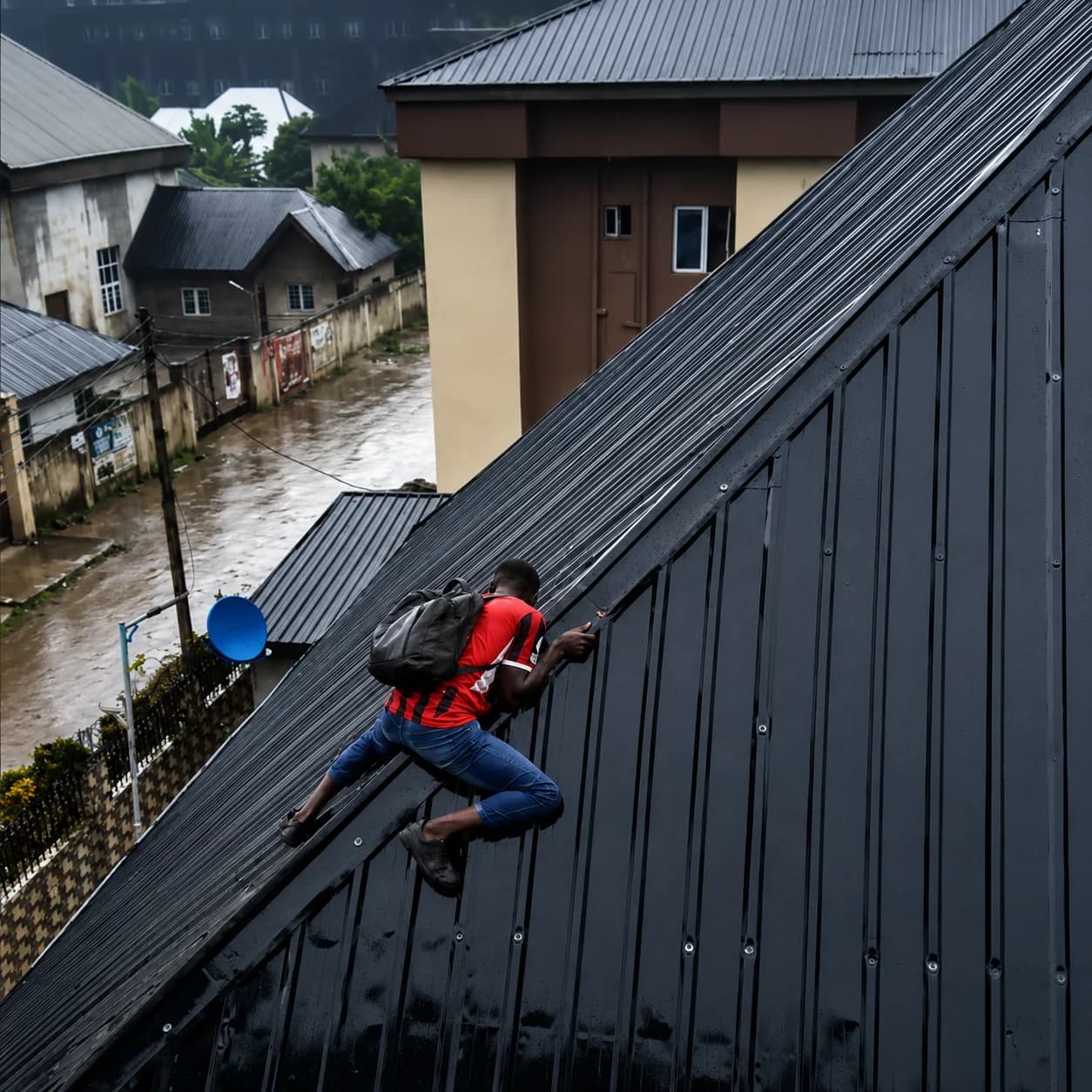
A video showing a solar panel installer climbing down from a rooftop during heavy rain has triggered concern and debate online, with Nigerians questioning the risks workers are taking to keep homes and businesses powered.
The footage circulating on social media shows the installer attempting to make his way down from the roof while rain is falling heavily.
The person recording the incident appears visibly concerned about the situation, with the accompanying reaction highlighting just how dangerous the descent looks.
The video has since attracted attention because it captures an increasingly familiar part of Nigerian life: the growing demand for solar power in a country where reliable electricity remains a major challenge.
"Chai, Rain"
The video is being circulated with reactions expressing disbelief at the conditions under which the installer was working.
For many Nigerians, the immediate concern is not the solar installation itself.
It is the worker's safety.
A wet rooftop can become extremely slippery, while rain can significantly reduce visibility and make it more difficult for someone working at height to maintain a secure footing.
If the worker loses balance, the consequences could be severe.
Nigerians Question Why Anyone Would Work in Such Conditions
The online conversation has largely focused on whether the installer should have remained on the roof once the rain began.
Some users questioned why the work was not stopped until the weather improved.
Others pointed out that installers sometimes face pressure to complete jobs quickly because customers are eager to have their solar systems activated.
But regardless of the reason, the central safety concern remains the same:
Working at height during heavy rain can turn a routine installation into a potentially life-threatening situation.
The Hidden Risk Behind Nigeria's Solar Boom
The viral video also highlights a much bigger trend.
Solar energy has become increasingly important to Nigerian households and businesses trying to reduce their dependence on the national grid and petrol or diesel generators.
More Nigerians are investing in solar panels, inverters and lithium batteries as alternative sources of electricity.
Recent social-media stories have shown just how significant that market has become, with one Nigerian recently revealing that he spent almost ₦3 million on a 6kVA solar system and installation after struggling with electricity supply.
As demand increases, so does the amount of work being carried out on rooftops.
And that means installer safety needs to become part of the conversation.
A Solar Installation Is Not Just About the Panels
To the average customer, installing solar may look relatively straightforward.
Panels go on the roof.
Cables are connected.
The inverter and batteries are installed.
The system is switched on.
But professional installation can involve workers climbing onto roofs, carrying heavy equipment, drilling mounting points and working around electrical components.
Those activities become considerably more dangerous when weather conditions deteriorate.
Rain Creates Multiple Hazards
Heavy rain can create several risks for rooftop workers.
The first is obvious: slipping and falling.
But there are other concerns.
Wet surfaces can make tools and equipment difficult to handle.
Strong winds can affect panels and other materials.
Poor visibility can make movement around the roof more difficult.
And electrical work requires additional caution when water is present.
For installers, knowing when to stop work can be just as important as knowing how to complete the installation.
Nigerians Connect the Video to the Power Crisis
Another major theme in the online reaction is Nigeria's electricity problem.
For years, unreliable power supply has pushed households and businesses toward generators and alternative energy systems.
Solar has increasingly become one of the most attractive options because it can provide electricity without the constant fuel costs associated with petrol and diesel generators.
That demand has created a growing industry of solar installers across the country.
But the more installations that happen, the more workers are exposed to potentially dangerous rooftop environments.
The Customer's Pressure Can Also Matter
There is another side to the story that deserves attention.
A customer who has already paid for a solar system may be desperate to have the installation completed.
If the worker arrives and rain begins halfway through the job, there may be pressure to "just finish it."
That is where safety standards become particularly important.
A professional installation should not require a worker to risk his life simply to meet a deadline.
If weather conditions make the rooftop unsafe, the job can wait.
Electricity can wait.
A person's life cannot.
What Professional Installers Should Consider
The viral footage is a reminder that solar companies and independent installers need proper safety procedures.
That includes appropriate fall-protection equipment, secure ladders, suitable footwear and proper assessment of rooftop conditions.
Workers should also have the authority to stop work when conditions become unsafe.
Solar installation guides similarly emphasise the importance of assessing roof condition and designing installations appropriately rather than simply placing panels wherever space is available.
The Installer Has a Family Too
The online conversation sometimes focuses so heavily on getting the job done that the person doing the work becomes invisible.
But behind every solar installation is a worker.
Someone with a family.
Someone who depends on that job for income.
Someone who expects to return home safely after work.
That is why the reaction to the video has resonated with so many Nigerians.
The goal of installing solar panels is to make people's lives safer and more comfortable.
It should never come at the cost of the installer's safety.
Nigeria's Solar Industry Needs Safety to Grow With It
The country's transition toward solar energy is likely to continue.
Businesses want lower energy costs.
Households want reliable electricity.
Small businesses need power to survive.
And with grid electricity remaining unreliable in many areas, demand for solar systems is unlikely to disappear.
That makes worker safety increasingly important.
As the industry grows, safety training and professional standards need to grow alongside it.
The Bigger Picture
The viral video is ultimately about more than one worker caught in the rain.
It captures two realities existing side by side.
On one side is Nigeria's desperate demand for reliable electricity.
On the other is the human cost and risk involved in building the alternative power infrastructure Nigerians increasingly depend on.
The solar revolution is creating opportunities for thousands of installers.
But those workers deserve to benefit from the industry's growth without being forced into unnecessary danger.
The Bottom Line
The viral footage of a solar installer climbing down a rooftop during heavy rain has sparked concern across social media, with Nigerians questioning whether the worker should have been operating under such dangerous conditions.
The exact identity and circumstances surrounding the particular installation have not been independently established, so claims about why the worker continued during the rain should be treated cautiously.
But the safety lesson is clear.
No solar installation is worth a worker's life.
As Nigeria's demand for solar power continues to grow, the industry must ensure that the people climbing the rooftops to deliver that power are protected just as seriously as the equipment they install.
Tags
EDITORIAL TEAM
About Talk Ya True Editorial Team
The Talk Ya True Editorial Team is an independent newsroom committed to factual reporting, responsible journalism and thoughtful analysis across Africa and around the world.
Related Articles
Nigeria
Viral Bread-Making Video Raises Alarms Over Hygiene and Worker Safety in Nigeria
Nigeria
Shock in Anambra as Jowizaza's Billionaire Father Reportedly Abducted at Prayer Mountain
Nigeria
Pastor's "Drop Money for Protection" Instruction Sparks Outrage Online
Politics
Orji Kalu Calls for Two-Year Amnesty to Recover Nigeria's Allegedly Looted Funds
Stay Informed
Get the biggest stories from Nigeria, Africa and around the world.
Free news updates. Unsubscribe anytime.
By subscribing, you agree to receive free news updates from Talk Ya True. You can unsubscribe at any time.