Nigeria
Viral Bread-Making Video Raises Alarms Over Hygiene and Worker Safety in Nigeria
A viral video showing a Nigerian bread-making operation using basic and visibly worn equipment has triggered a heated debate over food hygiene, worker safety and regulatory enforcement. While some Nigerians expressed disgust over bare-hand contact and sweat around the dough, others defended the workers and called for support, training and affordable financing rather than condemnation.
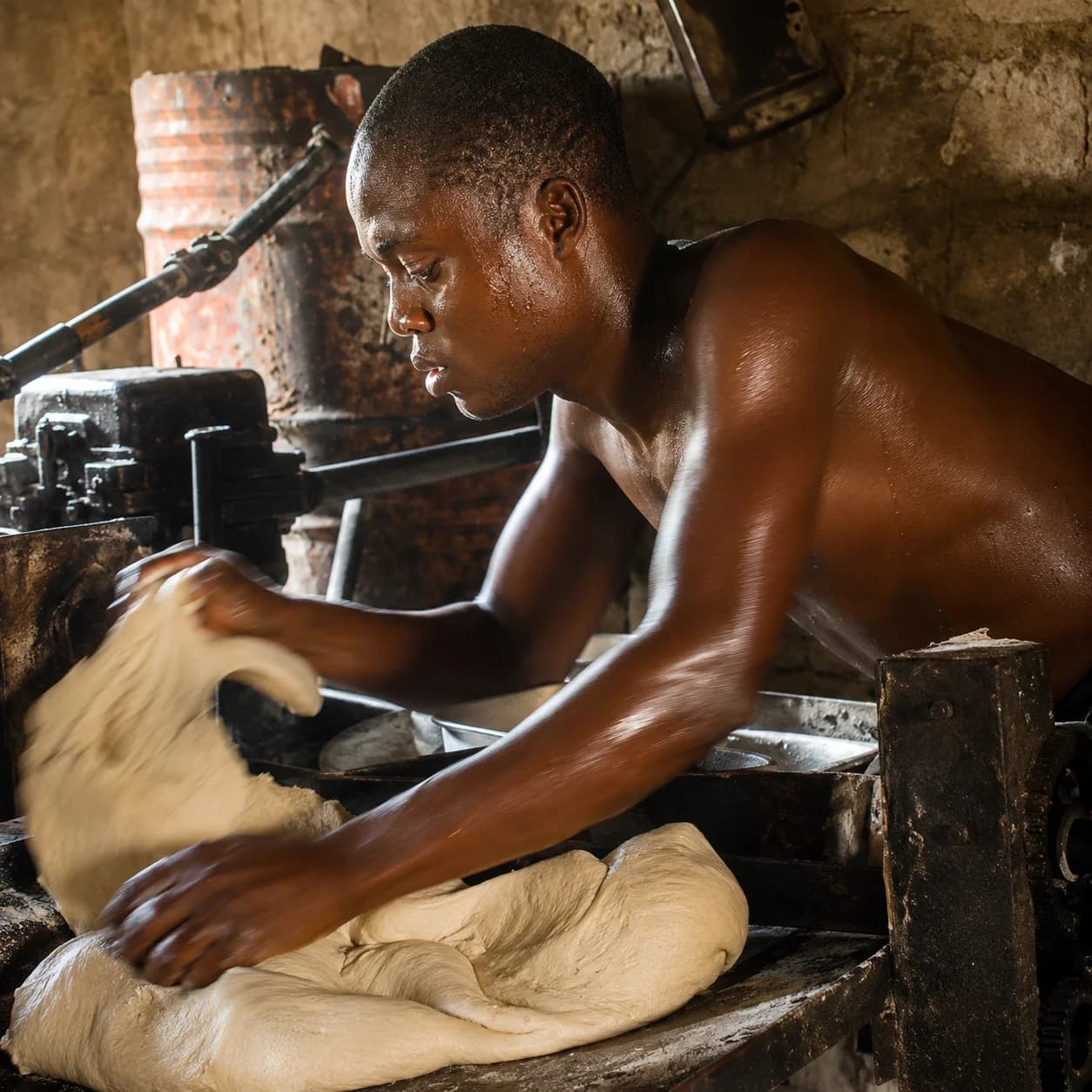
A disturbing video showing bread being produced in what appears to be a small-scale Nigerian bakery has sparked a heated debate over food hygiene, working conditions and the enforcement of safety standards in the country's baking industry.
The footage shows workers processing large sheets of dough using basic equipment that appears visibly worn.
At several points, the workers are seen handling the dough directly, prompting viewers to question the level of hygiene maintained during production.
The video has now become a wider conversation about the realities facing small food businesses in Nigeria — and whether struggling entrepreneurs are being given enough support to meet modern safety standards.
The Hygiene Concerns That Shocked Viewers
One of the most repeated concerns online is the apparent direct handling of the dough with bare hands.
Viewers have also pointed to the workers' proximity to the dough while sweating, with some expressing concern about perspiration potentially coming into contact with food.
For many Nigerians, the images were enough to trigger an immediate reaction.
Some described the process as unhygienic and questioned whether bread produced under such conditions should be sold to the public.
Others went further, arguing that the video demonstrates why stronger inspections are necessary across the country's food-production sector.
However, the video alone does not establish that the bread produced at the facility is contaminated or unsafe.
That would require proper inspection and laboratory testing.
The Machinery Created Another Concern
The hygiene issue was not the only thing that caught people's attention.
Viewers also noticed the proximity of workers' hands to moving machinery while the dough was being processed.
That raised questions about occupational safety.
Industrial and semi-industrial dough-processing equipment can cause serious injuries when workers are not adequately trained or when machinery lacks appropriate safeguards.
Some online commenters specifically worried about what could happen if a worker's fingers became caught in the machinery.
The irony is striking.
The same machine being used to increase production and make the bread-making process faster could become a serious hazard if proper safety procedures are not followed.
"Don't Just Shame Them"
Not everyone reacting to the video agreed with the criticism.
A different group of Nigerians defended the workers and the small business behind the operation.
Their argument was simple:
People should not be mocked for using what they can afford.
For many small entrepreneurs, purchasing modern bakery equipment can require a substantial investment.
Equipment, electricity, premises, raw materials, packaging and transportation all cost money.
A small bakery operating with older machinery may not necessarily be trying to ignore safety standards.
It may simply be struggling to afford better equipment.
That does not eliminate the need for hygiene and safety.
But it does add an important economic dimension to the conversation.
"Give Them Loans and Training"
One of the strongest alternative arguments online has been that government and financial institutions should do more than punish small operators.
Instead, critics of the harsh reactions have called for affordable loans, training and education.
The argument is that if Nigeria wants safer food production, small businesses need a realistic pathway toward compliance.
A bakery owner who cannot afford modern equipment may need access to financing.
A worker who has never received formal food-safety training may need education.
And a small operation struggling to meet regulatory requirements may need guidance on how to improve.
That approach could potentially achieve more than simply shutting businesses down.
But Food Safety Cannot Be Ignored
There is another side to the argument.
Bread is consumed by millions of Nigerians every day.
That means the people producing it have a responsibility to ensure that basic food-safety standards are followed.
Economic hardship cannot mean that consumers should accept unsafe food handling.
The challenge is therefore finding the balance between protecting consumers and supporting small businesses.
NAFDAC Already Has Requirements for Bread Production
Nigeria's National Agency for Food and Drug Administration and Control, NAFDAC, has specific requirements governing bread manufacturing facilities.
Its guidelines cover areas including the premises, production environment and water used in bread and baked-product production.
NAFDAC also has formal guidelines for bread registration and regulations governing bread products and permitted additives.
In other words, the country already has a regulatory framework.
The bigger question is how consistently those standards are being applied across the thousands of bakeries and small food-production businesses operating around the country.
The Gap Between Regulation and Reality
This may be the most important issue exposed by the viral footage.
Nigeria can have detailed food-safety regulations on paper.
But regulations only protect consumers when they are actually implemented.
Large commercial bakeries may have the resources to invest in modern equipment, formal quality-control systems and trained personnel.
A small neighbourhood bakery may operate under completely different circumstances.
That creates a difficult regulatory challenge.
How do authorities ensure compliance without simply pushing small entrepreneurs out of business?
The Worker Is Also at Risk
The discussion should not focus entirely on the people who will eventually eat the bread.
The workers themselves deserve protection.
A person standing beside moving machinery for hours every day should not have to rely entirely on luck to avoid an injury.
Workers need appropriate training and safe operating procedures.
Equipment should be maintained.
Where necessary, guards and protective mechanisms should be installed.
And employees should know how to stop machinery safely when something goes wrong.
Nigeria's Informal Economy Is Part of the Story
The viral video also reflects the enormous size of Nigeria's informal economy.
Millions of Nigerians earn their livelihoods through small businesses operating outside the large corporate environment.
These businesses provide jobs and affordable goods to communities.
But they can also operate with limited access to financing, technology, formal training and regulatory support.
That creates a difficult cycle.
Poor equipment can make businesses less productive.
Low productivity limits profits.
Low profits make it harder to purchase better equipment.
And the cycle continues.
Should the Bakery Be Shut Down?
That question has already emerged in the online debate.
But the answer should not come from social media.
If authorities have concerns about a particular bakery, the appropriate response would be an inspection.
Officials can determine whether the facility is registered, whether its production environment meets the relevant requirements and whether the food itself meets safety standards.
If violations are found, the operator should be given the appropriate enforcement response.
If the bakery meets the standards, the public should also be told.
That is how a food-safety system should work.
Social Media Has Become an Unofficial Inspector
The incident also demonstrates how Nigerians increasingly use smartphones to expose conditions they believe authorities should investigate.
A worker can record a video.
A customer can post it.
Within hours, millions of people can see it.
That can be powerful.
It can expose genuine problems that might otherwise remain hidden.
But it can also produce instant verdicts before inspectors have examined the evidence.
A viral video should therefore be treated as a reason for investigation, not automatically as proof of guilt.
What Nigerians Really Want
Beneath the arguments about the video is a fairly straightforward demand.
People want to know that the food they buy is safe.
They also want workers to operate in safe conditions.
And many Nigerians want small businesses to have a genuine opportunity to grow.
Those objectives do not have to conflict.
Government can enforce food-safety rules while also providing training and accessible financing.
Banks and development agencies can create funding programmes for small bakeries to upgrade equipment.
Industry associations can provide hygiene education.
And consumers can continue demanding transparency.
The Bigger Question: Who Is Responsible?
The viral video raises a question that extends far beyond one bakery.
Is the responsibility entirely on the business owner?
Is it on NAFDAC?
Is it on state and local authorities?
Or should consumers also play a role by demanding properly packaged and registered products?
The reality is that food safety requires all of them.
Regulators must inspect.
Businesses must comply.
Workers must follow safety procedures.
And consumers must remain vigilant.
The Bottom Line
The viral bread-production video has shocked Nigerians because it brings together two very different realities.
On one side is the genuine concern about hygiene and worker safety — bare-hand handling, perspiration around food and workers operating close to moving machinery.
On the other is the reality of small Nigerian entrepreneurs trying to survive with limited capital and outdated equipment.
Neither side should be ignored.
Food safety cannot be sacrificed because a business is struggling.
But small businesses should not simply be condemned without considering whether they have access to the financing, training and technology required to meet modern standards.
Nigeria already has regulations governing bread production and bakery facilities.
The real challenge is making those standards work on the ground.
Perhaps the viral video should therefore lead to something more productive than outrage:
Inspect the facility. Test the product. Train the workers. Help the business upgrade. And enforce the rules.
Because Nigerians deserve safe bread — and the people making that bread deserve a safe place to work.
Tags
EDITORIAL TEAM
About Talk Ya True Editorial Team
The Talk Ya True Editorial Team is an independent newsroom committed to factual reporting, responsible journalism and thoughtful analysis across Africa and around the world.
Related Articles

Nigeria
Solar Installer's Risky Rooftop Job During Heavy Rain Sparks Concern Across Nigeria

Nigeria
Shock in Anambra as Jowizaza's Billionaire Father Reportedly Abducted at Prayer Mountain

Nigeria
Pastor's "Drop Money for Protection" Instruction Sparks Outrage Online

Politics
Orji Kalu Calls for Two-Year Amnesty to Recover Nigeria's Allegedly Looted Funds
Stay Informed
Get the biggest stories from Nigeria, Africa and around the world.
Free news updates. Unsubscribe anytime.
By subscribing, you agree to receive free news updates from Talk Ya True. You can unsubscribe at any time.