Business
West Africa Approves Nigeria–Morocco Gas Pipeline in Landmark Regional Energy Deal
West African leaders have approved the Nigeria–Morocco Gas Pipeline, a landmark energy project expected to connect Nigeria's vast natural gas reserves with 13 West African countries, Morocco and eventually Europe. The approval marks a major milestone for one of Africa's largest infrastructure projects.
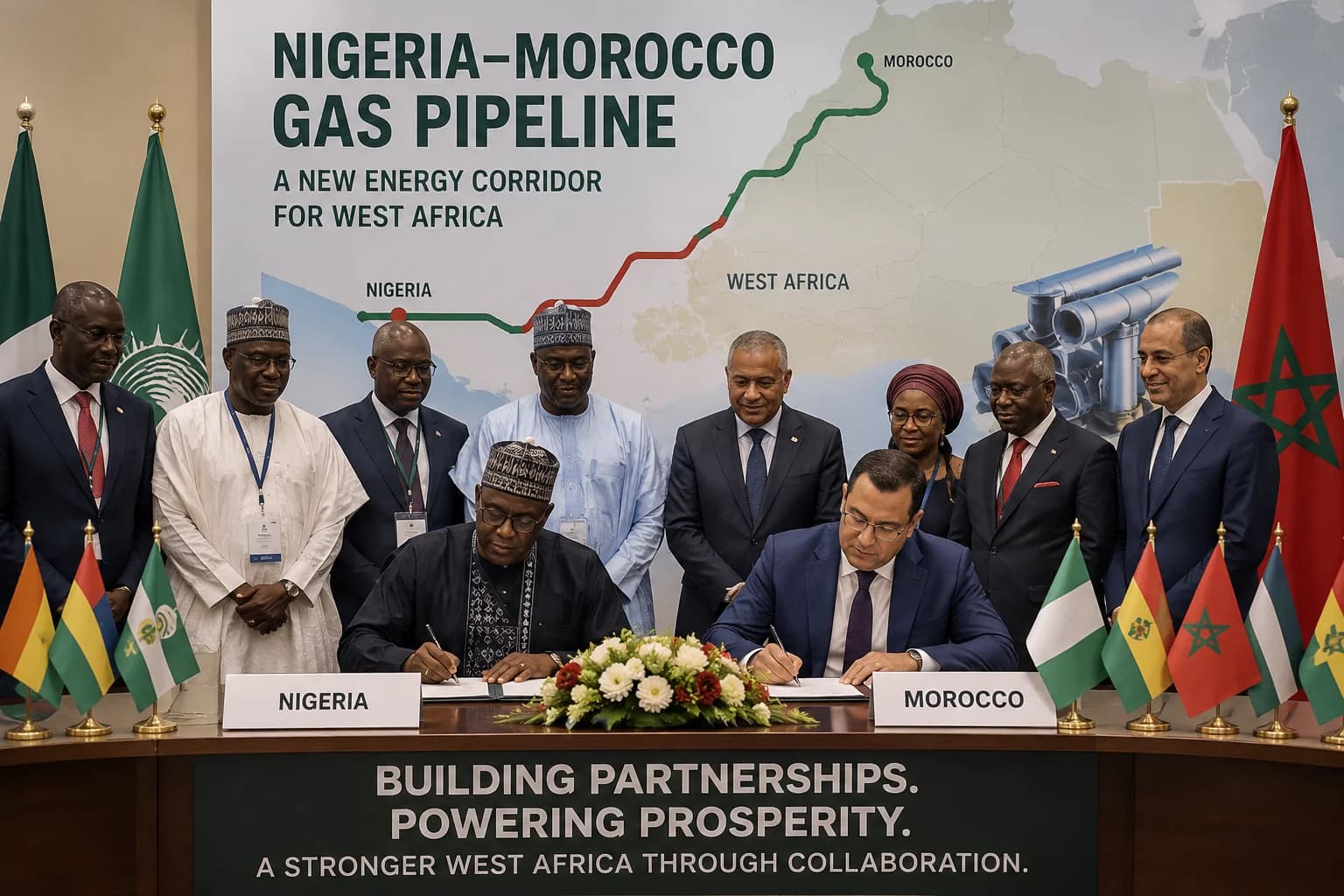
West African leaders have formally approved the Nigeria–Morocco Gas Pipeline (NMGP), paving the way for one of the continent's most ambitious energy infrastructure projects.
The agreement was endorsed during the 69th Ordinary Summit of the Economic Community of West African States (ECOWAS) in Freetown, Sierra Leone, where heads of state signed an intergovernmental agreement backing the project. The decision provides the political framework needed to move the pipeline into its next phase of development.
A 6,000-Kilometre Energy Corridor
The Nigeria–Morocco Gas Pipeline is expected to stretch for approximately 6,000 kilometres along Africa's Atlantic coast.
Starting in Nigeria, the pipeline will pass through 13 West African countries before reaching Morocco, where it will connect to the existing Maghreb-Europe Gas Pipeline, allowing Nigerian gas to reach European markets.
The project is designed to transport up to 30 billion cubic metres of natural gas annually, supplying energy to an estimated 400 million people while strengthening regional energy security.
Boost for Regional Integration
ECOWAS leaders described the project as more than just a pipeline, calling it a strategic investment in regional cooperation and economic integration.
By linking multiple West African countries through a shared energy network, the project is expected to:
Improve access to natural gas across the region.
Support electricity generation in participating countries.
Encourage industrial development.
Create thousands of jobs during construction and operation.
Strengthen trade and economic cooperation among ECOWAS member states.
What It Means for Nigeria
For Nigeria, the pipeline represents a major opportunity to unlock more of its vast natural gas resources.
The country holds one of Africa's largest proven gas reserves, and officials believe the project will increase gas exports, generate foreign exchange earnings and reinforce Nigeria's position as a leading energy supplier.
Minister of State for Petroleum Resources (Gas), Ekperikpe Ekpo, said the project would help commercialise Nigeria's estimated 215 trillion cubic feet of proven gas reserves while supporting long-term economic growth.
Construction to Be Phased
The project will be implemented in phases.
According to officials, construction is expected to begin with the Morocco–Mauritania–Senegal section before gradually extending southward to connect with Nigeria.
Regional institutions, including the Islamic Development Bank and the OPEC Fund for International Development, are among the organisations supporting the project's development.
Europe Eyes Alternative Gas Supplies
The pipeline also has significant international importance.
As Europe continues to diversify its energy sources, the Nigeria–Morocco Gas Pipeline is expected to provide an additional route for natural gas exports, reducing dependence on traditional suppliers while strengthening energy ties between Africa and Europe.
Energy analysts say the project could become one of the world's longest offshore and onshore gas pipelines once completed.
Challenges Ahead
Despite the political approval, several challenges remain before construction can begin.
These include:
Securing full project financing.
Completing detailed engineering and environmental studies.
Coordinating implementation across multiple countries.
Addressing security concerns along parts of the proposed route.
Nevertheless, ECOWAS leaders say the latest agreement represents a decisive step toward making the project a reality.
A Historic Milestone
The approval of the Nigeria–Morocco Gas Pipeline is being viewed as a landmark achievement for regional integration and energy cooperation in West Africa.
If completed as planned, the project could reshape the continent's energy landscape, improve electricity access for millions of people, strengthen Nigeria's role in the global gas market and deepen economic ties between Africa and Europe.
EDITORIAL TEAM
About Talk Ya True Editorial Team
The Talk Ya True Editorial Team is an independent newsroom committed to factual reporting, responsible journalism and thoughtful analysis across Africa and around the world.
Related Articles
Business
MPC Meeting in Focus as Investors Watch for CBN Interest Rate Decision

Business
Why the CBN Is Not Ready to Cut Interest Rates Yet - and What It Means for Nigerians
Business
Nigeria's Foreign Reserves Hit $40 Billion: What It Means for the Economy, the Naira and Everyday Nigerians
Business
Oil Markets on Edge as U.S.–Iran Tensions Raise Fresh Questions for Nigeria's Economy
Stay Informed
Get the biggest stories from Nigeria, Africa and around the world.
Free news updates. Unsubscribe anytime.
By subscribing, you agree to receive free news updates from Talk Ya True. You can unsubscribe at any time.